Why is my hormonal acne so persistent? What should I do about it?
If you feel like you are doing everything right, washing your face, using actives, and staying consistent, but your skin still won’t clear, you are likely only treating half of the problem. In 2026, clinical research has moved beyond the “scrub and strip” era. We now know that persistent acne is often a symptom of systemic inflammation and the gut-skin axis.
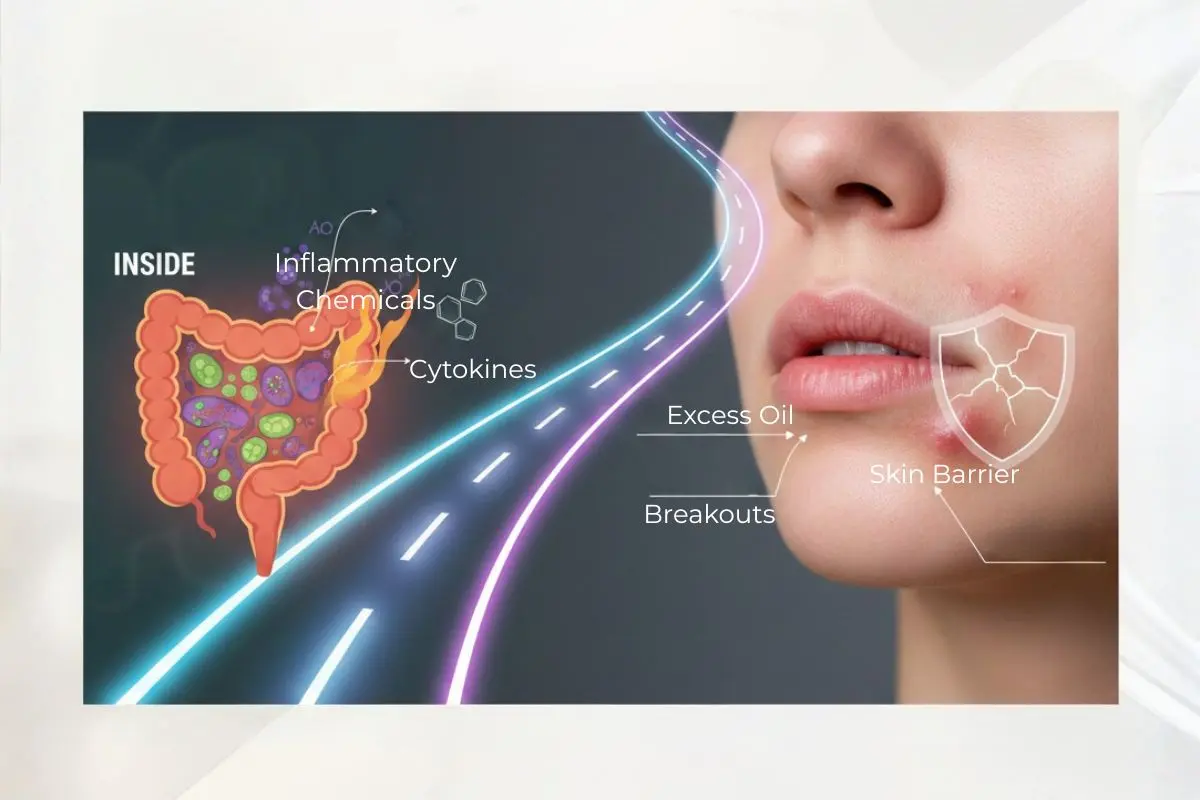
Systemic inflammation means the “fire” is inside your entire body, not just on your face. When your body is stressed by poor diet, gut issues, or hormones, it creates inflammatory chemicals that travel through your bloodstream. The Gut-Skin Axis is the “highway” these chemicals use to get to your skin. When your gut is inflamed, it sends a signal through this axis telling your skin to produce excess oil and swell up, which creates the deep, painful cystic acne that topical creams can’t reach because the source is internal.
How to fix skin barrier from acne products
One of the most common reasons to the question, why is my hormonal acne so persistent, is because of your skin barrier.
Many “high-street” acne treatments rely on high percentages of drying agents. While these may kill surface bacteria, they also destroy the “good” bacteria (the microbiome) that protects your skin.
When your barrier is compromised, it triggers a “rebound” effect: your skin produces more oil to compensate for the dryness, leading to more clogs and more inflammation. According to The Journal of Clinical and Aesthetic Dermatology, a healthy barrier is the first line of defense against C. acnes bacteria.
Use a good Barrier Repair Cream with ceramides to strengthen and heal your skin barrier.
Why is my hormonal acne so persistent? The Science of the Gut-Skin Axis
Search queries for “gut health and acne” have increased by over 200% this year. This is because the gut and skin are in constant communication. When the gut is inflamed due to diet or stress, it releases pro-inflammatory cytokines into the bloodstream. These signals travel directly to your sebaceous glands, triggering excess oil production and “internal” breakouts that topical creams cannot reach. Download our free “Acne Unmasked” guide here to learn the clinical facts about how your diet is driving your acne and how to stop it from the inside out.
Best supplements for hormonal acne South Africa
To stop the cycle of persistent acne, you must address the internal phase. This is the role of Botanical Biotech, the factual bridge between traditional nature and modern clinical science, where high-potency ingredients like Neem are used to target the root cause of inflammation.
Clinical studies on Azadirachta indica (Neem) show it acts as a systemic purifier, reducing the internal “heat” and inflammation that causes cystic breakouts. In my experience treating South African skin types, adding a botanical internal phase often provides the results that topicals alone cannot achieve. It specifically targets the mTOR pathway, which is the biological switch that controls how much oil your skin produces.
Why Is My Hormonal Acne So Persistent? Managing Hormonal Acne with a Clinical System
Successfully managing persistent breakouts requires moving beyond “spot treating” and adopting a structured clinical system. According to research in The Journal of Clinical and Aesthetic Dermatology, treating hormonal acne effectively requires a dual-action approach because the triggers are internal, but the damage, such as scarring and barrier depletion—is external. This is where using a coordinated system, such as our Inside Out Acne Fighting Combo, becomes essential. By combining internal botanical modulators with external professional-grade topicals, you address the biological “oil switch” while simultaneously repairing the skin barrier that harsh, high-street products often destroy.
In my experience treating South African skin types, a combo approach is the way to break the cycle of “rebound” oiliness. When you use the Natural Acne Fighter (Neem), you are cooling the systemic inflammation that causes deep, painful cysts.
Simultaneously, applying a non-stripping 2% Salicylic Acid treatment ensures that the surface pores remain clear without causing the dryness that triggers more oil production. This creates a “Clinical Loop” where the internal phase prevents the breakout from forming, and the external phase protects the skin’s surface and microbiome.
