

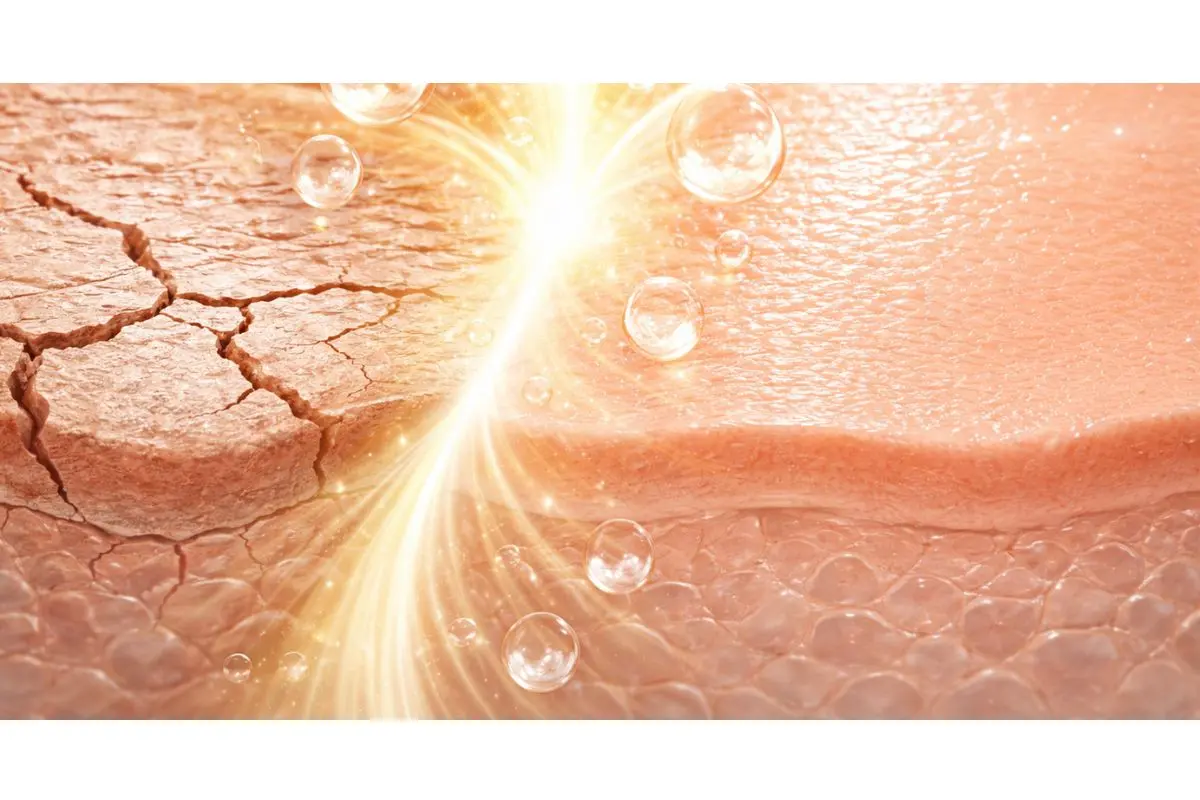
How to fix a burnt skin barrier from retinol
I know what it’s like to have burnt your skin barrier. In my experience trying out products before I started formulating and before I started ShaRique Skin, I too burnt my skin barrier. It was with Tretinoin. I followed the standard advice: use it once a week, then twice, then gradually build to daily use. Once I believed my skin could handle the intensity, I used Tretinoin three nights in a row, and it literally fried my skin.
The area around my mouth and my nose turned almost black; no amount of foundation could conceal the darkness. I had severely damaged my barrier, but luckily, I stopped using all products immediately and my natural skin tone eventually returned. Since that experience, I have dedicated myself to researching and studying skin of colour and its specific physiological reactions to Retinol.
These reactions extend to AHAs, BHAs, strong chemical peels, and even certain skin brighteners. When our barrier is compromised by these aggressive actives, the skin’s immediate defense mechanism is to trigger Post-Inflammatory Hyperpigmentation (PIH). Unlike lighter skin tones that may just stay red, our skin reacts to the “burn” by over-producing melanin, which is why areas can turn dark or even black.
I realized then that the advice I had been following came from Caucasian dermatologists whose research didn’t account for the unique inflammatory responses of Skin of Colour, specifically Black, Indian, and Coloured skin in South Africa.
Signs of a damaged Skin Barrier
The most obvious sign of a damaged skin barrier for us is localised darkening or a “burning” sensation when applying products that usually feel fine. If your face stings, feels tight, or appears unusually shiny, but not oily, your protective shield is failing. In South African skin types, this often presents as a rough, sand-papery texture or a sudden “ashy” appearance that no amount of heavy cream seems to fix.
Beyond the physical discomfort, the “Expert Signal” of a compromised barrier is a sudden breakout of tiny, itchy bumps or an unexplained darkening of the skin, especially around the mouth and eyes. This is the skin’s way of sounding an alarm. When the barrier is open, it loses moisture and allows irritants in, which triggers the inflammatory response that leads straight to the stubborn hyperpigmentation we are all trying to avoid.
How to fix a burnt skin barrier from retinol
To fix a burnt skin barrier from Retinol, you must first stop the cycle of inflammation. In Skin of Colour, a “retinol burn” is not just surface irritation, it is a breach of your skin’s defensive wall. According to clinical reviews, this compromise leads to Retinoid Dermatitis, which significantly increases the risk of Post-Inflammatory Hyperpigmentation (PIH).
The most critical step in recovery is knowing exactly what NOT to do. To prevent permanent darkening, you must strictly avoid the following:
Stop All Actives: Immediately stop using Retinol, AHAs (Glycolic Acid), BHAs (Salicylic Acid), and Vitamin C. Even “gentle” acids will aggravate a raw barrier.
No Physical Scrubbing: Do not use facial brushes, sponges, or granular scrubs. Mechanical friction will further tear the fragile Stratum Corneum.
Avoid Heat: Do not use hot water on your face or visit saunas. Heat triggers melanocytes, which can worsen the darkening around the mouth and nose.
Do Not Pick or Peel: Never tug at flaking skin. Forcing the skin to shed before it is ready leaves the underlying layers unprotected and prone to deep-seated dermal melanosis.
Avoid Fragranced Products: Stop using any soaps or creams with heavy perfumes or essential oils, as these are common irritants that can cause a stinging “burn” on a compromised barrier.
By removing these triggers, you allow the skin to stop the inflammatory response and begin the vital natural repair process of how to fix a burnt skin barrier from retinol.
How to fix a burnt skin barrier from retinol- Gentle cleanser for damaged skin barrier
When your barrier is “fried,” your goal is to cleanse without stripping the few natural lipids you have left. In my formulation research, I found that the standard “foaming” cleansers used in many routines contain harsh surfactants like Sodium Lauryl Sulfate (SLS), which clinical studies prove can further disrupt the stratum corneum and increase Transepidermal Water Loss (TEWL). For skin of colour, this irritation is the primary trigger for the darkening and “ashy” texture you are seeing.
To repair the damage, you must switch to a formula that restores the “acid mantle” and provides active anti-inflammatory relief. According to research published in the Journal of Drugs in Dermatology, ingredients like Colloidal Oats are clinically proven to induce the expression of genes related to barrier repair. Additionally, Honey acts as a natural humectant that draws moisture into the skin while providing antimicrobial protection for raw, compromised areas.
What to Use: The “Safety Net” Ingredients
For a successful recovery, your cleanser should feel like a soothing treatment rather than a detergent. Look for these specific “Expert” ingredients:
Oats: To calm the “stinging” sensation and reduce redness.
Honey: To lock in hydration and prevent the skin from feeling tight after washing.
Rose Water: A natural anti-inflammatory that helps regulate the skin’s pH and soothe “hot spots” of irritation.
- Hemp Seed & Jojoba Oils: To replenish the essential fatty acids that were stripped away by the Retinol burn.
I formulated the Oats, Honey, and Rose Water Gentle Cleanser specifically to act as this “safety net”. It removes impurities while simultaneously feeding the barrier with the nutrients it needs to stop the darkening process.
Ceramide cream for sensitive skin South Africa
When your skin has been compromised by actives, it has lost its essential lipids, specifically Ceramides. Ceramides make up 50% of your skin’s composition, acting as the “glue” that holds your skin cells together. According to clinical studies on Barrier repair and Ceramides, a deficiency in these lipids is exactly why your skin feels sensitive, tight, and begins to darken.
I formulated the ShaRique Skin Barrier Repair Cream to be a comprehensive “Expert” solution for this exact crisis. I didn’t just include Ceramide NP; I wove it into a 4-pillar repair system using the following data-backed ingredients:
The Lipid Shield: Shea Butter, Grapeseed Oil, and Hemi-Squalane mimic your skin’s natural oils to stop Transepidermal Water Loss (TEWL) immediately.
The Inflammation Killers: Niacinamide and Panthenol (Vitamin B5) work to stop the “stinging” sensation and prevent the melanin overproduction that leads to PIH.
The Deep Hydrators: Urea, Hyaluronic Acid, and Sorbitol pull moisture into the deeper layers where the irritation originated.
The Healing Agents: Allantoin, Oats, and Ubiquinol (CoQ10) provide the antioxidant power needed to repair cellular damage.
In my experience treating South African skin types, applying a moisturiser with this profile reverses the “ashy” look and your skin will return to its natural tone. This formula protects your raw skin from the environment while it heals from within.
How to fix a burnt skin barrier from retinol and How long does it take to repair a damaged barrier?
Repairing a compromised barrier requires patience because you are waiting on your skin’s natural cellular turnover. According to clinical research on Stratum Corneum physiology, a full cycle of skin renewal typically takes about 28 days in healthy adults. However, for Skin of Colour, this timeline can be influenced by how quickly we can suppress the inflammatory response that triggers melanin production.
Days 1–3 (The Cooling Phase): Within the first 72 hours of stopping all actives and using a gentle cleanser, the “stinging” and “burning” sensations should subside.
Weeks 1–2 (The Lipid Replenishment Phase): As you consistently apply ceramides and fatty acids, the “ashy” texture and extreme tightness will begin to improve. Your skin starts to hold onto its own moisture again.
Weeks 3–4 (The Full Recovery Phase): By the end of a full month, the protective wall is usually restored. This is the point where you will notice the unexplained darkening (PIH) starting to fade because the “alarm” has finally been turned off.
Do not be tempted to reintroduce Retinol as soon as the stinging stops. If you rush the process, you risk “re-traumatizing” the new, thin skin cells before they have fully matured, which leads to even deeper hyperpigmentation.