Melasma vs Hyperpigmentation?
Melasma vs Hyperpigmentation – Not all dark spots on the skin are the same. Some are caused by hormonal changes, others by sun exposure, and some appear after acne or irritation. If you don’t understand the differences, then how would you know what will work?
Not sure whether your dark patches are melasma, post-inflammatory marks or something else? Find your Pigmentation, Melasma & Chubaba routine according to your skin, budget and goals →
Before we dive into the specifics, it’s important to understand the broader concept of pigmentation. Pigmentation is the natural colouring of your skin, hair and eyes. It is largely determined by melanin, the pigment produced by cells called melanocytes. Melanin helps protect the skin from ultraviolet radiation, but it also gives skin its colour
Table of Contents
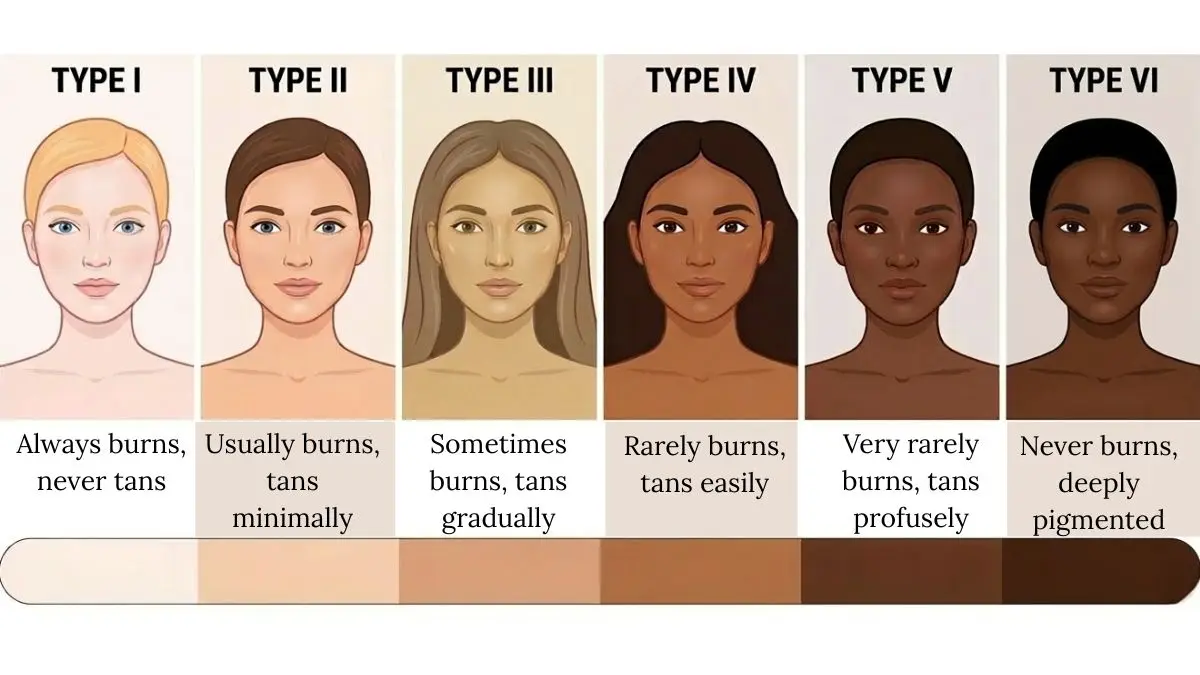
A useful way scientists describe differences in skin response is the Fitzpatrick skin phototype scale, which classifies skin from very light (Type I) to very dark (Type VI) based on how skin reacts to UV light. Studies show that people with higher Fitzpatrick types have more melanin and larger, more evenly distributed pigment packages called melanosomes. The Fitzpatrick scale describes how skin tends to respond to UV exposure. It is useful in dermatology, but it is not a complete measure of ethnicity, skin colour or pigmentation risk.
While this provides a natural shield that is great at preventing sun damage, it is also a double-edged sword. In melanin-rich skin, inflammation or injury can leave more noticeable and persistent post-inflammatory dark marks. Some people report that melasma looks darker with heat or flushing, but sunlight remains one of the best-established external triggers. UV and visible light are much more important to emphasise than ordinary household heat.
Melanin also acts as a natural defense against ultraviolet radiation, absorbing harmful rays to protect the DNA in skin cells. Research shows this is why darker skin generally has lower rates of sun‑induced damage. Darker skin is more prone to post-inflammatory hyperpigmentation, so a blemish, burn, scratch or irritating treatment can leave a darker mark after the original inflammation settles.
This darkening, the result of melanocytes producing melanin, can appear in many forms, from tiny freckles to large, irregular patches on the face. Every condition we’ll discuss, whether it’s the hormonal complexity of melasma, the localised marks of hyperpigmentation, the sun‑driven sun spots (solar lentigines), or what people in South Africa commonly call “Chubaba”- falls under this biological umbrella. These conditions can all create areas of darker skin, but they do not have exactly the same cause or biology. That is why identifying the type of pigmentation matters before choosing treatment.
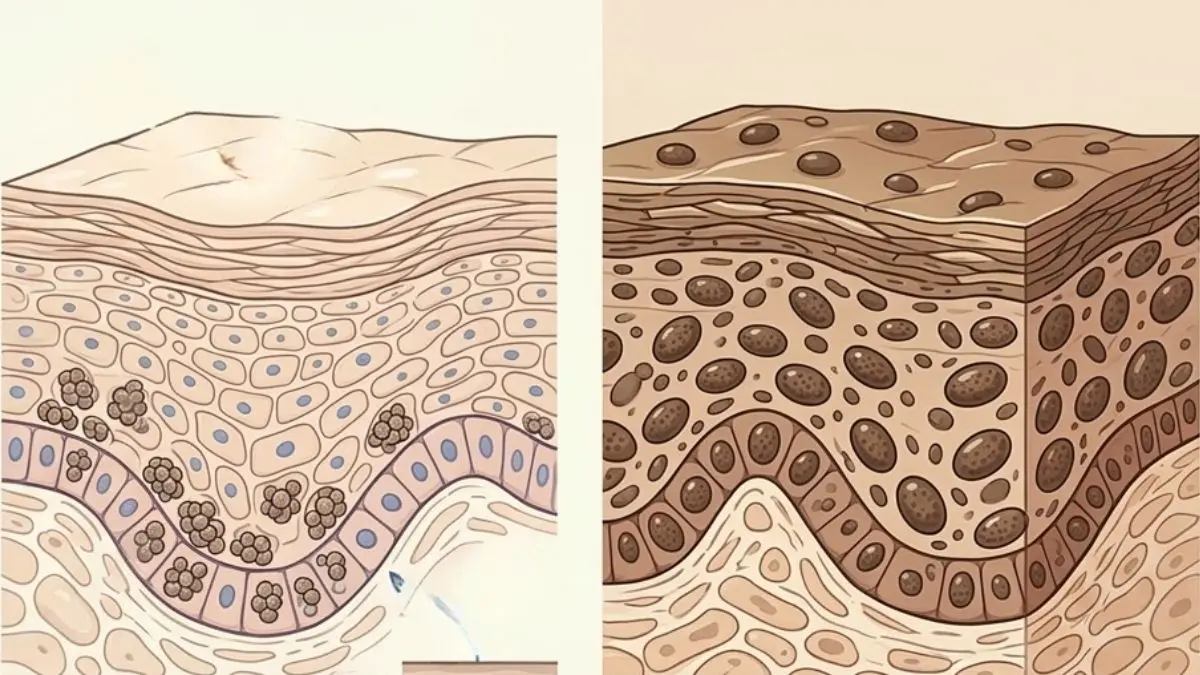
In lighter skin (Fitzpatrick Types I–II), melanosomes are small, clumped, and trapped in the bottom layer. This creates a weak shield, leaving the skin highly vulnerable to UV damage and burning. Right: Melanin-Rich Skin (Types IV–VI)
In melanin-rich skin (Fitzpatrick Types IV–VI), melanosomes are larger, individual, and spread through all layers to the surface. This creates a powerful natural shield, but also makes the skin highly reactive to heat and injury.
Melasma vs Hyperpigmentation- Identifying the Markers
In everyday language in South Africa, many people use “Chubaba” to describe any dark patch on the face. It is not a medical diagnosis, so two people calling their pigmentation Chubaba may actually be dealing with different conditions. If the dark patch is melasma, treating it like a simple surface stain can lead you toward the wrong treatment and more inflammation.
Types of Skin Pigmentation
Now that you understand that pigmentation is simply the broad, umbrella term for your natural skin color, it’s important to distinguish it from hyperpigmentation. Everyone has pigmentation, it’s your baseline skin tone, but hyperpigmentation happens when certain areas of the skin become darker than your natural tone.
These darker patches aren’t all the same, they happen for different reasons. There are several specific types of hyperpigmentation, each with its own triggers.
Melasma: Often linked to hormones and heat.
Sun Spots (Solar Lentigines): Caused by UV damage over time.
Post-Inflammatory Hyperpigmentation (PIH): Marks left after acne, cuts, or irritation.
Freckles: Primarily genetic but darkened by UV
Medical Pigmentation: Changes caused by medications or internal health conditions.
Visualising Pigmentation: Think of Your Skin Like a House
To understand how pigmentation changes happen, imagine your skin like a house.
The Ground – Melanocytes
Deep in your skin are melanocytes, the cells that produce melanin.
Think of them like the ground your house sits on — they supply the material that determines your skin’s colour.
The House – Your Natural Skin Tone
The walls and paint of the house represent your baseline pigmentation — your natural, healthy skin colour. This is what your skin normally looks like when everything is balanced.
When Something Goes Wrong – Hyperpigmentation
Now imagine something damages the house. Maybe there’s a leak, a crack, or weather damage. That damage represents hyperpigmentation, areas where the skin becomes darker than your normal tone.
The Maintenance Rule: Before we identify the leak, we must check the structure. If your skin barrier is compromised, if the “windows” of the house are broken, the interior will always be vulnerable. If your skin is currently burning, stinging, peeling or badly irritated, calm the irritation before piling on more strong pigment treatments. When the barrier is clearly irritated, our first priority is calming that irritation so the treatment itself does not create additional post-inflammatory pigmentation. But once the structure is stable, we have to ask: What caused the damage?
The Cause of the Damage = (Types of Pigmentation)
Different problems create different types of dark spots:
Internal plumbing problems (hormones)
→ Melasma
A break, injury, or impact to the house
→ Post-Inflammatory Hyperpigmentation (PIH)
Years of sun hitting one side of the house
→ Sun Spots / Solar Lentigines
Small natural marks in the paint
→ Freckles
Rare internal or medication-related issues
→ Medical or drug-induced pigmentation
Not all dark spots look the same. Each type of pigmentation leaves behind its own visual fingerprint on the skin. Learning to recognize these patterns is one of the most important steps in understanding what you are dealing with.

Types of skin pigmentation disorders
Melasma is strongly influenced by sunlight. UV is a major trigger, and visible light can also contribute, particularly in darker skin tones.
Post-Inflammatory Hyperpigmentation (PIH)
PIH is the skin’s way of “remembering” trauma. After a pimple, scratch, burn, or even harsh skin treatments, you might notice flat, defined spots exactly where the original damage occurred.
PIH develops after inflammation or injury stimulates excess pigment production. Once the original pimple, burn or irritation settles, the darker mark can remain. It usually appears in the same area where the original inflammation or injury occurred.
Freckles
Freckles are small, flat, tan, or light-brown spots that usually appear in clusters. They are often the size of a needle head and are most common on sun-exposed areas like the bridge of the nose and cheeks. What sets them apart is their hereditary nature; they have a strong genetic component, including associations with genes involved in pigmentation such as MC1R. This genetic predisposition combined with UV exposure creates their seasonal nature; they tend to darken and multiply during the summer months when UV exposure is high, and they can fade significantly or even disappear during the winter. This is because freckles are a reaction of the melanocytes to recent sun exposure in genetically predisposed skin, rather than a permanent change in the skin’s structure.
Sun Spots (Solar Lentigines)
Also commonly known as Age Spots, are flat, permanent marks caused by years of cumulative UV damage. A raised, waxy or changing lesion should not simply be assumed to be pigmentation and is better assessed by a healthcare professional.

Identifying the four primary forms of facial hyperpigmentation: Melasma, Acne Marks, Freckles, and Age Spots.
Medical Pigmentation
Some medications and medical conditions can cause changes in skin pigmentation. These changes may be diffuse, unusual in colour or appear in unexpected areas. If pigmentation appears suddenly, is widespread, involves areas such as the mouth or nails, or began after a new medication, speak to a healthcare professional.
Why It Matters to Know the Difference
If you treat every dark patch with the same aggressive “brightening” strategy, you risk making the problem worse.
For example, if you have Melasma, using a harsh physical scrub or a very strong acid might fade the surface, but the heat and friction from that treatment can actually trigger more pigment. You end up with a “Double Pigment” situation: your original melasma remains, and now you’ve added a layer of PIH from the irritation. Knowing your type means you can choose the tool that fixes the damage without “burning the house down”, or worsening the Chubaba you were trying to fix. Chubaba is a local name for different dark facial patches; it does not tell you whether the pigment is epidermal, dermal or mixed.
Resolving Melasma vs Hyperpigmentation- The Reality of the Road Ahead
Understanding the type of pigmentation you have is the start of an investigation, not a quick fix. In melanin-rich skin, there is no “miracle” that works overnight. Some pigmentation starts improving within weeks, while complete fading can take months. Deeper pigmentation generally takes longer, and melasma can recur even after it improves.
Success requires patience and a deep respect for your skin barrier. We do not believe in “forced consistency” at the expense of your health. If your skin is burning, stinging, persistently peeling or clearly irritated, stop the products causing the irritation and simplify the routine while the skin settles. Pushing through irritation is precisely what triggers the “Chubaba” response and makes patches darker.
- The Comprehensive Investigation: For a full breakdown of how to manage dark patches effectively, read: Melasma & Hyperpigmentation: Causes, Treatments, and How to Fade Dark Patches.
Deepen Your Investigation: For a closer look at why traditional treatments often fail skin of colour, read our deep-dive: Why is my Melasma getting darker?
Learn how to tackle stubborn dark patches safely by exploring our professionally formulated solutions specifically designed for melanin-rich skin in the Pigmentation & Melasma Skincare. (Please note: Physical products ship within South Africa only).
Common Questions & Expert Answers
Can I use the same cream for my freckles and my dark age spots?
While you can use similar brightening ingredients, the expectations are different. Freckles often become less noticeable with reduced UV exposure and consistent sun protection, although genetic tendency remains. Solar lentigines (age spots) tend to persist unless treated and can darken again with further UV exposure. A professional formula can fade them significantly, but it takes time and consistent UV protection.
Why does my pigmentation look “purple” or “grey” instead of brown?
Blue-grey or grey-brown pigmentation can sometimes suggest deeper pigment, but colour alone cannot tell you the exact cause. Unusual, widespread or changing pigmentation should be professionally assessed.
If freckles are “seasonal,” why do mine never fully disappear in the winter?
This goes back to the hereditary nature of your skin. Your genetic tendency remains even when freckles fade during periods of lower UV exposure.
Is it true that heat—not just sun—can make my Melasma worse?
Some people notice their melasma looks darker with heat or flushing, but sunlight is much better established as a trigger. UV and visible light should remain the main environmental focus. If you personally notice repeated heat-related flares, limiting excessive heat exposure may still be sensible.
While you can use similar brightening ingredients, the expectations are different. Freckles often become less noticeable with reduced UV exposure and consistent sun protection, although genetic tendency remains. Solar lentigines (age spots) tend to persist unless treated and can darken again with further UV exposure. A professional formula can fade them significantly, but it takes time and consistent UV protection.
Blue-grey or grey-brown pigmentation can sometimes suggest deeper pigment, but colour alone cannot tell you the exact cause. Unusual, widespread or changing pigmentation should be professionally assessed.
This goes back to the hereditary nature of your skin. Your genetic tendency remains even when freckles fade during periods of lower UV exposure.
Some people notice their melasma looks darker with heat or flushing, but sunlight is much better established as a trigger. UV and visible light should remain the main environmental focus. If you personally notice repeated heat-related flares, limiting excessive heat exposure may still be sensible.
Not all dark patches need the same treatment. Choose your next step:
Start simple → Chubaba Dark Patch Corrector
Stubborn pigmentation, advanced option → Melanin Breaker
Still not sure where you fit? → Build Your Pigmentation, Melasma & Chubaba Routine
Explore the pigmentation & melasma guide
Melasma vs HyperpigmentationYou are hereEpidermal vs Dermal — how deep?Why it's getting darkerHow long does it take to fade?
How to remove ChubabaWhat to Use for HyperpigmentationTreatment for dark skinTreat melasma without hydroquinoneDoes microneedling help?
Pigmentation, Melasma & Chubaba SolutionsFind your routine by concernChubaba Dark Patch CorrectorMelanin BreakerGuide: Why is it getting darker?
Best Skin Brightening Ingredients10 actives compared · the hubAlpha Arbutin4-ButylresorcinolKojic Acid DipalmitateMulberry Root Extract