
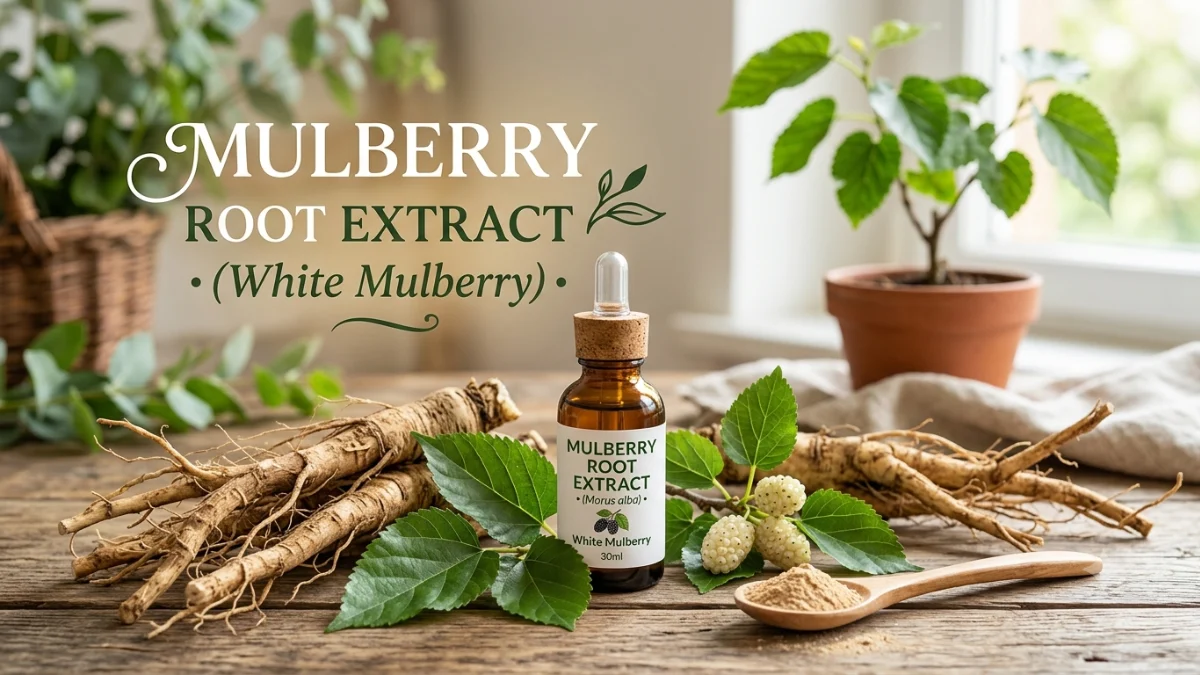
Mulberry Root Extract for Hyperpigmentation
Mulberry Root Extract (White Mulberry, Morus Alba Root Extract) is a botanical tyrosinase inhibitor used in skincare formulation to reduce the appearance of hyperpigmentation, melasma, and dark spots. In its 10:1 concentrated powder form, it works by slowing the enzyme responsible for excess melanin production. It is used in cosmetic formulations to target tyrosinase activity and support a brighter, more even-looking skin tone.
I have formulated with dozens of brightening actives over the years, and Mulberry Root Extract has a special place for me. Not because it is trendy, but because the research behind it holds up.
Looking for finished skincare rather than a raw ingredient? See our Pigmentation, Melasma & Chubaba solutions →
What Is Mulberry Root Extract, Exactly?
Mulberry Root Extract comes from the root bark of the White Mulberry tree. The “10:1” on the label means the powder has been concentrated so that every kilogram contains the bioactive equivalent of ten kilograms of raw root material. The 10:1 ratio describes the concentration of raw botanical material used to produce the extract. It does not by itself tell us the exact level of every active compound, so formulation quality and supplier specifications still matter.
Morus alba contains a range of compounds, including mulberrosides and flavonoids, that have shown anti-tyrosinase and anti-melanogenesis activity in laboratory research.
How It Actually Works on Skin
Tyrosinase is a key enzyme in melanin production. UV exposure, inflammation and hormonal influences can affect the signalling involved in melanogenesis, which can contribute to excess or uneven pigmentation.
Mulberry Root Extract works by inhibiting tyrosinase and dopa oxidase activity, slowing pigment production closer to its source rather than trying to fade pigment that has already surfaced. Laboratory studies have found that some mulberry-derived compounds can inhibit tyrosinase, and certain isolated mulberrosides have shown stronger enzyme inhibition than kojic acid under specific laboratory conditions. That should not be interpreted as proof that a finished Mulberry Root Extract product is clinically superior to Kojic Acid.
That gentleness is worth underlining. A lot of “brightening” ingredients irritate the skin enough to trigger more pigment, not less, especially on melanin-rich skin. Mulberry is generally positioned as a gentler botanical brightening option, but any cosmetic ingredient can cause irritation in some users, and tolerability depends on the finished formulation. I formulate with it for clients dealing with post-inflammatory hyperpigmentation (PIH), not just melasma.
Who Should Be Using It
Mulberry Root Extract can be considered as a botanical brightening ingredient in formulations targeting uneven tone and the appearance of dark marks. For diagnosed melasma or persistent pigmentation, it should be viewed as one cosmetic option rather than a replacement for medical assessment or established treatment. For the ShaRique Mulberry Root Extract 10:1 Powder, use the usage rate, pH, solubility and processing specifications supplied on our product page. Different extracts can have different specifications.
It Works Better as Part of a Strategy, Not Alone
Mulberry Root Extract can be used alone within a simple formulation or combined with complementary brightening ingredients. Combination approaches can target different parts of the pigmentation process, but more ingredients do not automatically mean better results.
Mulberry Root Extract pairs especially well with White Licorice Root Powder, which attacks melanin synthesis from a second angle, and and with Niacinamide, which helps reduce the transfer of melanosomes from melanocytes to surrounding skin cells. Used together, you are working the problem from three directions instead of one.
Take a look at skin brightening ingredients that pair well with Mulberry Root Extract
Quick Answers
Is Mulberry Root Extract safe for sensitive or melanin-rich skin?
Mulberry Root Extract is commonly used as a botanical brightening ingredient in formulations designed for a gentler approach. Sensitive skin can still react to botanical extracts, so the finished formulation and individual tolerance matter.
How much Mulberry Root Extract should be used in a formulation?
A usage rate of 1 to 5 percent is typical, added to the water phase or cool-down phase below 40°C.
Does Mulberry Root Extract work as well as Kojic Acid?
Some isolated mulberry compounds have outperformed kojic acid in laboratory tyrosinase tests, but this does not establish that Mulberry Root Extract is clinically more effective or better tolerated than Kojic Acid in finished skincare.
Where to Go From Here
If you are formulating your own brightening serum, our Mulberry Root Extract (White Mulberry) 10:1 Powder is available in 10g, 25g, and 50g sizes, with full usage and stability specs on the product page.
If you want to understand pigmentation more deeply, why it is so reactive, and what actually works long-term for skin of colour in South Africa, read Melasma and Hyperpigmentation: Causes, Treatments, and How to Fade Dark Patches next.
Want formulation guidance rather than guessing how to build a brightening serum? See DIY Serums for Pigmentation & Brightening →
This article is based on formulation experience and interpretation of published cosmetic science research. Individual results will vary depending on skin type, environment, and consistency of use. Nothing in this article constitutes medical advice. Our raw ingredients are for cosmetic and personal care formulation only, external use only. We recommend working with a qualified chemist or formulator if you are not advanced in formulating.
Explore the pigmentation & melasma guide
Melasma vs HyperpigmentationEpidermal vs Dermal — how deep?Why it's getting darkerHow long does it take to fade?
How to remove ChubabaWhat to Use for HyperpigmentationTreatment for dark skinTreat melasma without hydroquinoneDoes microneedling help?
Pigmentation, Melasma & Chubaba SolutionsFind your routine by concernChubaba Dark Patch CorrectorMelanin BreakerGuide: Why is it getting darker?
Best Skin Brightening Ingredients10 actives compared · the hubAlpha Arbutin4-ButylresorcinolKojic Acid DipalmitateMulberry Root ExtractYou are here


