What Does Niacinamide Actually Do for Your Skin?
What Does Niacinamide Actually Do for Your Skin?
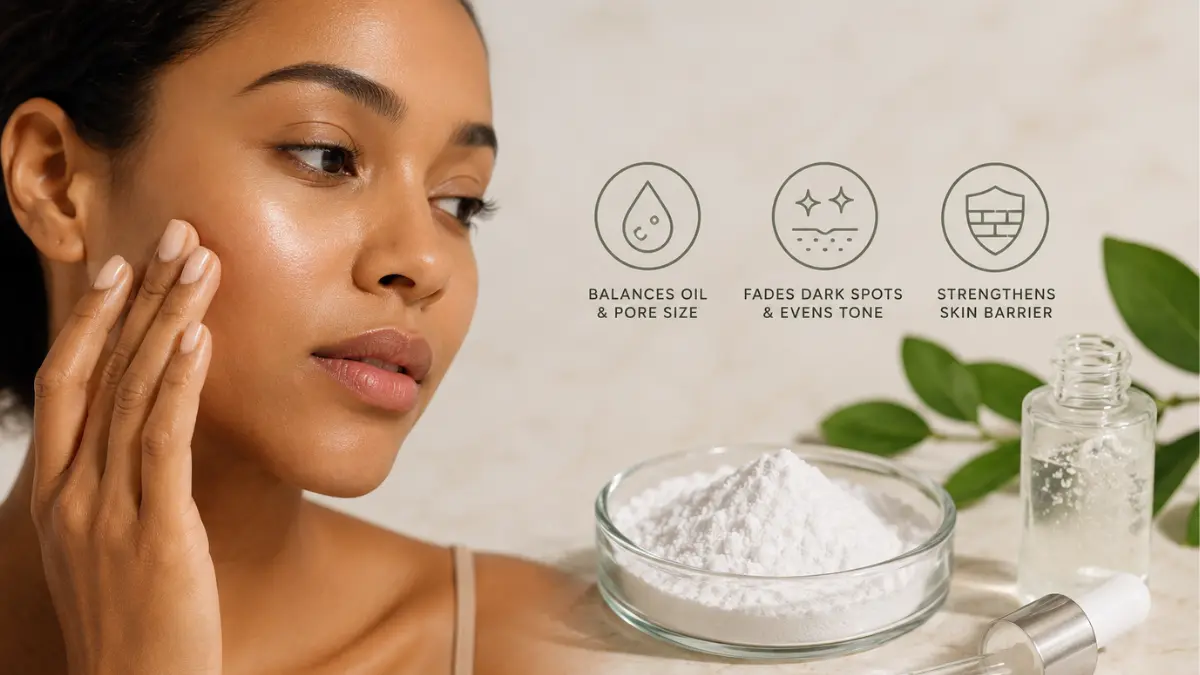
Niacinamide (vitamin B3, sometimes labelled nicotinamide on an ingredients list) is one of the rare skincare actives where the marketing and the actual clinical research mostly line up. It calms excess oil, fades dark spots, and supports a stronger skin barrier, and there’s real trial data behind all three claims, not just brand copy. Here’s what the studies actually found, and how to use it without wasting product.
What Is Niacinamide?
Niacinamide (also called nicotinamide) is a stable, water-soluble form of vitamin B3. Unlike some ingredients, such as vitamin C, it doesn’t break down easily when exposed to light or air. It’s also easy to combine with other skincare ingredients, which is why it’s found in so many products, from oil-control serums and brightening treatments to moisturisers designed to support the skin barrier.
It doesn’t work through one single mechanism. Depending on concentration and what it’s paired with, niacinamide can regulate sebum (oil) production, interrupt how pigment is transferred to the skin’s surface, and support ceramide (the fats that hold your skin barrier together) synthesis. That range is exactly why it shows up in so many different product types.
Our Pigmentation Night Serum pairs Niacinamide with Licorice Root Extract, Alpha Arbutin, Sodium Ascorbyl Phosphate, Retinyl Palmitate and Turmeric Extract
What the Research Actually Shows
Oil Control
A study of Japanese and Caucasian test groups found that topical 2% niacinamide measurably reduced facial sebum output after several weeks of use, compared to a vehicle control (Draelos et al., 2006, Journal of Cosmetic and Laser Therapy). That’s a genuinely useful data point if you deal with midday shine or enlarged pores — it’s not just anecdotal.
Hyperpigmentation and Uneven Tone
Niacinamide’s brightening reputation comes from its effect on melanosome transfer — essentially, it interrupts the handoff of pigment from melanin-producing cells to the surface skin cells that make dark spots visible. A study in the British Journal of Dermatology found niacinamide inhibited melanosome transfer by 35–68% in a laboratory coculture model, with corresponding lightening of hyperpigmented spots in a facial study on Japanese women.
A separate 12-week trial found that 5% niacinamide measurably reduced hyperpigmented spots, redness, and fine lines compared to a vehicle-only control (Bissett, Oblong & Berge, 2005, Dermatologic Surgery) — one of the better-designed studies behind the “does niacinamide actually fade dark spots” question.
Not sure which pigmentation product fits your concern? See our Pigmentation, Melasma & Chubaba solutions →
Want to compare Niacinamide with Alpha Arbutin, Tranexamic Acid, 4-Butylresorcinol, Kojic Acid Dipalmitate and other brighteners? Read Best Skin Brightening Ingredients: 10 Potent Actives Compared →
Barrier Support and Aging
The same Bissett trial also tracked skin texture and elasticity over the 12 weeks alongside the pigmentation results. Separate mechanistic and clinical research supports niacinamide’s role in skin-barrier function. These are related benefits, but they are not the same endpoint, which is why niacinamide sits in both the brightening and the anti-aging conversation.
Niacinamide vs Hydroquinone for Melasma
If you’ve been told hydroquinone is the only serious option for melasma, it’s worth knowing niacinamide has actually been tested against it head-to-head. In a double-blind trial, 27 melasma patients used 4% niacinamide on one side of the face and 4% hydroquinone on the other for eight weeks. Both sides improved, with 44% of patients rating niacinamide “good to excellent” versus 55% for hydroquinone — a real but modest gap — while niacinamide caused fewer side effects (18% versus 29%) (Navarrete-Solís et al., 2011, Dermatology Research and Practice). It’s not a straight replacement, but it’s a genuinely gentler option worth knowing about if hydroquinone has irritated you before.
Can You Mix Vitamin B3 With Other Actives?
Short answer: yes, with almost everything, which is part of why it’s such a workhorse ingredient. We’ve covered the specific vitamin C question in more depth already — read Can You Mix Vitamin C and Niacinamide? if that’s the pairing you’re planning. It also combines well with Alpha Arbutin, retinoids, and peptides, which is why you’ll often see it anchoring a brightening or barrier-repair serum rather than standing alone.
Who Should Use It
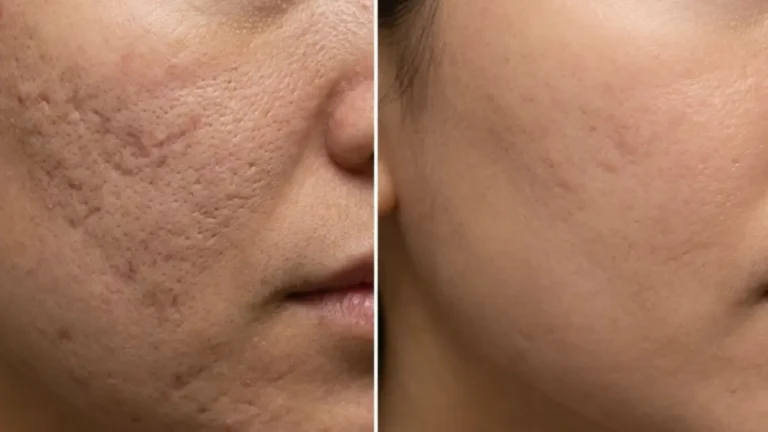
Niacinamide’s low irritation profile is a big part of its appeal — it’s generally well tolerated across skin types, including sensitive and reactive skin that can’t handle stronger actives. It’s a particularly good fit if you’re dealing with any combination of: visible pores or midday oiliness, post-acne marks or general uneven tone, or a compromised barrier that needs calming rather than more exfoliation.
How Much Vitamin B3 You Actually Need
This is the part most product labels don’t explain: niacinamide is typically formulated at 2% to 5% of a serum. That range isn’t arbitrary — it’s the concentration used in the actual clinical trials above, and going meaningfully higher doesn’t add benefit, it just raises the (still fairly low) chance of transient flushing or tingling in sensitive skin.
For a first DIY batch, start at 2% and build up from there once you know how your skin responds. If you want a tested starting formula rather than guessing ratios, our DIY Serums for Pigmentation & Brightening guide shows you how to pair 5% Niacinamide + 2% Alpha Arbutin.
What Does Niacinamide Actually Do for Skin? FAQ
Does it really work?
Yes, for oil control, uneven tone, and barrier support specifically, those three claims have real clinical trial data behind them, cited above. It’s not a cure for deep-set melasma or a replacement for sunscreen, but it’s one of the better-evidenced multitaskers in skincare.
How long does it take to work?
The trials above saw measurable changes at 4 weeks (sebum) and 8–12 weeks (pigmentation, texture) of consistent, twice-daily use. Skincare actives need that runway, don’t judge it at the two-week mark.
Can you use it every day?
Yes. Niacinamide can be used daily in many finished skincare products because of its low irritation profile. Whether you use it once or twice a day depends on the complete formula, the rest of your routine and your skin’s tolerance.
Does it help with acne?
Indirectly — by reducing sebum production and calming inflammation, it can support an acne routine, but it is not a substitute for established acne actives such as salicylic acid or benzoyl peroxide.
What percentage of niacinamide is best?
2% to 5%, matching the concentrations used in the clinical trials referenced above. 2–5% has a useful clinical evidence base for several cosmetic benefits and is a sensible range for many formulations. There is no need to assume a 10% product is automatically twice as effective as a 5% product.
Ready to build it into a routine rather than guess at ratios? Shop Niacinamide Powder or start with the DIY Serums for Pigmentation & Brightening guide for a tested formula.
Explore the pigmentation & melasma guide
Melasma vs HyperpigmentationEpidermal vs Dermal — how deep?Why it's getting darkerHow long does it take to fade?
How to remove ChubabaWhat to Use for HyperpigmentationTreatment for dark skinTreat melasma without hydroquinoneDoes microneedling help?
Pigmentation, Melasma & Chubaba SolutionsFind your routine by concernChubaba Dark Patch CorrectorMelanin BreakerGuide: Why is it getting darker?
Best Skin Brightening Ingredients10 actives compared · the hubAlpha Arbutin4-ButylresorcinolKojic Acid DipalmitateMulberry Root Extract
NiacinamideYou are hereVitamin C: SAP vs THDMix Vitamin C & Niacinamide?L-GlutathioneTremella (hydration)