
Is Body Acne Different from Face Acne
Body acne is not face acne that wandered south. The skin on your back and chest is thicker, its oil glands are larger and more numerous, and it spends its day trapped under fabric, friction and sweat – which is why the routine that cleared your face often does nothing for your back. And there is a further complication: what people treat as body acne may not be acne at all.
If you have been throwing face products at your back for months and wondering why nothing shifts, there is a good chance you are treating the wrong condition with the wrong tools.
Shop the Salicylic Acid Body Acne Spray
How common is Body Acne?
Far more common than the silence around it suggests. Research presented by Del Rosso and colleagues at the American Academy of Dermatology found that roughly half of people with facial acne also have truncal acne — acne on the trunk, meaning back and chest — with about 61% affected on the back and 45% on the chest.
That is half the global acne population, yet standard skincare routines almost exclusively target the face, leaving millions of people feeling isolated and assuming their body breakouts are an anomaly, when they are actually the norm.
Before anything else: is it actually acne?
This is the single most useful thing in this article, so I am putting it before the treatment advice rather than burying it in an FAQ.
There is a condition called Malassezia folliculitis — an infection of the hair follicle caused by a yeast that lives naturally on everybody’s skin — and it looks so much like truncal acne that it is routinely mistaken for it. In a case series discussed in a 2025 review in Journal of Fungi, 65% of patients with Malassezia folliculitis had previously been misdiagnosed and treated for acne vulgaris – with topical or oral antibiotics or standard acne treatments.
Two thirds. Treated for the wrong condition, sometimes with antibiotics, which can make a yeast overgrowth worse rather than better.
How to tell them apart, in plain terms:

The Itch Factor: Real acne hurts or feels sore. Fungal acne (Malassezia folliculitis) itches, and that persistent itch is your biggest clue.
The “Copy-Paste” Look: Fungal acne is uniform. It consists of small, identical bumps and pus-filled spots that look exactly the same. Real acne is a mixed bag, showing blackheads, whiteheads, and deep painful bumps all at different stages of development.
Zero Blackheads: Fungal acne does not form traditional clogged pores. If you cannot find a single blackhead or whitehead in the breakout area, be suspicious.
The Antibiotic Test: If topical or oral acne antibiotics did absolutely nothing—or actively made the breakouts worse—it is a strong signal of fungal involvement.
The Weather Trigger: Fungal acne thrives on sweat, humidity, and tight clothing. It flares up rapidly after gym sessions or sitting in damp clothes.
If that list describes you, see a doctor rather than buying another acne product. It is treated as a fungal condition, not an acne one, and the right treatment works quickly.
Why body skin needs different tactics
Assuming it is genuinely acne, here is why your face routine underperforms on your back.
The skin is thicker. The stratum corneum on your back is substantially more robust than on your face. Actives take longer to work through it and generally need to be more persistent, not gentler.
The glands are bigger. Your back and chest carry a high density of large sebaceous glands. More oil, deeper follicles, more raw material for blockage – which is why body acne skews toward larger, deeper, slower lesions rather than surface bumps.
It is under constant mechanical stress. Bra straps, backpacks, gym benches, car seats, tight collars. Friction plus occlusion plus sweat produces what is often called acne mechanica — and no serum overcomes a mechanical cause. If you sit in damp gym clothes for an hour after training, that hour is doing more to your back than any product will undo.
You cannot reach it. A genuinely underrated factor. Compliance collapses when a treatment requires contortion. This is the entire argument for a spray format over a cream: not marketing, just the recognition that the treatment you can actually apply to the middle of your own back twice a day is the one that works.
What actually works
Salicylic acid is the logical first active for body acne specifically. It is a beta hydroxy acid, which makes it lipophilic — oil-loving — so it dissolves into sebum and works inside the follicle rather than only on the surface. On oil-heavy body skin with deep, congested follicles, that is exactly what you need. It is also anti-inflammatory, which helps with the sore, angry lesions the back specialises in.
Get your Salicylic Acid Body Acne Spray
Benzoyl peroxide is the other proven option, and it works differently — it kills C. acnes bacteria directly. It is effective and it can bleach fabric mercilessly. Every white towel, pillowcase and t-shirt you own is at risk. We compared the two properly in Salicylic Acid vs Benzoyl Peroxide: The SA Guide.
Behavioural changes that genuinely matter: shower promptly after sweating rather than an hour later; wash body-acne areas last so conditioner and cleanser residue rinses off your back rather than sitting on it; change gym clothes immediately; wash bedding and gym gear more often than feels necessary; loosen anything that straps tightly against affected skin.
None of that is glamorous. All of it outperforms an expensive product used inconsistently on skin that stays damp and covered.
The part that outlasts the acne
The lesions clear. The dark marks stay – and on deeper skin tones, post-inflammatory hyperpigmentation on the back and chest routinely bothers people for far longer than the breakouts ever did.
Prevention beats correction here, which is a boring thing to hear and true anyway: treat early, do not pick, and keep affected areas out of direct sun while they are healing. For marks already there, the same actives that work on facial pigmentation work on the body – they just need patience, because you are working through thicker skin. Our guide to Getting Rid of Hyperpigmentation from Acne covers the approach.
For the body specifically, we formulated Body Brightener for exactly these marks, and Retinol Smoothing Body Cream for the tone and texture changes that linger after the breakouts clear. Glow Up Body Exfoliator helps both work better — two or three times a week, not daily.
Frequently asked questions
What causes body acne on the back and chest?
The same process as facial acne, oil, dead skin cells and bacteria blocking follicles – but amplified by larger, denser oil glands and made worse by friction, sweat and occlusion from clothing. Thicker skin means lesions tend to be deeper and slower to clear.
Why won’t my body acne go away?
Three common reasons: it may not be acne (Malassezia folliculitis is frequently misdiagnosed as acne, and itches rather than hurts); a mechanical cause such as straps, gym kit or damp clothing may be undoing your treatment daily; or you may be using facial-strength products on far thicker skin.
Is salicylic acid or benzoyl peroxide better for body acne?
Salicylic acid is oil-soluble and works inside oil-clogged follicles, which suits the deep congestion typical of body acne. Benzoyl peroxide kills acne bacteria directly and is also effective — but it can bleach fabric, which matters more on the body than on the face.
Does a body acne spray actually work better than a cream?
For the back, generally yes – because you can reach the middle of your own back with it. The most effective treatment is the one you will genuinely apply twice a day without help.
Can gym clothes cause back acne?
They can worsen it considerably. Friction plus occlusion plus sweat is a recognised trigger, sometimes called acne mechanica. Changing out of damp kit straight after training is one of the highest-return habits available to you.
How long does body acne take to clear?
Expect eight to twelve weeks of consistent treatment before judging results, and longer than facial acne – thicker skin and deeper follicles simply take more time. If nothing has shifted by then, revisit whether it is acne at all.
The bottom line
Half the people with facial acne have it on their body too, and almost nobody writes for them. Confirm you are treating acne and not a yeast folliculitis, fix the mechanical causes you are quietly recreating every day, and use an active that suits oily, thick, hard-to-reach skin – applied in a format you can actually reach with.
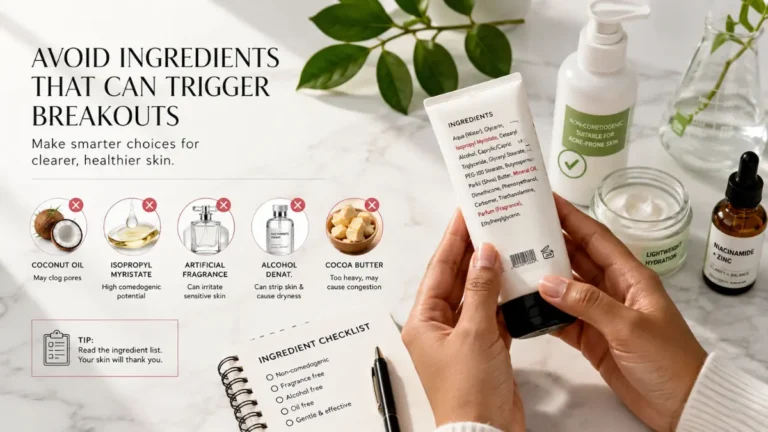
Our Salicylic Acid Body Acne Spray was formulated for exactly that problem — the right active for oil-clogged follicles, in a format that reaches the middle of your back. And before you buy anything else, it is worth checking our list of the worst ingredients for acne-prone skin, because body products are some of the worst offenders.