
What Ceramides Actually Do for Your Skin Barrier
When it comes to ceramides for skin, the word has become shorthand for “this will fix your barrier”, a big promise for an ingredient most people can’t define. So let’s do what we always do here: strip out the marketing and look at what ceramides genuinely are, what the research says they do, and when they’re actually worth your money.
What ceramides actually are
Your outermost layer of skin, the stratum corneum, is often described as a “brick-and-mortar” wall. The dead, flattened skin cells (corneocytes) are the bricks. The mortar holding them together is a matrix of fats, and ceramides are its single biggest component: roughly 50% of that lipid matrix is ceramides, alongside about 25% cholesterol and 10–20% free fatty acids. That mortar is what stops water evaporating out of your skin and stops irritants getting in, so ceramides aren’t a trendy “extra,” they’re a core structural part of the wall itself. If yours already feels tight, depleted or reactive, you can start rebuilding it with our Ceramide Barrier Support Cream.
What Ceramides for Skin actually does
One job, done well: they help seal moisture in. When the ceramide-rich mortar is intact, water loss through the skin (dermatologists call it transepidermal water loss, or TEWL) stays low, and skin feels comfortable, plump and calm. When that mortar is depleted, water escapes, and skin gets tight, flaky, reactive and “dehydrated no matter what I put on it”.
This isn’t theoretical. In people with atopic dermatitis and chronically dry skin, researchers have repeatedly measured lower ceramide levels in the stratum corneum compared with healthy skin. A later study found that specific ceramides were reduced in atopic skin, and that the drop correlated directly with how impaired the barrier was on TEWL testing . In other words: less ceramide, weaker barrier, more water loss.
Do ceramides for skin actually work when applied topically?
Short answer: yes, and the reason is simple. Because your barrier is partly built from ceramides, topping them up gives your skin back the exact material it’s short of, rather than adding a foreign “active.” In a 2025 British Journal of Dermatology study, topically supplementing skin-identical lipids including Ceramide NP raised the skin’s own Ceramide NP levels by 24%, lowered water loss, and left skin measurably less reactive to an irritant. That’s the whole logic of a good ceramide product: you’re replacing something your skin already makes and has simply run low on, and Ceramide NP, the same form used in that study, is exactly what you’ll find in our barrier cream.
A quick note on the names
Ingredient lists say Ceramide NP (the modern INCI name for what older studies called ceramide 3), Ceramide AP, Ceramide EOP, and so on. The letters simply describe the structure, you don’t need to memorise them. Ceramide NP is the most common one in skincare, one of the types shown to be depleted in compromised skin, and the one we use in our barrier cream. If you see it on a label, you’re getting the real thing.
Ceramides work best in good company
In a routine, ceramides pair beautifully with the ingredients that hydrate, soothe and support the barrier alongside them. Humectants like hyaluronic acid and panthenol (provitamin B5) pull in and hold water; niacinamide helps skin make more of its own ceramides and calms redness; allantoin and colloidal oats soothe reactive skin; and antioxidants like ubiquinol (CoQ10) and vitamin E help protect the lipids from breaking down. It’s no coincidence our Ceramide Barrier Support Cream is built around exactly this line-up, so the ceramides arrive with everything that helps them do their job.
Who actually needs ceramides for skin
Ceramides earn their place if you:
- have dry, tight, flaky skin that moisturiser never quite settles;
- are using retinoids or acids (they naturally speed up turnover and can thin the barrier while your skin adjusts);
- have over-exfoliated, or have a stinging, reactive “compromised” barrier;
- or live somewhere the environment works against you, think dry climates, long winters and constant air-conditioning, all of which pull moisture out of skin.
If your barrier is already healthy and comfortable, ceramides won’t transform anything, they maintain a wall that’s already standing. That’s not a knock; it’s just realistic. And to be clear about what they don’t do: ceramides are a barrier ingredient, not a brightening one. They won’t fade dark spots or melasma — that’s a job for our brightening actives. If you’re unsure whether you’re dealing with melasma or another type of pigmentation, read our guide on Melasma vs Hyperpigmentation.
How to use them, and where they fit
Ceramides go in your moisturiser step, morning and/or night, after any water-based serums. They layer happily under sunscreen and play well with almost everything — including the actives that stress your barrier in the first place. If you use retinol or acids, keep a ceramide product on hand as your safety net: it supports the barrier while those actives do the resurfacing work.
For everyday barrier support, the simplest route is a ready-made moisturiser like our Ceramide Barrier Support Cream. And if you make your own serums, toners or creams, our water-soluble Ceramide 2.5% liquid dissolves straight into water-based formulas, so you can add ceramides at the strength you want.
A closer look at our Ceramide Barrier Support Cream
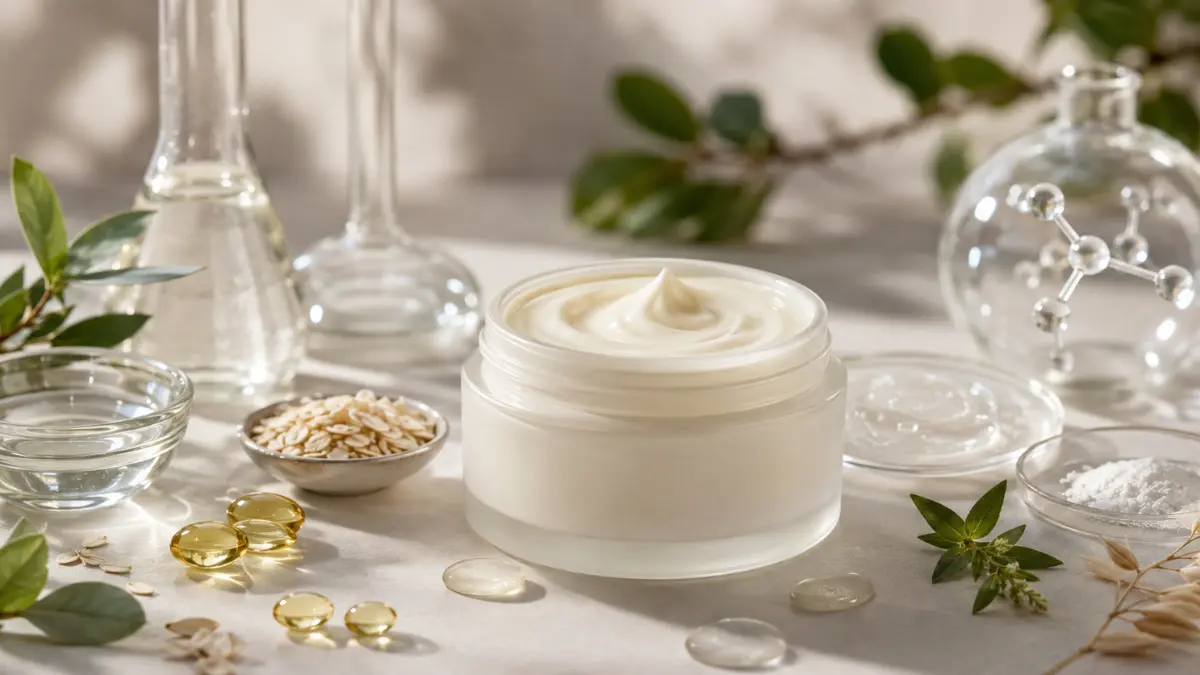
If you’d rather not formulate from scratch, our Ceramide Barrier Support Cream is a professional-grade, restorative moisturiser made specifically for sensitive, dehydrated and compromised skin. At its heart is Ceramide NP, the barrier lipid this whole article is about, supported by a considered cast of partners: niacinamide and panthenol to calm and hydrate, hyaluronic acid and glycerine to draw in water, urea and allantoin to soften and soothe, colloidal oats for reactive skin, shea butter and grapeseed oil for nourishment, and ubiquinol (CoQ10) with vitamin E as antioxidants. It’s what you reach for when skin feels tight, stings with actives, or just won’t stay comfortable — a quiet, everyday barrier rebuild rather than a one-note ceramide cream.
The honest bottom line
Ceramides for skin aren’t hype. They’re a genuine, well-researched structural ingredient your barrier is literally built from, and topping them up makes real sense for dry, sensitised or actives-using skin. They’re not a brightening miracle and they won’t resurface anything, but as the quiet workhorse that keeps your barrier strong and comfortable, they’re one of the most reliable things you can put on your face. If you want to feel the difference, our Ceramide Barrier Support Cream is the easiest place to start.
Ceramides for Skin FAQ
Can I use ceramides for skin every day?
Yes. Ceramides for skin are gentle and structural rather than active, so daily use, morning and night, is completely fine. In fact, consistent use is where they do their best work.
Can I use ceramides for skin with retinol or vitamin C?
Absolutely. One of the biggest benefits of ceramides for skin is that they help offset the barrier stress caused by retinoids, exfoliating acids and even vitamin C, making these actives easier for your skin to tolerate.
Are ceramides for skin good for oily or acne-prone skin?
Yes. Ceramides for skin are suitable for oily and acne-prone skin because a weakened skin barrier can actually contribute to excess oil production and irritation. Choose a lightweight, non-comedogenic formula rather than a heavy cream.
Are synthetic ceramides for skin as good as “natural” ones?
Yes. Most ceramides for skin used in skincare are lab-made to closely match the ceramides naturally found in your skin. What matters most is that they’re included in a well-formulated product alongside hydrating and barrier-supporting ingredients.
How long do ceramides for skin take to work?
With consistent use, ceramides for skin can improve barrier comfort within a few days, while a more compromised skin barrier may take several weeks to rebuild. Ceramides are designed to support long-term skin health rather than deliver overnight results.