
What to Use for Hyperpigmentation
What to Use for Hyperpigmentation: Ingredients That Actually Work
If you’ve spent any amount of time researching hyperpigmentation, you’ve probably been told to use Vitamin C, hydroquinone, acids, retinol, niacinamide, tranexamic acid, alpha arbutin, kojic acid, or a dozen other ingredients.
The problem?
Most people are using the wrong products, at the wrong time, on the wrong skin. After years of investigating skincare claims, listening to skincare experts, analysing ingredient research, and reviewing hundreds of pigmentation journeys through ShaRique Skin, I’ve discovered a pattern that appears again and again: People become obsessed with removing pigment while completely ignoring why their skin is producing excess pigment in the first place. But there’s another question that almost nobody is asking: What condition is your skin barrier in?
Want to skip the trial and error? Build your Pigmentation, Melasma or Chubaba routine according to your skin, budget and goals →
Can your skin actually tolerate the acids, retinoids, brightening ingredients, peels, and treatments you’re layering onto it, or has the pursuit of fading dark spots become so aggressive that you’ve compromised the very barrier designed to protect your skin?
It’s a question many people only start asking when their pigmentation becomes darker, their skin becomes reactive, and the products that once seemed promising stop delivering results.
If your pigmentation seems to be getting darker despite your efforts, your skin barrier could be part of the story. Download Why Is My Melasma or Dark Spots Getting Darker? and learn why this often-overlooked connection matters.
Before You Treat Hyperpigmentation, Understand What You’re Treating
Hyperpigmentation is not a skin condition. It is a response. Your skin produces melanin as a protective mechanism. When that process becomes overactive, pigment begins accumulating in certain areas, creating dark patches, uneven tone, melasma, sun damage, or post-inflammatory pigmentation.
The trigger could be:
- Sun exposure
- Hormonal changes
- Acne
- Inflammation
- Sun exposure and, in melasma, visible light
- Irritation or inflammation associated with a damaged skin barrier
- Aggressive skincare treatments
Not a day goes by where someone does not send our company’s social media channels a private message or comment saying they have spent thousands of rands on skincare products for pigmentation, and nothing has worked. And by the looks of things, at the time of writing this article, many people still do not seem to want to understand the causes or what they can actually do. Instead, there is a strong expectation that a single product will deliver a miracle and remove hyperpigmentation overnight. They often come looking for a quick fix, while resisting the deeper conversation about skin behaviour, triggers, and barrier health.
What is consistently being overlooked is this: until you understand your skin, and begin to reduce or “curb” the triggers driving pigmentation in the first place, you may keep working against the results you are trying to achieve.
Purchase your premium brightening actives from Ingredients and download the DIY Serums for Pigmentation & Brightening guide to begin formulating your own pigmentation and brightening serums.
Why Most Hyperpigmentation Products Fail
The beauty industry often presents hyperpigmentation as a straightforward concern: use a brightening serum consistently and, over time, the appearance of dark spots or patches may improve. In reality, it is rarely that simple.
Many pigmentation products are designed primarily to reduce melanin production or help fade existing pigment. While these mechanisms can be helpful, they do not always address the broader context in which pigmentation develops. Factors such as inflammation, skin barrier dysfunction, environmental exposure, heat, hormones, and ongoing skin stress can all influence how pigmentation behaves and how persistent it becomes.
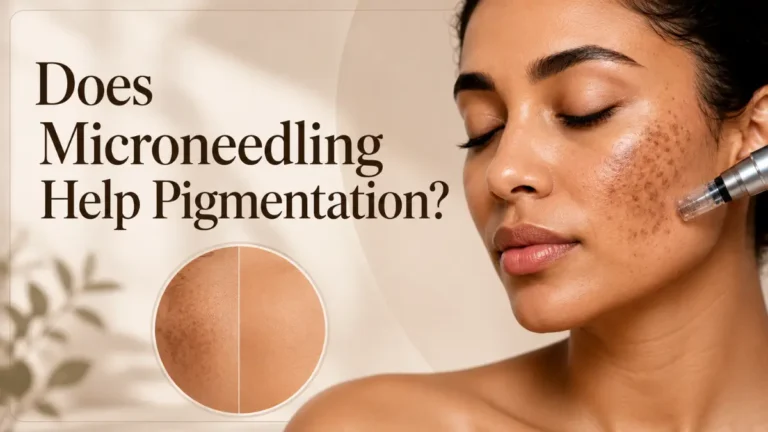
In fact, some people become trapped in a cycle of over-exfoliation. They use acids. Then stronger acids. Then peels. Then microneedling. Then stronger peels. Meanwhile their skin becomes increasingly irritated. The result? More inflammation. More melanocyte activity. More pigmentation. Not less.
The Multi-Pathway Skin Brightening Ingredient System to Look For

To help influence the processes involved in excess pigment formation, you need to look for ingredients that act across multiple stages of the melanogenesis pathway. This is the approach used by skincare formulators and experts who understand that hyperpigmentation is not driven by a single mechanism, but by a cascade of biological events involving enzyme activity, inflammation, and skin barrier response.
In professional formulation science, the focus is not on a single “miracle” ingredient, but on combining actives that target different points in the pigmentation process, while still supporting overall skin tolerance and barrier function. This is the standard we follow in our own pigmentation formulations at ShaRique Skin.
Active ingredients, such as the ones listed below interact with distinct mechanisms involved in melanin production, melanosome transfer, and visible expression:
- Tranexamic Acid: Inhibits plasminogen activation, reducing the inflammatory signaling that triggers melanocyte activity.
- Alpha Arbutin: A potent tyrosinase inhibitor that regulates melanin synthesis at the source.
- 4-Butylresorcinol: Targets tyrosinase and TRP-1 to effectively reduce pigment density.
- Phenylethyl Resorcinol: Often supplied in stabilised cosmetic systems such as SymWhite® 377, it is a potent tyrosinase-targeting cosmetic brightener with antioxidant properties.
- Kojic Dipalmitate: A stable kojic-acid derivative used in cosmetic formulations to support a brighter, more even skin tone.
- Hydroxypinacolone Retinoate: A cosmetic retinoid used to support skin renewal and improve the appearance of uneven tone.
- Licorice Root Extract: Contains glabridin to inhibit pigment-inducing enzymes and soothe inflammation.
- Turmeric Extract: Calms the inflammatory response often associated with post-inflammatory hyperpigmentation.
- Tetrahexyldecyl Ascorbate: A stable, oil-soluble Vitamin C derivative that protects against environmental triggers and brightens the skin.
- Azelaic Acid: For people dealing with both acne and pigmentation, azelaic acid can be extremely valuable. It helps address inflammation while supporting a more even skin tone. This dual action makes it a useful option for post-acne marks and recurring breakouts.
Looking for a potent pigment corrector containing 4-Butylresorcinol, Tranexamic Acid, Tetrahexyldecyl Ascorbate, and Phenylethyl Resorcinol? Melanin Breaker combines advanced actives selected for their ability to target multiple stages of pigmentation development, alongside barrier-supporting and antioxidant ingredients designed to maintain skin stability during treatment.
What to Use for Hyperpigmentation: A Multi-Pathway Approach
Oxidative stress plays a major role in persistent pigmentation, particularly in sun-exposed and inflammation-prone skin. To support this, formulations include:
- Tetrahexyldecyl Ascorbate (Vitamin C)
- Tocopherol (Vitamin E)
- Ferulic Acid
These ingredients help reduce oxidative load in the skin environment, which can contribute to pigment instability over time.
Barrier Integrity & Hydration Pathway
This is where my perspective often differs from conventional pigmentation advice. The most common mistake I see is the exclusive focus on pigment correction while overlooking skin barrier health.
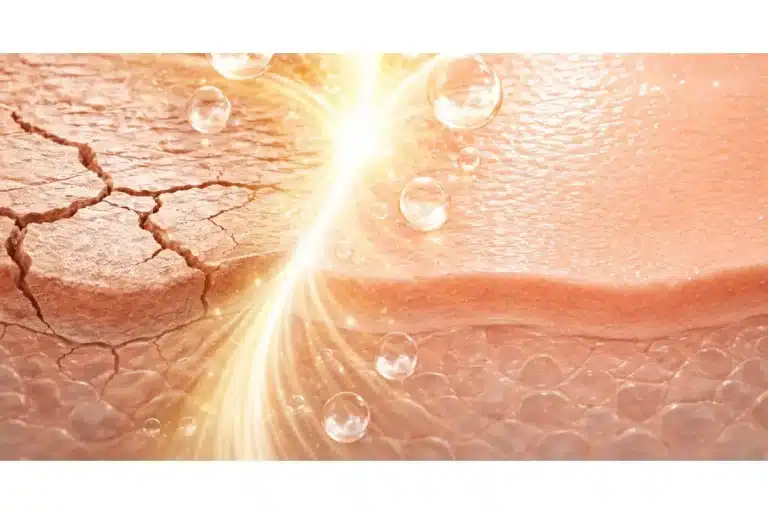
If the skin is consistently inflamed, irritated, dehydrated, or under stress, the pigmentation journey becomes significantly more complex. The skin barrier is the body’s first line of defence, and when it is compromised, inflammation increases. When inflammation increases, pigmentation often follows. This is especially relevant in melasma, where the skin is already highly reactive to internal and external triggers.
Many people are often surprised to learn that practices such as excessive exfoliation, harsh cleansing, overuse of active ingredients, and repeated in-clinic treatments may actually contribute to the persistence of pigmentation rather than its resolution.
A compromised skin barrier is therefore one of the most overlooked factors in hyperpigmentation management. When the barrier function is weakened, the skin becomes more reactive, less resilient, and less able to tolerate active treatments – all of which can reinforce the cycle of inflammation-driven pigmentation.
For this reason, barrier support should be considered a non-negotiable foundation in any pigmentation routine. In some formulations, these ingredients are incorporated alongside brightening actives. However, in more sensitised or inflammation-prone skin, a dedicated barrier-repair step may be required either before or alongside pigmentation treatment to properly restore function and improve tolerance.
Key barrier-supporting ingredients include:
- Ceramide NP
- Cholesterol
- Skin-identical Fatty Acids
- Glycerin
- Propanediol
- Shea Butter
- Squalane
- Jojoba Oil
- Caprylic/Capric Triglyceride
- Colloidal Oatmeal
- Panthenol (Pro-Vitamin B5)
- Allantoin
- Beta-Glucan
- Hyaluronic Acid
- Sodium PCA
These ingredients work synergistically to restore hydration, reinforce lipid structure, and support the skin’s natural protective function. Together, they improve tolerance to active treatments while helping reduce inflammation-driven triggers that can contribute to persistent pigmentation.
Ultimately, while barrier-supporting ingredients can be included within pigmentation formulations, they are not always sufficient on their own. In many cases, a dedicated barrier-repair product is necessary to properly reset skin function and support long-term pigment control.
If you are serious about restoring skin function before active treatment, take a look at our Barrier Repair Cream designed to support lipid recovery and reduce irritation-driven pigmentation.
Soothing & Tolerance Pathway
Because pigmentation treatments often fail due to irritation and low skin tolerance, it is essential to prioritise calming and anti-inflammatory ingredients that help the skin remain stable during active use. Key skin-calming ingredients include:
- Allantoin
- Licorice Root Extract
- Centella Asiatica (Cica)
- Panthenol (Pro-Vitamin B5)
- Bisabolol
- Beta-Glucan
- Madecassoside
- Asiaticoside
- Colloidal Oatmeal
- Aloe Vera
- Sodium PCA
These ingredients help reduce visible irritation, support the skin’s natural repair processes, and improve overall tolerance to active pigmentation treatments. By lowering reactivity and strengthening the skin’s ability to recover, they play a crucial role in maintaining consistency, which is often the deciding factor in whether pigmentation treatments succeed or fail over time.
What to Use for Hyperpigmentation – The Most Important Product: Sunscreen
No pigmentation ingredient can outwork daily UV exposure. None. You can use the most advanced pigmentation serum available, but if UV radiation continues stimulating melanin production, your progress will be limited. This is why sunscreen remains the foundation of every pigmentation routine. Not because it’s exciting. Not because it’s trendy. Because it works. Daily SPF 50 protection is one of the most effective tools available for preventing pigmentation from worsening. If you have melasma, particularly in a darker skin tone, a tinted sunscreen containing iron oxides can also help protect against visible light.
Stay Consistent
This is where most people struggle. Hyperpigmentation rarely disappears overnight. Meaningful improvement often requires weeks or months of consistency. The people who see the best results are usually not the people using the strongest products. They’re the people following the most consistent routine.
Final Thoughts on What to Use for Hyperpigmentation
If you’re wondering what to use for hyperpigmentation, the answer is not a single miracle ingredient.
Successful pigmentation management requires a combination of targeted brightening ingredients, skin barrier support, sun protection, and patience. The goal shouldn’t simply be to fade dark spots. The goal should be to understand why your skin is producing excess pigment and create an environment where healthy, balanced skin can thrive. Because when you focus only on removing pigment, you may miss the bigger story your skin is trying to tell.
Ready to choose what to use? Build your Pigmentation, Melasma or Chubaba routine →
To find out more about pigmentation read Melasma and Hyperpigmentation: Causes, Treatments, and How to Fade Dark Patches.
Explore the pigmentation & melasma guide
Melasma vs HyperpigmentationEpidermal vs Dermal — how deep?Why it's getting darkerHow long does it take to fade?
How to remove ChubabaWhat to Use for HyperpigmentationYou are hereTreatment for dark skinTreat melasma without hydroquinoneDoes microneedling help?
Pigmentation, Melasma & Chubaba SolutionsFind your routine by concernChubaba Dark Patch CorrectorMelanin BreakerGuide: Why is it getting darker?
Best Skin Brightening Ingredients10 actives compared · the hubAlpha Arbutin4-ButylresorcinolKojic Acid DipalmitateMulberry Root Extract