Best DIY Tranexamic Acid Serum for Melasma
Best DIY Tranexamic Acid Serum for Melasma
Melasma is one of the most stubborn forms of hyperpigmentation, characterized by symmetrical, dark brown or grayish patches on the face. Unlike standard sunspots, melasma (Melasma) is deeply rooted in hormonal fluctuations, vascular activity, and chronic inflammation within the skin.
When over-the-counter commercial products fail, many people begin searching for the best DIY tranexamic acid serum for melasma and mix actives into existing products. I know this happens from conversations with people who ask whether they can simply buy actives and mix them into what they have. While researching this further, I came across websites suggesting adding a teaspoon of active into a ready-made base.
From a formulation point of view, this completely disrupts the chemical system in the formula. Simply mixing ingredients without understanding stability, pH control, and solubility can lead to irritation, barrier damage, and even worsened post-inflammatory hyperpigmentation.
Looking for the exact 5% Tranexamic Acid serum formula? Get DIY Serums for Pigmentation & Brightening — five complete pigmentation formulas with percentages and methods →
Moving from ready-made skincare to raw cosmetic formulation requires a shift from a consumer mindset to a formulation mindset.
Make your own high-performance tranexamic acid serum, by downloading our Professional DIY Serums for Pigmentation & Brightening: Step-by-Step Guide.
The Science of Tranexamic Acid for Melasma
Hydroquinone is considered the gold standard for pigmentation treatment by many dermatologists, but long-term use carries risks such as irritation and rebound pigmentation, especially in skin of colour.
Rather than bleaching the skin, tranexamic acid works by targeting the inflammatory pathway When skin is exposed to UV light, heat, or hormonal triggers, keratinocytes release inflammatory mediators. These signals activate melanocytes, which then overproduce melanin.
Tranexamic acid helps interrupt this cycle by calming inflammatory signalling and reducing communication between skin cells and pigment-producing cells, making it a key active in the best DIY tranexamic acid serum for melasma.
One of the reasons people develop melasma is chronic inflammation combined with environmental stressors such as high UV and visible-light exposure.
People living in high UV environments are at significantly greater risk because ultraviolet radiation continuously activates inflammatory pathways in the skin. Over time, this repeated stimulation keeps melanocytes in a hyper-responsive state, meaning they produce pigment more aggressively and more frequently than normal.
Tranexamic acid is suitable for many skin types, including skin of colour (Fitzpatrick skin types), where melanocytes are naturally more reactive and easily triggered by inflammation, UV and visible light, and hormonal fluctuations.
Crucial Formulation Factors for a DIY Tranexamic Acid Serum
Creating an effective DIY tranexamic acid serum for melasma requires precision. This is not a “mix and apply” situation.
1. Percentage Accuracy
Clinical studies show tranexamic acid works best between 2% and 5%. Going higher does not speed up results. Instead, it increases irritation risk, which can worsen melasma due to inflammatory rebound.
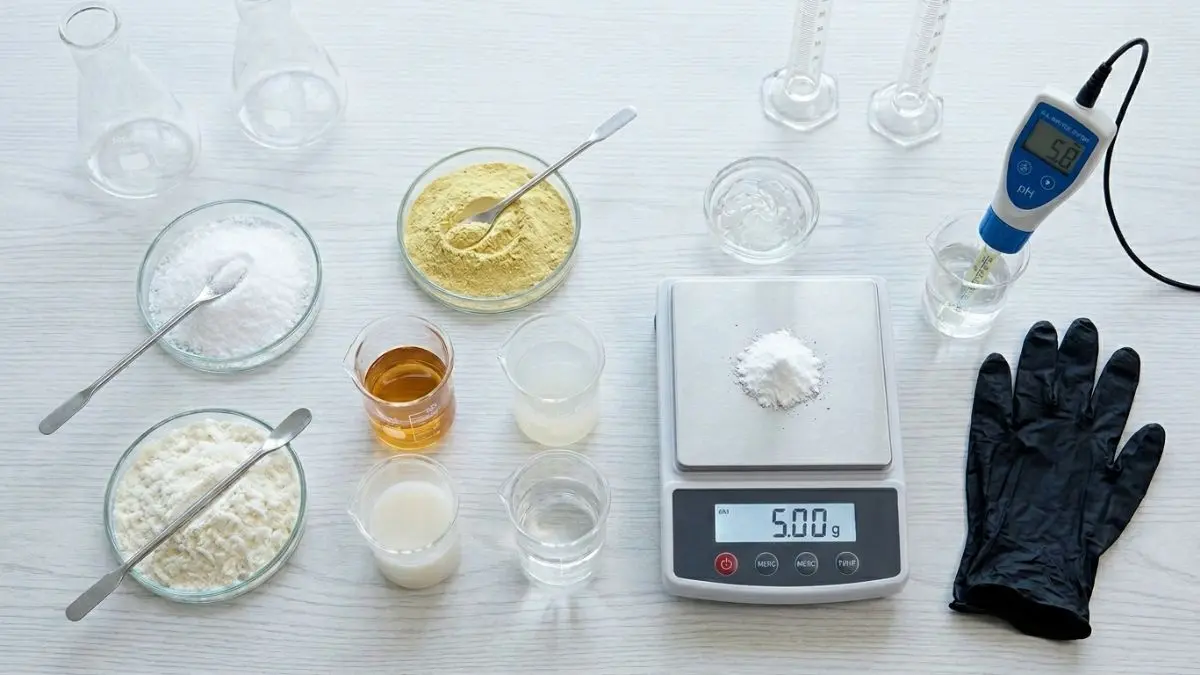
Even small measurement errors can shift the formula into an unsafe range, which is why precise digital weighing is essential.
2. The Critical pH Window
pH determines both stability and skin compatibility. For tranexamic acid serums, the ideal range is pH 5.5 to 6.5.
- Below pH 5 → increased irritation risk
- Above pH 7 → reduced stability and reduced effectiveness
Without a calibrated pH meter, you are essentially guessing formula safety.
Why the Kitchen-Sink Approach Fails in the Best DIY Tranexamic Acid Serum for Melasma
A common DIY mistake is combining multiple strong actives into one formula. That’s not how formulation works. Ingredients must be chosen based on compatibility and shared chemical environments.
The issue is not that these ingredients are bad, but that they require different pH ranges, delivery systems, and stability conditions.
Professional formulation focuses on pathway-targeted synergy rather than ingredient overload.
Don’t risk skin barrier damage and learn how to build advanced, stable formulas designed specifically for skin of color by downloading our Professional DIY Serums for Pigmentation & Brightening: Step-by-Step Guide.
Safety and Preservation (Non-Negotiable)
Any water-based serum is vulnerable to microbial growth.
Without a proper broad-spectrum preservative system, bacteria, yeast, and mold can develop long before visible signs appear.
Contrary to popular DIY claims, ingredients like vitamin E, essential oils, or grapefruit seed extract are not effective preservatives. They do not provide broad-spectrum antimicrobial protection.
A properly formulated serum must include:
- A tested broad-spectrum preservative
- pH-compatible preservation system
- Sanitised equipment and containers
Skipping this step is not just ineffective — it can actively damage the skin barrier and worsen pigmentation.
Protect Your Results: Daily Photoprotection
Daily broad-spectrum sunscreen is essential when treating melasma. Because visible light can also worsen melasma, particularly in darker skin tones, a tinted sunscreen containing iron oxides can provide useful additional visible-light protection. Tranexamic Acid can help reduce the appearance and severity of melasma, but melasma is prone to recurrence and usually needs ongoing trigger control and photoprotection.
Final Thought: From Guesswork to the Best DIY Tranexamic Acid Serum for Melasma
Melasma does not respond well to random experimentation. It requires controlled, repeatable, and scientifically structured formulation.
The difference between a failed DIY serum and an effective one is not just ingredients, it is stability, compatibility, and precision.
- To learn more about how to formulate water-based DIY pigmentation serums, especially the Best DIY Tranexamic Acid Serum for Melasma, read Best DIY Brightening Serums for Pigmentation.
- Visit Ingredients to select your ingredients.
Already know how to formulate and only need the active? Shop Tranexamic Acid (high-purity powder) →
Prefer finished skincare? See our Pigmentation, Melasma & Chubaba solutions →
Before You Begin
Prepare your work area and suitable formulation equipment as part of your formulation hygiene routine. Our 70% Isopropyl Alcohol Hygiene & Prep Solution is a convenient option for appropriate equipment and work-surface preparation. Allow treated surfaces and equipment to dry completely before weighing or mixing.
Explore the pigmentation & melasma guide
Melasma vs HyperpigmentationEpidermal vs Dermal — how deep?Why it's getting darkerHow long does it take to fade?
How to remove ChubabaWhat to Use for HyperpigmentationTreatment for dark skinTreat melasma without hydroquinoneDoes microneedling help?
Pigmentation, Melasma & Chubaba SolutionsFind your routine by concernChubaba Dark Patch CorrectorMelanin BreakerGuide: Why is it getting darker?
Best Skin Brightening Ingredients10 actives compared · the hubAlpha Arbutin4-ButylresorcinolKojic Acid DipalmitateMulberry Root Extract
NiacinamideVitamin C: SAP vs THDMix Vitamin C & Niacinamide?L-GlutathioneTremella (hydration)
Best DIY Brightening SerumsThe DIY hubDIY 5% Tranexamic Acid SerumYou are hereDIY Skin Brightening SerumGet the 5-Formula GuideShop brightening ingredients