Salicylic Acid vs Benzoyl Peroxide | The SA Guide
Salicylic acid vs benzoyl peroxide for acne is the central debate for anyone managing breakouts in South Africa. As an investigative journalist and formulator, I believe it is essential to look at the clinical facts rather than marketing claims. To choose the right treatment for our unique climate, we must understand how these two active ingredients actually function within the pore.
TABLE OF CONTENTS
The “Bleaching Effect” of Benzoyl Peroxide
Why Salicylic Acid is Often Preferred for Congestion
When Benzoyl Peroxide May Be the Better Choice
How to Fix Damaged Barrier Acne
Salicylic Acid vs Benzoyl Peroxide, The Expert Verdict: Which Should You Buy?
Salicylic Acid vs Benzoyl Peroxide for Acne: The Main Difference
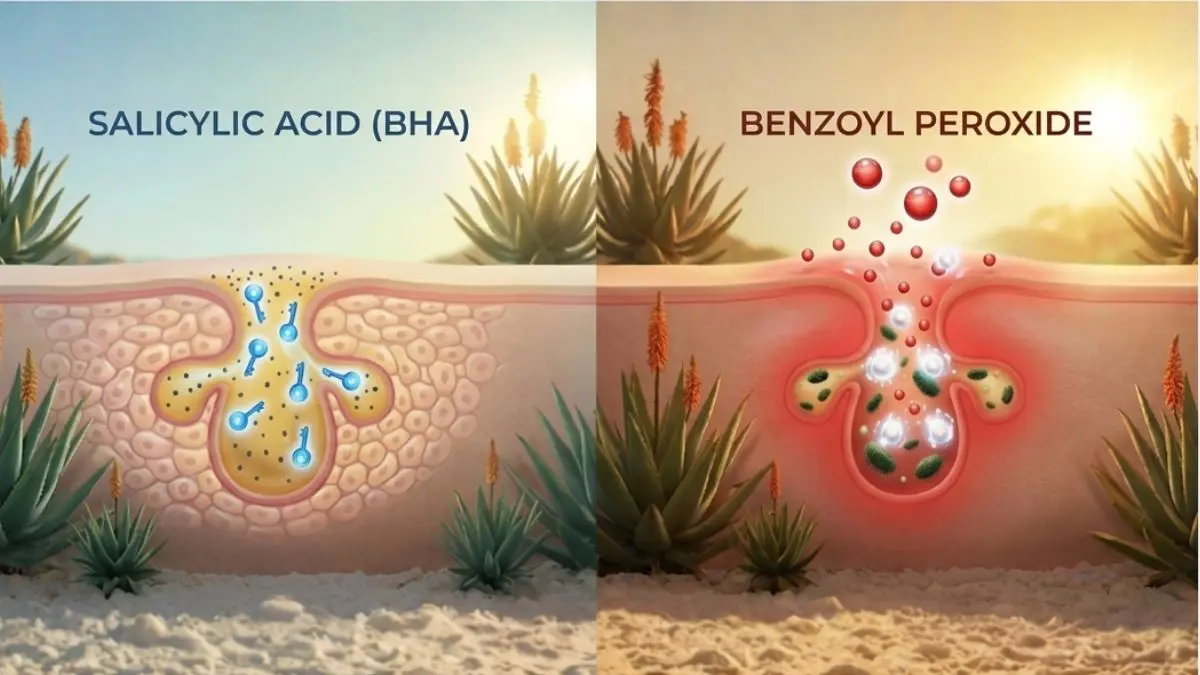
To understand which is better, we have to look at how they work. Think of Benzoyl Peroxide as an antibacterial treatment. It penetrates into the pore and releases oxygen, which kills Cutibacterium acnes bacteria and reduces inflammatory acne. It also has mild exfoliating properties that help loosen dead skin and clear blocked pores.
Salicylic Acid (BHA), on the other hand, is like a “drain cleaner” for your pores. It is oil-soluble, meaning it can move through sebum and get inside the pore to dissolve the mixture of oil and dead skin that causes a blockage in the first place. This makes it especially useful for blackheads, whiteheads, and oily congestion.
The “Bleaching Effect” of Benzoyl Peroxide
One well-documented characteristic of Benzoyl Peroxide is that it is an oxidizing agent.
According to clinical data hosted by the National Institutes of Health (NIH), this oxidation is responsible for killing acne-causing bacteria. However, the same chemical reaction can also bleach fabrics and lighten hair with repeated contact, which is why benzoyl peroxide products are known to discolor towels, clothing, and bedding.
Ruined Fabrics: If you apply a Benzoyl Peroxide cream to your back and then wear dark clothing, or lie on pillowcases, the fabric can develop orange or white bleach spots. This discoloration is permanent and widely reported because benzoyl peroxide acts as an oxidizing agent.
Hair Discoloration: If the product comes into contact with the hairline, eyebrows, or beard area, it can gradually lighten hair with repeated exposure.
Skin Irritation: Benzoyl Peroxide can also cause dryness, redness, and peeling, particularly at higher concentrations. In darker skin tones, excessive irritation may increase the risk of post-inflammatory hyperpigmentation if the skin barrier becomes compromised.
Why Salicylic Acid is Often Preferred for Congestion
Because Salicylic Acid targets blocked pores and has anti-inflammatory properties, it is often helpful for managing blackheads, whiteheads, oily skin, and “bacne” or chest breakouts. Instead of mainly targeting bacteria, it works by keeping pores clear and reducing inflammation.
For those dealing with body congestion, using a targeted Salicylic Acid Body Acne Spray allows for easy application to hard-to-reach areas like the back without the risk of bleaching clothing. For facial concerns, a professional Salicylic Acid Exfoliant works with the skin’s natural oils to keep the follicle clear.
When Benzoyl Peroxide May Be the Better Choice
Benzoyl Peroxide is often more effective for red, inflamed pimples and pus-filled breakouts. This is because it directly reduces acne-causing bacteria inside the follicle. It is a powerful tool for moderate inflammatory acne, provided the user is aware of the potential for dryness and fabric damage.
How to Fix Damaged Barrier Acne
If you have overused active ingredients and your skin feels tight, stinging, or looks shiny but flaky, you are likely dealing with a compromised barrier. This is a common result of aggressive Benzoyl Peroxide use without proper hydration.
To fix damaged barrier acne, you must temporarily “pause” all strong acids and exfoliants. Focus on a “less is more” approach:
Simplify: Switch to a gentle, non-stripping cleanser.
Repair: Apply a Barrier Repair Cream containing ceramides and humectants. These ingredients act as the “mortar” between your skin cells, sealing in moisture and keeping irritants out.
Protect: Use a mineral-based sunscreen to prevent further UV damage to the sensitized area.
Once the stinging stops and the skin feels flexible again, you can slowly reintroduce your Salicylic Acid Cleanser once or twice a week to keep pores clear without re-damaging the barrier.
Salicylic Acid vs Benzoyl Peroxide, The Expert Verdict: Which Should You Buy?
After looking at how both ingredients function, the choice depends on your specific skin concern:
Choose Benzoyl Peroxide if you have active, red, inflamed pimples that need antibacterial treatment.
Choose Salicylic Acid if you struggle with blackheads, whiteheads, oily congestion, or body acne.
Some people benefit from using both in a routine, Salicylic Acid to prevent blockages and Benzoyl Peroxide to treat inflamed breakouts. However, using both at the exact same time (layering one over the other) significantly increases the risk of redness, peeling, and a compromised skin barrier. This is especially true in the South African climate where the sun already stresses the skin.
Salicylic Acid vs Benzoyl Peroxide, Final Thoughts from the Lab
Both ingredients are clinically proven and effective. Salicylic Acid helps keep pores clear, while Benzoyl Peroxide reduces acne-causing bacteria. By choosing the correct ingredient for your skin concern, you address the root cause of breakouts while supporting long-term skin health.