Chemical Peels: What You Need to Know
I still remember my first face peel.
It was about 15 years ago. I was already going to aesthetics clinics and taking skincare seriously, but I didn’t yet have the scientific understanding of skincare that I have today.
I went in expecting a treatment that would improve my skin. What I didn’t expect was the immediate, intense sensation that followed when the peel was applied.
My face became very red. It was burning. I was told the sensation was normal and that I should tolerate it.
I didn’t agree. I insisted that the peel be removed.
My skin eventually settled and healed, but I never forgot that experience — not because I decided chemical peels were bad, but because it made me realise how important it is to understand what is being put on your skin, why it is being used, how strong it is, what you should expect to feel, and when you should speak up.
Years later, I had a very different experience. Before another peel, I told the therapist that my skin was dry and dehydrated. She didn’t simply proceed because I had arrived for a peel. She refused to peel me immediately and worked on hydration first.
The two treatments taught me very different lessons. My first taught me to listen to my skin. My second taught me that the condition of your skin matters before you peel it. And those experiences are a big part of why I became so interested in the science behind skincare.
In this guide
What Is a Chemical Peel?
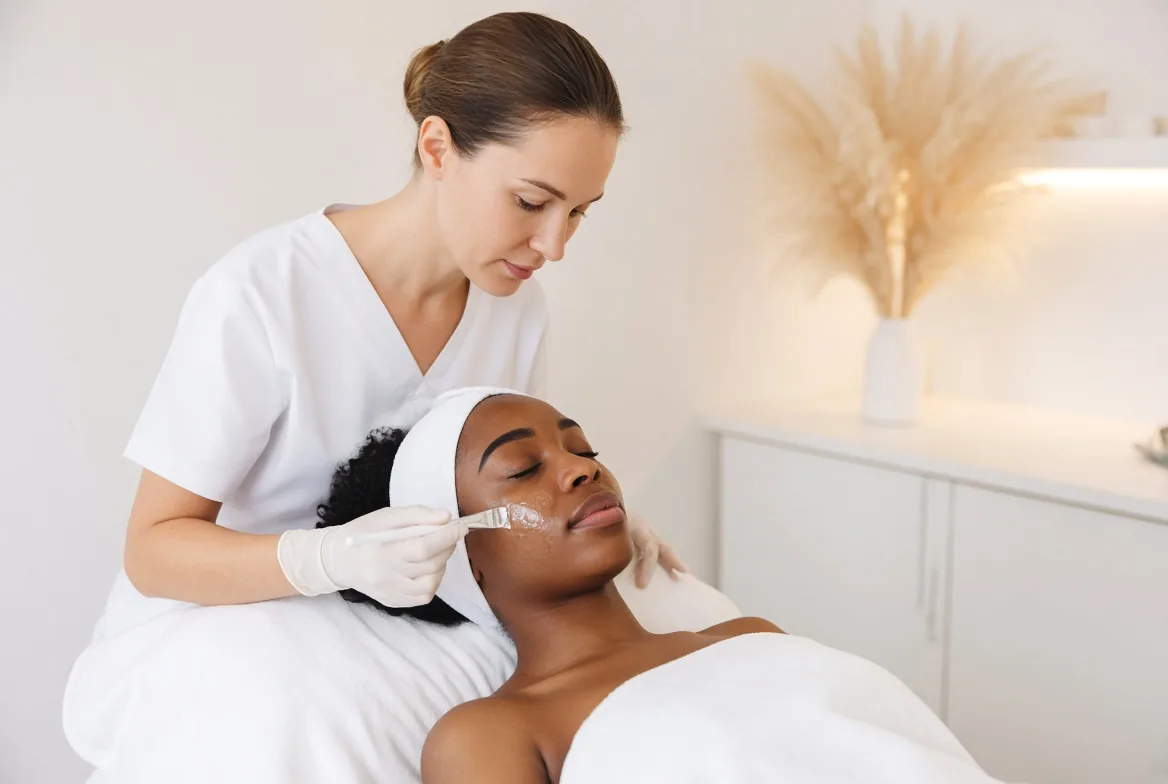
A chemical peel is a form of controlled chemical exfoliation, in which a peeling solution is applied to the skin to produce a controlled effect. Different peels can be used for different concerns, including:
- uneven pigmentation
- post-inflammatory hyperpigmentation
- melasma
- acne and some forms of acne scarring
- uneven texture and dullness
- signs of photoageing
But “chemical peel” is not one single treatment. Mandelic acid, glycolic acid, salicylic acid, lactic acid and other peeling agents all behave differently. Even within the same acid, concentration is only one part of the equation — the formulation, pH, exposure time and the condition of the skin all influence the result.
That is why I don’t think the most useful question is simply, “What percentage is the peel?” A better question is: “What is being used, how is it formulated, how will it be applied, and is my skin ready for it?”
Not sure which peel is which?
Explore our professional face peel range — lactic, glycolic, mandelic and mixed-acid — each explained in plain language so you can match the acid to your concern.
Why Skin Condition Matters Before a Peel
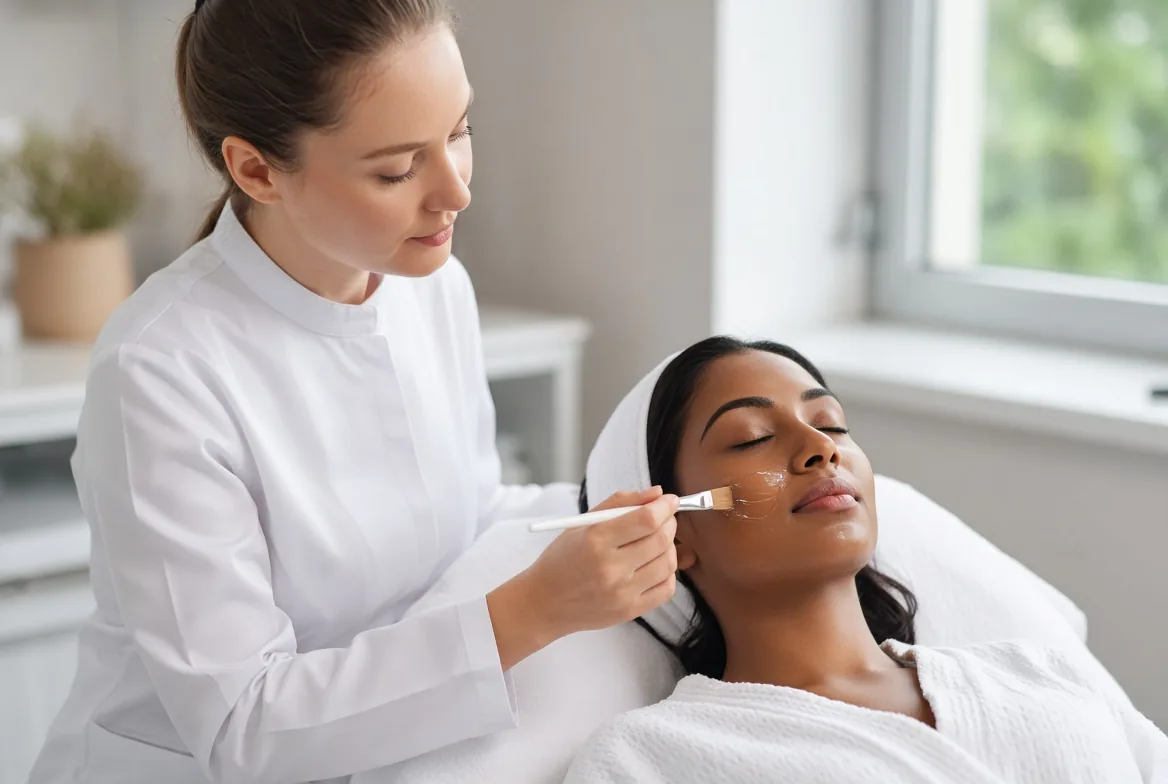
This is one of the biggest lessons I took from my second peel. Dryness and dehydration aren’t necessarily the same thing, but both can matter when you’re deciding whether the skin is ready for an exfoliating treatment.
If the skin is already irritated or compromised, adding another potentially irritating treatment may not be the smartest starting point. Sometimes the right question isn’t “Which peel should I use?” It is “Should I peel this skin today?”
My second therapist effectively answered that question for me. The answer was no. Not yet. Hydration first. That changed how I thought about professional skincare. A treatment shouldn’t begin simply because someone has booked an appointment. The skin in front of you has to be considered.
Chemical Peels and Skin Tone: What Does the Research Say?
This is where the conversation becomes more interesting. You will find people saying chemical peels are too risky for darker skin. You will also find practitioners who routinely use chemical peels on skin of colour and have built entire treatment ranges around them. The research does not support either extreme as a universal rule.
Chemical peels can be used across the full range of skin tones, but in deeper skin the risk of pigmentary complications needs to be taken seriously. A 2026 scoping review specifically examined chemical peels in Fitzpatrick skin types IV–VI. It identified only seven studies meeting its inclusion criteria and concluded that superficial peels such as glycolic and salicylic acid show promise, while also highlighting small sample sizes, short follow-up periods and the underrepresentation of darker skin in the research.
That matters. Because saying “chemical peels are completely safe for dark skin” is too broad. But so is saying “chemical peels should never be used on dark skin.” The evidence is more nuanced than either headline.
Why Pigmentation Changes the Conversation
If you’re having a peel because you want to improve pigmentation, there’s an important contradiction to understand. You may be using a peel to address pigmentation — but excessive inflammation can itself contribute to post-inflammatory hyperpigmentation. This is particularly relevant in skin of colour.
A systematic review examining treatments for post-inflammatory hyperpigmentation in skin of colour found that inflammatory conditions were common triggers, and highlighted how difficult PIH can be to treat effectively. That doesn’t mean chemical peels are automatically inappropriate. It means irritation cannot be treated as irrelevant when pigmentation is the concern. The goal is not to irritate the skin as much as possible — it is an appropriate, controlled treatment response.
If your skin struggles with peels
Some skin doesn’t love acids — and that’s okay. Microneedling can be a gentler route to many of the same concerns, from texture to pigmentation, without pouring acid onto reactive skin.
If a Peel Stings, Should You Push Through It?
Here I want to separate published evidence from my personal experience. Published peel studies describe sensations including tingling, stinging, burning, warmth and discomfort with different protocols. I’m not going to rewrite the research and claim nobody should ever feel those sensations during a peel.
But my own rule is clear: I do not consider significant stinging acceptable. When a peel simply tingled or felt warm, I was fine. When one burned, I knew something was wrong.
That was when I insisted the peel be removed. I’m not presenting that as a universal clinical rule — I’m telling you what I’ve learned from my own skin. If a professional peel becomes intensely uncomfortable, I believe you should speak up immediately rather than assuming you have to tolerate it because “that’s how peels work.”
You should know your own skin. You should know what normal feels like for you. And you should be comfortable saying, “This doesn’t feel right.”
What About Glycolic Acid?
Glycolic acid is one of the best examples of why I don’t believe in simple internet verdicts. The evidence does not support saying that glycolic acid is automatically unsuitable for darker skin. There are published studies investigating glycolic acid peels in skin of colour — but those studies also don’t mean that every person will tolerate every glycolic acid concentration.
What have researchers actually studied?
- A 1997 comparative study investigated serial glycolic acid peels in patients with Fitzpatrick IV, V and VI skin who had post-inflammatory hyperpigmentation. The group received six serial peels reaching a maximum of 68%, alongside topical hydroquinone and tretinoin, and the study reported a trend towards faster, greater improvement with minimal adverse effects.
- A 2002 study investigated 20–30% glycolic acid peels in Hispanic women with melasma (interestingly, adding the peels did not clearly outperform hydroquinone alone).
- A 2001 study in Indian women with melasma investigated 50% glycolic acid peels after a two-week preparation programme using sunscreen and a 10% glycolic acid lotion.
- A 2017 study investigated glycolic acid peels alongside a topical regimen in dark-skinned patients (Fitzpatrick III–V) with facial PIH.
- A 2019 randomised trial investigated 35% glycolic acid for melasma in Indian patients.
And more recently, researchers in South Africa examined sequential high-concentration glycolic acid and TCA peels in patients with Fitzpatrick IV–VI skin, the majority phototype V. The treatment produced significant improvement at 12 weeks — but irritation occurred in 77.5%, post-peel cracking in 62.5% and transient hyperpigmentation in 12.5%, and melasma recurrence reached 70% by week 12 after treatment stopped.
That South African study is particularly interesting to me, because it reminds us that effectiveness and tolerability are two different questions. A treatment can produce improvement and still produce irritation. Both facts matter.
So Is Glycolic Acid Safe for Everyone?
There isn’t one percentage that answers that question for everybody. Research has investigated glycolic acid at concentrations far above those used in ordinary leave-on skincare. But a study showing that a particular concentration was used in a particular population does not mean that concentration is automatically appropriate for you.
I have personally used 5% glycolic acid. I’ve also used 10%. My skin could not handle 10% well. That does not prove 10% glycolic acid is too strong for everyone with my skin tone — it tells me something about my skin. And that is how I think we should approach skincare more generally. Published research can show us what has been studied, the outcomes, the adverse effects and the patterns. But your skin is still your skin.
Does a Stronger Peel Mean Better Results?
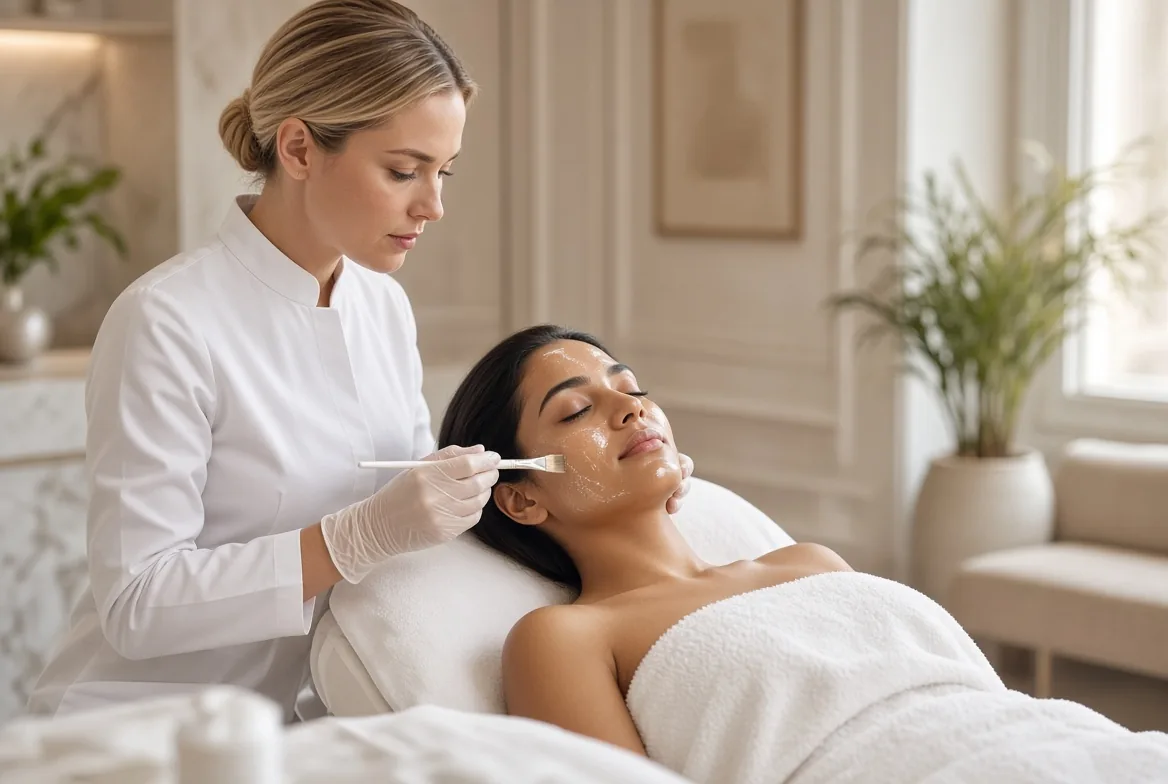
No. This is one of the ideas I would most like people to stop accepting automatically. A higher percentage does not automatically mean a better treatment. A stronger peel can produce a stronger effect, but the goal isn’t to see how much irritation your skin can survive.
Particularly when pigmentation is the concern, excessive inflammation may be counterproductive. The best peel isn’t necessarily the strongest peel. It is the peel that is appropriate for the person, the skin and the concern being treated.
What Should You Ask Before Having a Chemical Peel?
You don’t need to become a cosmetic chemist before having a treatment. But you should be able to ask a few basic questions — and never feel difficult for asking them.
- What acid is being used, and at what concentration?
- What is the purpose of this particular peel?
- How is the product formulated (including pH)?
- Is my skin currently suitable for this treatment?
- What should I expect to feel, and how long will it stay on?
- What should I do if it becomes uncomfortable?
- What should I stop using beforehand, and use afterwards?
- If pigmentation is my concern: how are you accounting for my risk of post-inflammatory hyperpigmentation?
Preparing Your Skin for a Chemical Peel
Preparation doesn’t necessarily mean a complicated routine — it means considering the condition of the skin before treatment. Depending on the person and the peel, that may involve managing dryness, reducing irritation, adjusting certain active products, or following a specific pre-peel protocol. Some published studies used pre-peel regimens before glycolic acid treatment; one Indian melasma study, for example, used sunscreen and a 10% glycolic acid lotion for two weeks before 50% glycolic acid peels.
But a study protocol is not a DIY prescription. Your preparation should make sense for your skin and the treatment being considered. And sometimes the correct preparation is simply to wait — that’s exactly what happened to me. My skin was dry and dehydrated, so the therapist chose hydration first. I think that was a very good decision.
Prep gently, don’t strip
In the days before a peel, keep cleansing calm and non-stripping. Our Oats, Honey & Rose Water Gentle Cleanser was made for exactly this — soothing, low-irritation, no harsh surfactants.
What Should You Expect After a Peel?
Post-peel skin may behave differently from your normal skin, and your practitioner should give you specific aftercare instructions based on the treatment you received. In general, that may involve:
- avoiding unnecessary exfoliation
- following instructions about when to restart active ingredients
- supporting the skin with appropriate moisturisation
- protecting the skin from UV exposure
- not picking or pulling at peeling skin
- watching for unexpected or worsening reactions
Don’t assume every product in your normal routine should immediately go back onto freshly treated skin. Your post-peel routine may need to be simpler than usual — the priority is a calm, supported barrier.
Support the barrier afterwards
Freshly peeled skin wants comfort, not more actives. Our Post-Treatment Barrier Repair Cream is designed to soothe and support the skin barrier while it recovers.
When Should You Delay a Chemical Peel?
Sometimes the best treatment decision is not to treat yet. If the skin is already significantly irritated, inflamed or compromised, proceeding simply because an appointment has been booked doesn’t necessarily make sense. A good professional treatment isn’t about doing what was originally booked at all costs. Sometimes it means changing the plan. Sometimes it means preparing first. Sometimes it means saying no.
Can Chemical Peels Make Pigmentation Worse?
They can potentially contribute to post-inflammatory pigmentation if the skin becomes excessively irritated or inflamed — which is why this matters most in deeper skin tones. But that doesn’t mean chemical peels are inherently bad for pigmentation; research has actually investigated peels as treatments for melasma and PIH, including in darker skin. It means there is a balance: you are trying to treat the pigmentation without unnecessarily creating more inflammation. That’s why I don’t think a pigmentation treatment should be judged only by how dramatic it looks immediately afterwards. The longer-term response matters.
Professional Peel or At-Home Peel?
The word “professional” doesn’t automatically make a product appropriate for every person — and the fact that something is available online doesn’t automatically make it suitable for home use. Concentration, pH, formulation, application method, exposure time and the condition of the skin all matter. If you’re considering a professional peel, understand what is being used and who is performing it. If you’re considering an at-home product, don’t assume the highest percentage will give the best result. Your face is not a chemistry experiment.
My Approach to Chemical Peels
My first peel taught me to listen to my skin. My second taught me that preparation matters. My experience with glycolic acid taught me that a percentage on a label cannot tell you exactly how your individual skin will respond. And the research has taught me something else: there is no single answer for every skin.
The published literature contains studies showing chemical peels can be useful, including in darker skin — and it also contains evidence of irritation and pigmentary complications. A 2026 review concluded that superficial peels show promise in skin of colour, while also highlighting how limited and underrepresented the evidence remains. So I don’t want to tell you “chemical peels are dangerous,” nor “don’t worry, they’re completely safe.” I’d rather show you what the research says and let you understand the variables that matter. That’s the investigative journalist in me — and as a formulator, I want to understand the formulation, not just the marketing claim on the front of the bottle.
At ShaRique Skin, our philosophy is simple: we teach it, test it, explain it, formulate it, source it and sell it.
Chemical Peel FAQs
Do chemical peels have to sting to work?
No. Published studies report different sensations with different protocols, including tingling, stinging, warmth and burning. My personal position is that significant stinging is not acceptable to me, and I would have the treatment stopped and reassessed.
Are chemical peels safe for darker skin?
Chemical peels can be used on skin of colour, but treatment needs to take individual pigmentation risk, skin condition, peel type and protocol into account. Research specifically examining Fitzpatrick IV–VI remains limited.
Is glycolic acid safe for dark skin?
Glycolic acid has been studied in darker skin, including Fitzpatrick IV–VI populations, at a range of concentrations. That does not establish one universally safe concentration for every person.
Does a higher percentage mean a better chemical peel?
No. Concentration is only one variable. Formulation, pH, exposure time, skin condition and the purpose of treatment also matter.
Can a chemical peel worsen pigmentation?
Irritation and inflammation can contribute to post-inflammatory hyperpigmentation, so this is an important consideration when treating pigmentation — particularly in deeper skin tones.
Should I have a peel if my skin is very dry?
Not automatically. The cause and severity of the dryness and the proposed treatment need to be considered. Sometimes preparation or barrier support should come first.
Does visible peeling mean the peel worked?
No. Visible shedding is not a reliable measure of treatment effectiveness.
The Bottom Line
I don’t think you should be afraid of chemical peels. I also don’t think you should blindly trust them. My first peel taught me to listen to my skin. My second taught me that preparation matters. My experience with glycolic acid taught me that my tolerance is not necessarily somebody else’s. And the research tells us that chemical peels can be useful across a range of skin tones, while also showing that the evidence is still limited and that irritation and pigmentary complications deserve serious consideration.
So before your next peel, don’t just ask “What percentage is it?” Ask: What acid is it? Why am I having it? Is my skin ready? What should I expect to feel? What happens if my skin reacts badly? And most importantly — do I understand what is being done to my skin? You don’t need to be a chemist. But you should be informed.
Explore our face peels
Research behind this article
- Garelick E, et al. Chemical Peels in Skin of Color: A Scoping Review of Safety, Efficacy, and Practice Patterns. Cureus. 2026. PubMed
- Maruma F, Dlova N, et al. Sequential high-concentration glycolic acid and TCA peels in skin phototype IV–VI (South Africa). Int J Womens Dermatol. 2025. PubMed
- Treatment of Post-Inflammatory Hyperpigmentation in Skin of Colour: A Systematic Review. J Cutan Med Surg. 2024. PubMed
- Glycolic acid peels for postinflammatory hyperpigmentation in black patients. Dermatol Surg. 1997. PubMed
- Hurley ME, et al. Efficacy of glycolic acid peels in the treatment of melasma (Hispanic women). Arch Dermatol. 2002. PubMed
- Safety and efficacy of glycolic acid facial peel in Indian women with melasma. Int J Dermatol. 2001. PubMed
- Treatment of Postinflammatory Hyperpigmentation with Glycolic Acid Peels and a Topical Regimen in Dark-Skinned Patients. Dermatol Surg. 2017. PubMed
- Garg S, et al. 35% Glycolic Acid Peel for Melasma: A Randomized Control Trial (India). Dermatol Surg. 2019. PubMed