SymWhite 377 (Phenylethyl Resorcinol) for Skin
SymWhite 377 (Phenylethyl Resorcinol): What to Know Before You Buy
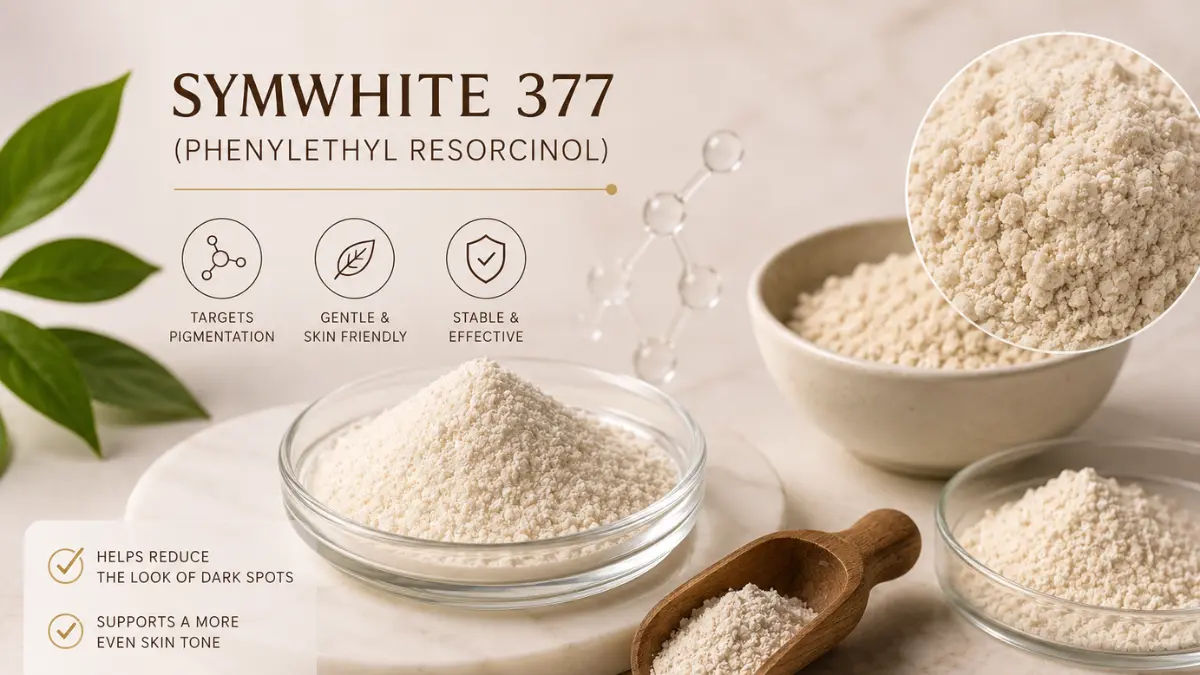
SymWhite 377 is the trade name for Phenylethyl Resorcinol, a lab-made brightening active developed as a gentler, more stable alternative to older skin-lightening ingredients. It works by interrupting the enzyme (tyrosinase) that drives pigment production, and the mechanism behind that has real published research — though, as with most single-ingredient actives, the human clinical data is thinner than the marketing around it. Here’s what’s actually been shown, and what to do with it.
1. What’s Actually in the Bottle
SymWhite 377 is a brand name, not an INCI (International Nomenclature of Cosmetic Ingredients) name — if you’re checking an ingredients list, look for “Phenylethyl Resorcinol”. It’s a synthetic resorcinol derivative developed by the German ingredient supplier Symrise, first commercialised as a skin-brightening active roughly a decade ago and now widely used across the industry under both names.
2. How It Actually Works
Like most brightening actives, SymWhite 377 targets tyrosinase — the enzyme your skin uses to produce melanin. A 2019 cell-based study found that phenylethyl resorcinol reduced both melanin content and tyrosinase activity in melanocytes (the pigment-producing cells), and traced the mechanism to activation of a specific signalling pathway (p44/42 MAPK) that ultimately suppresses the protein driving pigment production (Kim et al., 2019, Phytomedicine). That’s a genuine, mechanistic explanation — not just “it blocks melanin” marketing shorthand.
3. What the Human Data Actually Shows
This is where it’s worth being honest: most of the strongest efficacy data on phenylethyl resorcinol is cell-based or manufacturer-run, which is common for newer cosmetic actives but does mean it carries less weight than a large independent human trial. The clearest independent human study to date looked at a narrower use case — infraorbital dark circles, not general hyperpigmentation. A randomised trial in 20 women found that daily topical phenylethyl resorcinol significantly reduced the melanin index under the eyes by week 8, with an even greater reduction when combined with microneedling, and no serious side effects reported (Yu et al., 2021, Journal of Cosmetic Dermatology). It’s a real result, but it’s specific to dark circles — treat broader hyperpigmentation claims for this ingredient as mechanistically plausible rather than as firmly proven by a large human trial.
4. SymWhite 377 vs the Other Resorcinols
If you’ve read our post on 4-Butylresorcinol, you’ll notice the family resemblance — both are resorcinol derivatives that inhibit tyrosinase, and both show up in serious brightening formulas. The practical difference is potency versus gentleness: 4-Butylresorcinol has more independent published data behind it and is generally considered the stronger of the two, while SymWhite 377 is positioned as the milder option for skin that reacts badly to stronger actives. If you’ve tried 4-n-Butylresorcinol Powder and found it too much, SymWhite 377 is the logical step down, not a straight upgrade.
Melanin Breaker combines SymWhite 377 (Phenylethyl Resorcinol) with 4-Butylresorcinol, Tranexamic Acid and fat solubale Vitamin C for next level skin brightening.
5. Who It’s Suited For
SymWhite 377 is generally well tolerated, including on reactive or melanin-rich skin that can flare up on stronger actives like hydroquinone. It’s a reasonable pick if you want a brightening active with a lower irritation ceiling, or if you’re layering it alongside other pigmentation-focused actives and want to keep total irritation risk down. As with any new active, patch-test first and introduce it gradually rather than adding it into a routine already carrying several exfoliating or brightening ingredients at once.
SymWhite 377 for Skin of Colour
Hyperpigmentation can behave differently in melanin-rich skin, where even minor inflammation may trigger post-inflammatory hyperpigmentation (PIH) or make existing dark spots appear more noticeable.
One reason SymWhite 377 has become a popular brightening active is its relatively low irritation profile compared with some traditional skin-lightening ingredients. For individuals with deeper skin tones, this can make it a useful addition to a well-balanced pigmentation routine.
However, no brightening ingredient works in isolation. Daily sunscreen use remains essential, as UV exposure can contribute to pigment formation and undermine the progress made with topical treatments.
As always, patch test first and introduce new actives gradually, particularly if your routine already includes exfoliating acids or retinoids.
How Much SymWhite 377 Powder You Actually Need
Formulation guidance for phenylethyl resorcinol typically sits between 0.1% and 1% of a finished serum, with most brightening formulas landing at the lower end of that range. Going higher doesn’t have solid evidence behind it and mostly just adds cost without added benefit, this isn’t an ingredient where more is better.
Read Best DIY Brightening Serums for Pigmentation to find out about similiar ingredients.
SymWhite 377 FAQ
Is SymWhite 377 the same as Phenylethyl Resorcinol?
Yes — SymWhite 377 is the trade name; Phenylethyl Resorcinol is the INCI name you’ll see on an ingredients list. They’re the same compound.
Is SymWhite 377 better than kojic acid?
It’s generally considered a more stable option , kojic acid is notoriously prone to discolouring and losing potency in a formula over time, which SymWhite 377 doesn’t share. Direct head-to-head human efficacy data between the two is limited, so treat “better” as a stability and formulation-ease claim more than a proven efficacy one.
Can you use SymWhite 377 with Vitamin C or Niacinamide?
Yes, it layers fine with both — there’s no known conflict, and combining brightening actives through different mechanisms (tyrosinase inhibition, antioxidant support, melanosome-transfer inhibition) is a common formulation approach.
How long does SymWhite 377 take to show results?
The dark-circle trial referenced above saw measurable change by week 8 of daily use. Give any brightening active at least 8-12 weeks of consistent use before judging whether it’s working.
Download DIY Serums for Pigmentation & Brightening to learn how to make your own brightening serums.