
ShaRique Skin

Tag: #melasma

  • How to treat melasma without hydroquinone?

    How to treat melasma without hydroquinone?

    How to treat melasma without hydroquinone in South Africa?

    In my 20 years of investigative experience, I have seen the devastating results of unmonitored skin lightening. Recently, two clients came to me in distress saying that their skincare products “burnt” their faces. When I thoroughly researched the specific products they were using, I discovered they contained hidden Hydroquinone. Like many South Africans, they had no idea they were applying a regulated drug to their faces. I had to be direct with them: you must stop using these cheap, unregulated ‘brighteners’ immediately. They are not just ineffective, they are actively harming South African skin and increasing the risk of Exogenous Ochronosis—a permanent blue-black darkening that is notoriously difficult to reverse.

    While hydroquinone is a known pigment suppressor, for Fitzpatrick IV–VI skin tones (skin of color), it often leads to a condition called Ochronosis-a permanent blue-black darkening that no cream can fix.

    The truth is, you don’t need to bleach your skin to lighten your tough pigmentation and melasma. You need a clinical synergy of at least 10 high-performance actives that treat the skin without the “rebound” risk.

    The Myth of the “Hero” Ingredient

    Most people search for one single ingredient to “cure” their pigmentation. But melasma is a multi-stage defense mechanism. If you only use one active, you are only blocking one pathway. To clear deep-seated pigment safely, you must move beyond the “one-bottle fix” and adopt a multi-pathway strategy.

    In my research into the mechanics of pigmentation, I have found that treating skin of colour is not about “bleaching” a surface, it is about outsmarting a biological system.

    Melanin is produced in a factory-like process within your cells. If you only use one ingredient, for example, a Vitamin C serum, you are only closing one “exit” in a factory that has ten. The skin, being a highly adaptive organ, will simply find another route to produce pigment.

    To manage stubborn melasma well, especially in the harsh South African climate, the protocol must address the three critical stages of the pigment cycle simultaneously:

    1. Enzymatic Inhibition: Slowing down the “factory” before the pigment is even made.

    2. Melanosome Transfer: Stopping the pigment from traveling to the surface of the skin.

    3. Controlled Desquamation: Shifting existing dark marks using large-molecule acids like Mandelic Acid and Gluconolactone that exfoliate without triggering heat or inflammation.

    According to clinical studies on Fitzpatrick IV–VI skin tones, using a synergy of multiple actives at lower, non-irritating percentages is significantly more effective than using a high percentage of a single, aggressive active.

    This “multi-pathway” approach allows us to achieve high-intensity results while keeping the skin barrier calm, which is the only way to prevent the dreaded “melanin rebound”.

    The Protocol: How to treat melasma without hydroquinone effectively

    To execute this strategy for real results, your routine must include these four distinct categories of actives:

    • The Gentle Exfoliant (Mandelic & Gluconolactone): Traditional exfoliants like Glycolic Acid have a small molecular structure that penetrates too quickly. To clear existing pigmentation without heat, you must use large-molecule acids, in low percentages, as found in the ShaRique Skin Pigmentation Exfoliant. These gently lift pigmented cells while keeping the surface hydrated.

    • The Retinoid (Cell Turnover): You cannot shift deep-seated melasma without increasing cell turnover. A retinoid acts as the “manager” of your skin cells, telling the bottom layers to push fresh, unpigmented cells to the top faster. However, you must be extremely careful with the choice of retinol and the percentage you use; high percentages often cause irritation, which triggers inflammation—the primary cause of rebound pigmentation.

      When I formulated our Melasma Serum, I specifically chose Granactive Retinoid (Hydroxypinacolone Retinoate). Technically, this is a next-generation ester that binds directly to the skin’s retinoid receptors without needing the metabolic breakdown that traditional retinol requires. Research shows it delivers the high-intensity results of Tretinoin (prescription strength) but with significantly lower irritation potential. This allows us to accelerate turnover and clear pigment while keeping the skin’s inflammatory response completely silent.

    • Potent Brightening Inhibitors (The Multi-Blockers): To stop the melanin factory, you need a cocktail of inhibitors that work on different enzymes simultaneously. You need ingredients such as Tranexamic Acid, Kojic Dipalmitate, Alpha Arbutin, Licorice Root, and Vitamin C (SAP).

      Our Pigmentation Night Serum  and Melasma Serum use a strategic blend of these high-performance actives to ensure the melanocyte is blocked at every stage. By using this synergy, you are not just suppressing one enzyme; you are shutting down the entire assembly line. This multi-inhibitor approach is far more effective, and significantly safer, than using a high percentage of a single bleaching agent, as it prevents the skin from finding a biological “workaround” that leads to rebound darkening.

    • Barrier Repair Agents (The Shield): Correction without protection is a recipe for failure. You must include Ceramides, Urea, and Hemi-Squalane (found in our Barrier Repair Cream) to “seal” the skin and prevent the inflammatory response that makes melasma darker.

      Technically, research into the biology of skin of colour shows that it often naturally lacks sufficient Ceramides, leading to a compromised moisture barrier. It is vital to repair your barrier every single day, especially when using active treatments. This is because most skin brighteners, even safe ones, work by manipulating the skin’s chemistry, which can lead to transepidermal water loss (TEWL). If the barrier is not reinforced daily with lipids and humectants, the skin interprets the dryness as an injury. This triggers an inflammatory response, and  inflammation is the direct “on-switch” for melanocytes to produce more pigment as a defense mechanism.

      By including these barrier repair agents, you are telling the skin it is safe. This “calming” effect is what allows the inhibitors and exfoliants in the Tough Pigmentation & Melasma Combo to do their work without the risk of the skin fighting back.

    Why You Must Learn Your Skin (The Only Way)

    Even with the best products, success depends on how you adjust them to your skin’s daily needs. There is no “one size fits all” in clinical skincare. If you truly want to stop the cycle of darkening, you have to learn about your skin, it is the only way to achieve long-term clearance.

    If you don’t understand the biology of your own skin, you will always be at the mercy of the next “miracle” bottle. Skincare is not a guessing game, it is a science. This is why I didn’t just stop at creating products; I documented the technical truth.

    In my investigative blueprint, Why is My Melasma or Dark Spots Getting Darker?, I solve the “darkening mystery” that plagues so many South Africans. This guide isn’t just a book; it is a Skin Barrier Blueprint. It provides the deep-dive research into ingredients and personalized guidance specifically for darker skin tones.

    Unless you understand the “why” behind the “how”, specifically regarding Barrier Repair and Inflammation Control, you will continue to spend money on products that your skin eventually rejects. You need to know how to treat melasma without hydroquinone.

    True clearance is 50% formulation and 50% education. To stop the cycle of melasma for good, you have to become the expert on your own face.

    Conclusion: How to treat melasma without hydroquinone?

    If you are wondering how to treat melasma without hydroquinone, remember that the system outperforms the ingredient. By combining Gentle Exfoliation, Retinoids, Multi-Inhibitors, and Barrier Repair, you are addressing the biological truth of your skin. Our Tough Pigmentation & Melasma Combo provides this exact synergy, offering a safe, scientific, and high-intensity solution for South African skin.
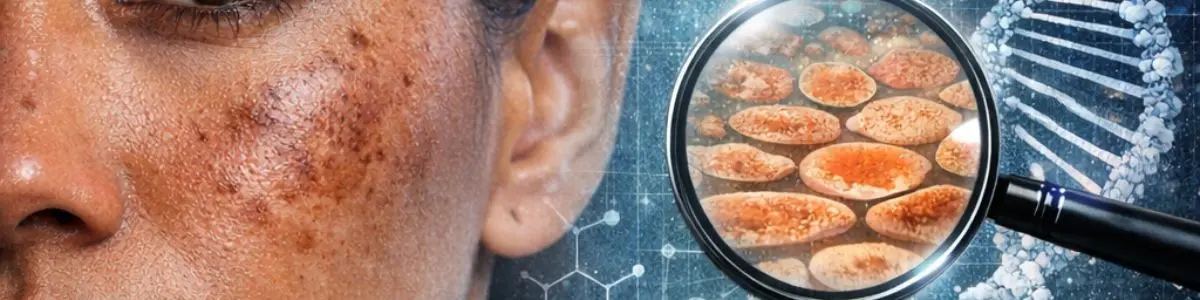

  • Why Your Melasma or Dark Spots are Getting Darker

    Why Your Melasma or Dark Spots are Getting Darker

    Why Your Melasma or Dark Spots are Getting Darker: An Investigative Report

    Pigmentation, melasma, or dark spots, whatever the label, it all comes down to one biological fact: your skin is overproducing melanin in specific areas. And yes, it’s often more noticeable in skin of color because even small amounts of inflammation can trigger pigmentation.

    You might know the “top” ingredients everyone talks about to fight pigmentation, but here is the truth: they often fail. My investigation has uncovered the missing piece—Your Skin Barrier. If your barrier is compromised or dehydrated, even the most expensive “gold-standard” actives cannot deliver results.

    The Darkening Mystery: Why Brighteners Sometimes Backfire

    Have you noticed your skin looking darker after starting a new skin brightening product? Or perhaps your spots fade, only to return with a vengeance? This boils down to barrier health.

    When your “shield” is broken, your melanocytes (pigment-producing cells) go into survival mode. I explore this “Darkening Mystery” in detail in my investigative blueprint.

    Why Your Melasma or Dark Spots are Getting Darker

    This clinical guide tells you exactly how to read how your “skin is feeling” so you know when to apply actives and when to focus on repair.

    With over 20 years of experience as a Legal Journalist, I have spent my career investigating evidence and uncovering truths. Now, as a Skincare Formulator, I apply that same rigor to clinical data.

    The Global Climate Factor: Heat as the “Silent” Trigger

    While many focus purely on UV light, research reveals a broader culprit: Environmental Heat. Whether you are in London, New York, or Johannesburg, the cellular response to trauma is identical. According to clinical studies on skin biology, heat from cooking, hot showers, or extreme temperatures acts as a silent trigger that wakes up dormant melasma or dark spots—even if you are wearing sunscreen. The evidence is clear: according to a landmark study on the specific contributions of seven factors involved in health and beauty, our lifestyle choices and environmental heat exposure are often more responsible for darkening pigment than genetics alone.

    The Barrier-Inflammation-Pigment Axis

    We must stop treating pigmentation as a surface defect and start seeing it as an immunological response.

    • The Barrier Signal: When your epidermal barrier is compromised, Transepidermal Water Loss (TEWL) increases. This is a measurable indicator of dysfunction that activates inflammatory mediators.

    • The Inflammatory Loop: These signals tell your melanocytes to pump out pigment as a biological shield.

    • The Trauma Cycle: If you are “chopping and changing” products or over-exfoliating, you are unknowingly resetting the trauma and sustaining the inflammation.

    Investigative Ingredient Analysis: Beyond the Hype to understand Why Your Melasma or Dark Spots are Getting Darker

    To stop the darkening of melasma or dark spots, you must prioritize Skin Intelligence over marketing.

    • Retinoids: While effective for aging, the contraindications for high-strength formulas include reactive, sensitized skin. Pushing “retinol every night” can quietly increase inflammation.

    • Anti-Inflammatories: The recovery phase is non-negotiable. You cannot fix pigment while the “alarm” of inflammation is still ringing.

    • Barrier-Repair Actives: You must strengthen the shield before aggressive correction.

    The Investigative Diagnostic: Identify Your Depth

    You cannot treat what you haven’t diagnosed. Use these two simple tests from my research to identify your melasma or dark spots:

    1. The Stretch Test: Gently stretch the skin at the dark spot. If the color stays the same or looks darker, it is Epidermal (surface). If it appears to fade, it is Dermal (deep).

    2. The Border Test: Look at the edges. Sharp, well-defined borders usually indicate surface pigment. Fuzzy, grayish-blue edges are a hallmark of deep, complex cases like melasma.

    From Complexity to Clarity

    No one can “fix” your pigmentation but you. It requires stepping out of the cycle of skin trauma and into informed decision-making. For a structured presentation of my findings and the exact investigative routine to follow, you can access the full  Pigmentation Truth: A Guide to Barrier Repair and Inflammation Control.

  • Hyperpigmentation: What you can do about it. 

    Pigmentation disorders, such as hyperpigmentation, can affect just certain parts of the skin, or the entire body.
    Pigmentation disorders, such as hyperpigmentation, can affect just certain parts of the skin, or the entire body.

    Hyperpigmentation can no doubt be devastating for the person who suffers from it. But the good news though is that if you want to treat hyperpigmentation, you can. You can treat it at home and in-office, by your skin specialist or dermatologist.

    What is pigmentation?

    It is the color of your skin, which gets its color from a pigment called melanin. There are cells in the skin called melanocytes which make melanin.
     
    When these cells get affected- by injury or damage- melanin production gets affected. This causes the skin to produce more melanin. This results in darkening of the skin.
     
    Pigmentation disorders, such as hyperpigmentation, can affect certain parts of the skin. It can also affect the entire body.
     
    People with skin of color are more prone to pigmentation disorders. This is when compared to Caucasian skin.

    Causes of hyperpigmentation

    • Sun exposure, heat as well as skin inflammation or irritation
    • Certain medications
    • Hormonal problems or pregnancy
    • Stress and anxiety
    • Hereditary factors

    Types of hyperpigmentation

    The most common types of hyperpigmentation are:

    Melasma

    • This causes patches of discoloration on the skin. It usually happens on the face and neck. 

    Sunspots

    • Also known as liver spots, sunspots are flat brown spots. They develop on areas of your skin that get exposed to the sun. 

    Post inflammatory pigmentation

    • It’s caused when skin gets injured or inflamed. For instance cuts, burns, surgery, acne and even mosquito bites.

    How to prevent hyperpigmentation?

    • Use sunscreen with an SPF of at least 30.
    • Protect your skin from the sun by wearing hats.
    • Cover your body with clothing while out in the sun.
    • Avoid being outdoors between 10am to 4pm.

    How to treat hyperpigmentation

    • Retinoids.
    • Lightening creams.
    • Chemical exfoliants
    • Chemical peel.
    • Laser peel.
    • IPL therapy.
    • Microdermabrasion.
    • Dermabrasion.

    What to look for in skincare products for hyperpigmentation

    If you suffer from hyperpigmentation, you should look for products that reduce hyperpigmentation. This you can do by using ingredients that inhibit tyrosinase. It is an an enzyme responsible for the formation of skin-darkening melanin.
     
    A good product must also have hydrating ingredients which will moisturize the skin. Look out for ingredients such as glycerin or hyaluronic acid in a product.
     
    Ingredients to look out for in skincare products

    Vitamin C

    It can reduce hyperpigmentation by blocking melanin production. Vitamin C also blocks tyrosinase which makes it a natural skin brightener. Also, it is a powerful antioxidant. It protects skin cells from further damage either from the sun or outside pollutants.

    Kojic Acid

    It also works by inhibiting tyrosinase enzymes. It also protects the skin from environmental toxins. This is because it is high in antioxidants. Kojic dipalmitate is more stable than kojic acid. It is also more efficacious than kojic acid. This is when it comes to inhibiting the activity of tyrosinase present in human skin. This in turn inhibits the formation of melanin.

    Alpha Arbutin

    Is considered to be a natural form of hydroquinone — a chemical that bleaches the skin. Arbutin inhibits the enzymes that stimulate pigment-producing cells.

    Glutathione

    This is a well-tolerated antioxidant. It is rich in three amino acids: cysteine, glycine, and glutamate. It is a melanin inhibitor that inactivates the enzyme tyrosinase.

    Licorice root extract or oil

    Licorice root extract fights free radicals. It inhibits their production and prevents the formation of excess melanin. It helps remove dark spots and lightens them to give you an even skin tone.

    Vitamin A

    Retinoids are a form of vitamin A. It stimulates the production of collagen. This reduces fine lines and wrinkles and stimulates cell turnover. When this happens, new skin cells come to the surface of the skin.
     
    Tretinoin is the most powerful form of retinol and is available by prescription only. But, you can get retinol over the counter. If your skin can’t tolerate retinol it is not the end of the world. You will also enjoy using retinyl palmitate or  retinaldehyde. These forms of Vitamin A are better tolerated on the skin.

    Niacinamide

    This is a form of vitamin B3, which is involved in cell metabolism. It can interrupt the process of cell pigmentation. This in turn will result in skin brightening. In clinical studies, niacinamide decreased hyperpigmentation and increased skin lightness. The data suggests that niacinamide is an effective skin lightening compound. It works by inhibiting melanosome transfer from melanocytes to keratinocytes.

    Alpha hydroxy acids

    AHAs are water-soluble acids made from sugary fruits. They assist peel away the surface of the skin. New cells come to the surface which makes skin look better.

    Azelaic Acid

    It has anti-inflammatory properties and can suppress melanin production in the skin. Azelaic acid encourages cell turnover. The skin heals quick and scarring gets minimized.

    Chemical peels

    These are stronger strengths of acids. They can treat dark spots by removing the top layers of skin, allowing it to regenerate. Lighter peels are used at home, but deeper peels should be applied by a dermatologist.

    Takeaways

    • Sun protection is essential in the war against hyperpigmentation. Dermatologists recommend that sunscreen should be applied every two hours, especially when outdoors.
    • Another way to protect your skin is to wear a wide brimmed hat when outdoors. Also wear clothing that will protect your skin.
    • It is also important to try and determine what the cause of your hyperpigmentation is. Then only can you treat it .
    • You need to get into a targeted skincare routine.
    • When buying products to treat hyperpigmentation, look at the ingredients list. Choose products that have ingredients to tackle pigmentation.

     https://medlineplus.gov/skinpigmentationdisorders.html

    https://www.insider.com/best-ingredients-for-hyperpigmentation

    https://www.everydayhealth.com/beauty-pictures/tricks-to-treat-hyperpigmentation.aspx

    https://www.medicinenet.com/what_causes_hyperpigmentation/article.htm

    https://www.medicinenet.com/what_causes_hyperpigmentation/article.htm

    https://www.insider.com/best-ingredients-for-hyperpigmentation

    https://pubmed.ncbi.nlm.nih.gov/12100180/#:~:text=In%20the%20clinical%20 studies%2C%20 niacinamide,transfer%20from%20melanocytes%20to%20keratinocytes.

    https://www.insider.com/best-ingredients-for-hyperpigmentation

    https://www.dermastore.co.za/shop/key-ingredients/glutathione/