


What Is Melasma?
Melasma is a common, chronic skin condition that shows up as a symmetrical dark brown, blackish or grayish-brown patches, most often on the face. These patches often appear on the forehead, cheeks, bridge of the nose, and above the upper lip. While melasma does not cause physical discomfort, it is devastating for those who notice their appearance changing despite consistent skincare efforts. In South Africa people also refer to hyperpigmentation and melasma as Chubaba.
At its core, melasma is a disorder of melanogenesis, the biological process by which the skin produces pigment. Normally, melanocytes (the cells responsible for skin color) create melanin in balanced amounts. In melasma, these cells become overactive, producing excess pigment in targeted areas. Unlike simple sunspots, melasma often involves deeper layers of the skin and reacts strongly to both internal and external triggers.
Table of Contents
Difference Between Whitening, Brightening, and Lightening on the Face
The Strategic Approach: Matching the Treatment to the Signal
Melasma Causes
The primary factors that trigger this overproduction of pigment include:
Hormonal Fluctuations: Significant shifts in estrogen and progesterone, such as those during pregnancy, from oral contraceptives, or hormone replacement therapy, are leading causes.
Ultraviolet (UV) Exposure: Sunlight is the most potent external trigger. UV rays directly stimulate melanocytes, which is why melasma often worsens in summer or after brief sun exposure.
Heat and Visible Light: Emerging research shows that heat and high-energy visible (HEV) light from devices can intensify pigment production, making everyday environments a factor in management.
Because melasma is chronic and prone to recurrence, I must be completely honest, there is no instant fix. Effective management focuses on long-term suppression rather than a temporary “erase”.
Melasma vs Pigmentation
What it means: Pigmentation is your natural skin color, while melasma is a specific type of dark patch that appears on the face. Melasma is chronic, symmetrical, and triggered by hormones, sun exposure, and sometimes heat or visible light. In contrast, general pigmentation can include sunspots, acne scars, or post-inflammatory marks and is usually easier to treat.
In a nutshell: All melasma is pigmentation, but not all pigmentation is melasma.
Melasma vs Hyperpigmentation
What it means: Hyperpigmentation is a broad term for any excess darkening of the skin caused by melanin, including acne marks, sunspots, and age spots. Melasma is a specific, chronic form of hyperpigmentation that appears symmetrically on the face and is influenced by hormones, UV light, and heat. It often affects deeper skin layers, making it more persistent than regular hyperpigmentation.
In a nutshell: All melasma is hyperpigmentation, but not all hyperpigmentation is melasma.
How to remove hyperpigmentation from face permanently
While “permanent” removal depends on the cause and depth of the pigment, there are proven strategies to fade melasma long-term and prevent recurrence:
- Strict Sun Protection – Ultraviolet (UV) rays are the main trigger for hyperpigmentation. Daily use of broad-spectrum sunscreen, hats, and protective clothing is essential to prevent new dark spots and stop existing ones from worsening. Use an SPF of 50 and above and reapply every two three hours, especially if outdoors.
- Topical Brightening Agents –While there are thousands of ingredients identified by research as tyrosinase inhibitors, and hundreds of cosmetic-grade molecules available to formulators as myself, the mass market typically relies on just a dozen “hero” ingredients like niacinamide and alpha arbutin because they are inexpensive. In my experience as a clinical researcher focusing on South African skin types, I have found that common ingredients like Alpha Arbutin and Niacinamide, while popular on social media, often lack the potency required to manage stubborn melasma in Black and Indian skin. This is why I formulated Melanin Breaker, a next-generation product designed for those who have lost faith in standard ingredients and need a deeper, more clinical approach to pigment suppression.
- Chemical Exfoliation – Alpha hydroxy acids (AHAs) and beta hydroxy acids (BHAs) remove dead skin cells and encourage skin renewal, helping to fade superficial pigmentation over time.
- Professional Treatments – Procedures like chemical peels, laser therapy, and microneedling can target deeper pigmentation, but on skin of color, the wrong percentage or type of peel and laser can actually trigger post-inflammatory hyperpigmentation and worsen the condition. While microneedling is highly effective for breaking up pigment and increasing product penetration, it is critical not to needle too deep, as excessive trauma can backfire on reactive skin. Monthly professional sessions can also become a significant financial burden; however, you can learn to perform this safely and effectively at home by following the clinical protocols in our Professional Microneedling Training Manual.
- Addressing the Root Cause – For pigmentation caused by hormonal changes, acne, or inflammation, treating the underlying trigger is essential for lasting results.
Key takeaway: Hyperpigmentation can often be significantly reduced, but permanent results require a combination of sun protection, consistent topical treatments, and professional procedures. Patience and a long-term strategy are essential.
What Hormone Causes Melasma?
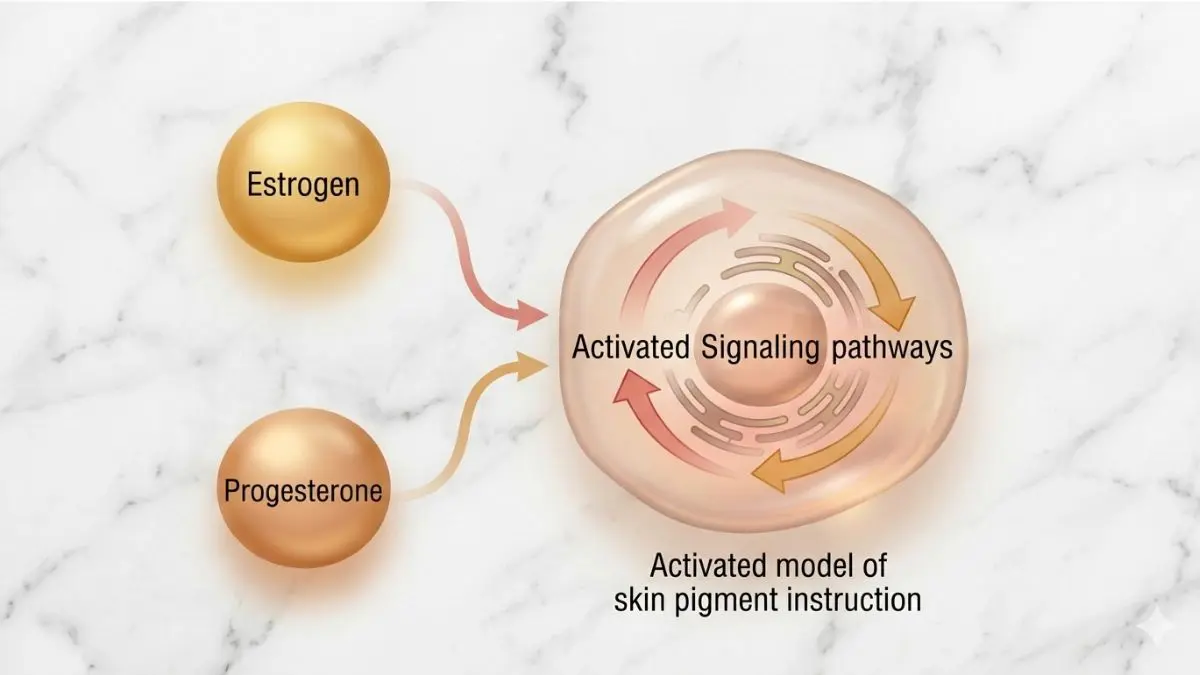
An illustration of the biological signaling process: How systemic fluctuations in estrogen and progesterone transmit specific instructions to skin cells to activate pigment production.
While the exact trigger can vary, melasma is primarily driven by fluctuations in Estrogen and Progesterone. These hormones act as direct signals to your melanocytes, telling them to increase pigment production.
This is why melasma is so frequently associated with female life stages, such as pregnancy or the start of oral contraceptives, and why it is often referred to as the “mask of pregnancy”.
Simply put, your hormones act like a volume knob for your skin’s pigment cells. When these hormone levels spike, they turn that knob all the way up. This sends a loud, urgent signal, called the Melanocyte-Stimulating Hormone, telling your skin to start “pumping out” extra melanin immediately. In this hyper-alert state, your skin becomes significantly more reactive; even the slightest bit of UV light or heat can cause a dark patch to appear almost overnight because the “instruction” to make pigment is already turned to the maximum.
The Cortisol Connection: How Stress Hormones Fuel Pigment
Many women overlook the impact of Cortisol—the body’s primary stress hormone—on their melasma. Chronic stress triggers the adrenal glands to release cortisol, which is biologically linked to the production of Melanocyte-Stimulating Hormone (MSH). Because these hormones share a similar precursor, an increase in stress can “trick” your skin into producing excess melanin, even if you are staying out of the sun. This explains why melasma may flare up during high-pressure periods at work or home, despite a consistent skincare routine.
Adrenal Stress and the “Inflammatory Trigger”
Cortisol doesn’t just stimulate pigment directly; it also weakens the skin’s immune response and triggers internal inflammation. For reactive South African skin types, this inflammation acts as a “green light” for melanocytes to remain overactive. When cortisol levels remain high, topical treatments alone may struggle to show results because the “internal engine” of pigment production is constantly fueled by stress. Addressing melasma, therefore, isn’t just about what you apply to your face, it’s about managing hormonal signals from the inside out.
Does Estrogen Cause Melasma?
Estrogen is the primary hormonal culprit in melasma development. High estrogen levels, whether produced naturally during pregnancy or introduced via birth control pills or Hormone Replacement Therapy (HRT), sensitize the skin. It essentially “lowers the threshold” for pigment production, meaning your skin will darken from sun exposure that previously wouldn’t have caused a mark. Research shows that estrogen binds to specific receptors in melanocytes, directly triggering melanin overproduction in a process that standard brightening ingredients cannot always override.
Low Estrogen and Melasma
While high estrogen is the most common trigger, declining estrogen levels during perimenopause and menopause also affect pigmentation. As estrogen drops, the skin thins and its barrier weakens, making existing melasma more prominent and the skin more vulnerable to environmental damage. Hormonal imbalances, such as shifts in the estrogen-to-testosterone ratio—can trigger localised inflammation, keeping melasma “active” even as you age.
The Role of Progesterone and MSH
Progesterone also plays a role by intensifying pigment responses, especially during the second half of the menstrual cycle. Additionally, Melanocyte-Stimulating Hormone (MSH) acts as the final messenger in this hormonal cascade. For South African skin types, this combination creates a hyper-reactive environment, requiring high-potency tyrosinase inhibitors to calm overactive melanocytes.
In the skincare industry, words like “whitening,” “brightening,” and “lightening” are often used interchangeably to sell products, but from a clinical and safety perspective, they mean very different things. As an investigative skincare researcher, I believe it is vital to understand these distinctions so you don’t accidentally compromise your skin’s health while trying to clear a dark patch.
Difference Between Whitening, Brightening, and Lightening on the Face
In skincare, the words “whitening,” “brightening,” and “lightening” are often used like they mean the same thing, but they are very different. Knowing the difference helps you pick products that work safely without harming your skin.
What is Skin Brightening?
Goal: Give your skin a healthy glow and radiant look.
How it works: Brightening products don’t change your skin color, they remove dull, dead skin cells so your natural light can shine through. Ingredients like AHAs (mild acids) or Vitamin C help speed up cell turnover. Think of it like polishing a window so more light comes through.
Who it’s for: Anyone with dull, tired-looking, or flat skin.
What is Skin Lightening?
Goal: Fade dark spots or uneven patches so your skin tone looks even.
How it works: Lightening targets excess melanin in specific areas using high-performance ingredients like tyrosinase inhibitors (e.g, the ones in Melanin Breaker). They turn down the “volume” on overactive pigment cells without affecting healthy skin.
Who it’s for: People with melasma, sunspots, acne marks, or stubborn dark patches.
What is Skin Whitening?
Goal: Make your whole complexion lighter than your natural skin tone.
How it works: Many “whitening” products in unregulated markets contain harmful ingredients like mercury or strong steroids. These can damage melanocytes, thin your skin, and create a greyish cast.
Clinical Advice: Avoid any whitening products that don’t show a full, transparent ingredient list. True skincare should never harm your skin to change its natural color.
Key Takeaway
Brightening = Glow, radiance, and removing dullness.
Lightening = Targeting dark spots and evening out skin tone.
Whitening = Dangerous and often harmful; an attempt to change natural skin color.
What Is the Fastest Way to Cure Melasma Naturally?
Melasma is a complex and chronic form of hyperpigmentation, which means there is no true “instant cure,” even with natural methods. However, the fastest natural strategy is not about aggressively removing pigment, it’s about stopping the triggers that activate it, while calming the skin and allowing healthy renewal.
The first and most important step is strict sun protection. Ultraviolet light is one of the strongest triggers for melasma. Even brief exposure can signal melanocytes to produce more pigment. Daily sunscreen, wearing hats, and limiting direct sun exposure are essential if you want pigmentation to gradually fade.
The Role of Kitchen Ingredients: Heroes vs Hazards
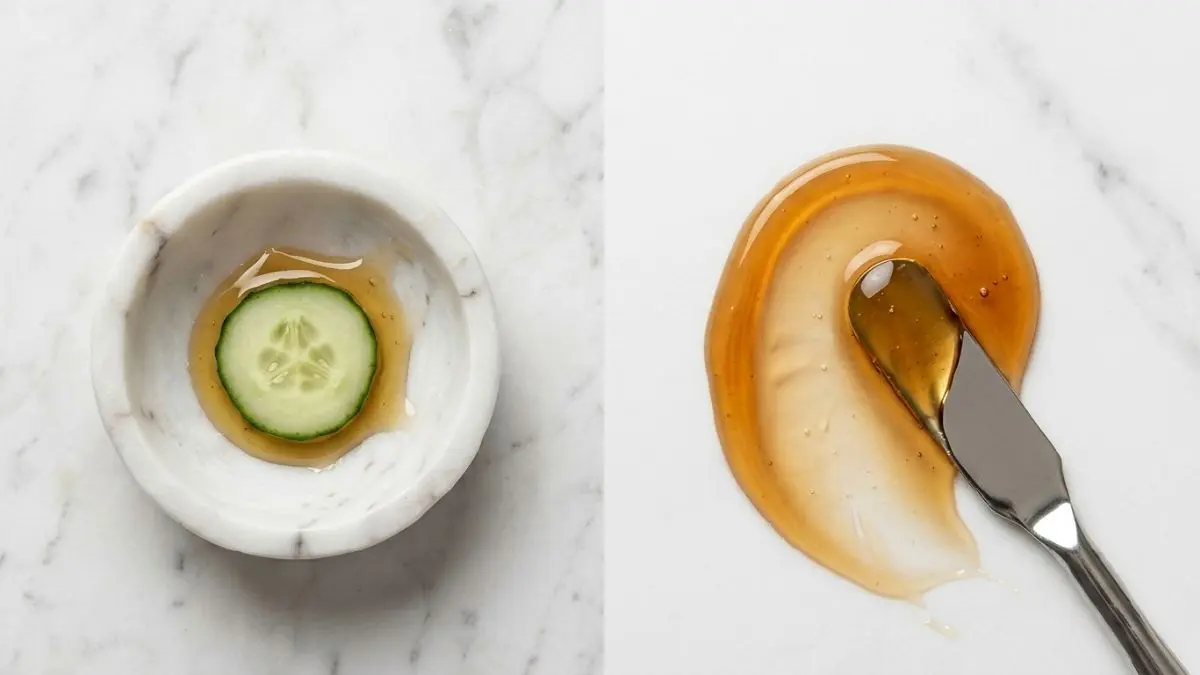
The intersection of nature and science: While safe natural ingredients like cucumber and honey help cool and calm reactive skin, clinical-grade suppression is required to address the deeper biological signals of melasma.
In many households, turning to the pantry is the first instinct when dealing with skin concerns. However, as an investigative skincare journalist and skincare formulator, I categorise these ingredients based on biological safety and skin compatibility.
Not everything in your kitchen belongs on your face, especially if you have a reactive, melanin-rich skin tone.
Aloe Vera & Cucumber (The Cooling Heroes)
These are among the safest natural ingredients for pigmentation-prone skin.
Cucumber is about 95% water and contains caffeic acid, while Aloe Vera contains compounds such as aloin that help calm inflammation.
Their biggest advantage is temperature regulation. Heat, even from standing over a stove or sitting in a hot car, can keep melasma active. These ingredients act like a “heat shield”, cooling the skin and helping shut down the inflammatory signal before pigment is produced. I have tested aloe vera and cucumber on my face and my skin did look brighter after using it.
Potato Slices (The Enzyme Support)
Potatoes contain a mild enzyme called catecholase. While they are generally safe, their brightening effect is very mild. I have tried it and saw no results, however, they may support a slightly more even tone over time, but they lack the molecular strength to reach the deeper layers of the epidermis where melasma typically develops.
Raw Honey (The Barrier Healer)
I am such a strong advocate for using honey in DIY masks that I have formally incorporated it as a key ingredient in my Honey and Oats Cleanser. Honey is a natural humectant, meaning it attracts and retains moisture in the skin.
This makes it valuable for maintaining a healthy skin barrier, which is important because dry or compromised skin is more prone to inflammation, and inflammation often triggers darker pigmentation.
Turmeric (The Antioxidant)
Turmeric contains curcumin, a powerful anti-inflammatory antioxidant. However, DIY turmeric masks from the kitchen can create problems. Use a pinch in your DIY masks.
Raw turmeric can stain the skin yellow, which on deeper skin tones often appears muddy or like worsening hyperpigmentation. I love turmeric extract that’s why I have also used it in our Melasma Serum.
It is even contained in our Pigmentation Night Serum.
Lemon Juice & Apple Cider Vinegar (The Hazards)
These are often searched online as “natural bleaching remedies,” but they can be extremely damaging.
Lemon juice is highly acidic and can trigger phytophotodermatitis, a chemical reaction when citrus compounds meet sunlight. This can cause burns, scarring, and even darker pigmentation than before.
For melanin-rich skin, these DIY treatments can make pigmentation significantly worse.
Why “Suppression” Is Faster Than “Scrubbing”
One of the biggest mistakes people make when treating melasma naturally is trying to scrub or peel the pigment away.
In reality, the fastest improvement comes from suppressing the triggers that keep pigment active.
Reducing heat exposure and calming inflammation are critical. Activities such as cooking over a hot stove, long periods in a warm environment, or friction on the skin can keep the pigment “tap” switched on.
Supporting gentle skin renewal can also help improve tone gradually. Mild exfoliation can encourage the shedding of pigmented cells, but harsh scrubs should be avoided because they can create micro-tears in the skin barrier.
On melanin-rich skin, this trauma often leads to post-inflammatory hyperpigmentation, making dark patches worse instead of better.
The Verdict on Natural “Fast” Results
In simple terms, the fastest natural way to improve melasma is not by forcing pigment out of the skin, but by removing the triggers that keep it active.
This means controlling:
sun exposure
heat
inflammation
hormonal stress
When soothing natural ingredients are combined with targeted clinical tyrosinase inhibitors, the skin can gradually return to balance.
How to Treat Melasma and Hyperpigmentation the Right Way
After understanding what melasma is, what causes it, and how it differs from other forms of pigmentation, one important truth becomes clear: treating melasma requires a completely different mindset than treating ordinary dark spots.
Melasma is not simply surface discoloration that can be scrubbed away with a stronger cream or peel. It is a condition driven by complex biological signals inside the skin. Hormones, ultraviolet light, inflammation, and heat all interact with melanocytes, the pigment-producing cells responsible for skin colour.
Because of this, melasma should be approached as a long-term management process rather than a quick cosmetic fix.
Why Most Pigmentation Treatments Fail
One of the biggest reasons people struggle with melasma is that many treatments focus only on the visible pigment, not the signal that created it.
This is why some creams initially appear to work, only for the dark patches to return weeks or months later. The pigment may fade temporarily, but if the underlying triggers remain active, melanocytes simply begin producing excess melanin again.
In other words, pigment will continue to return if the biological “switch” that activates it is never turned off.
Successful treatment therefore requires a strategy that addresses both the pigment you see and the triggers you cannot see.
The Importance of Patience in Pigmentation Treatment
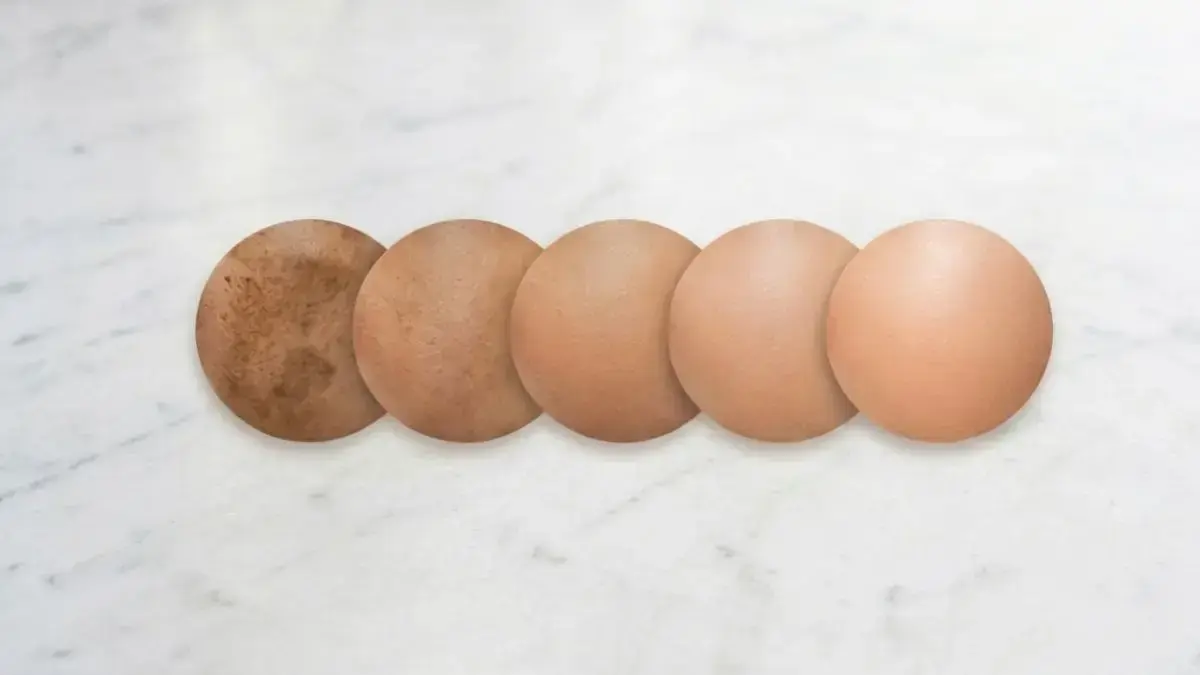
The reality of suppression: Fading deep-seated pigment is a gradual biological process. True management focuses on slowing pigment production at the source while allowing the skin to naturally renew at its own pace.
Another key concept many people overlook is that skin cannot change overnight.
Human skin renews itself through natural cycles. Pigmented cells must gradually move upward through the epidermis before they can fade or be shed. This process takes time, which is why even the most effective treatments require patience and consistency.
Trying to force rapid results with aggressive exfoliation, harsh peels, or unregulated bleaching products often damages the skin barrier. When this happens, the skin responds with inflammation, which ironically triggers more pigmentation rather than less.
For melanin-rich skin, gentle and controlled treatment is almost always the safer and more effective path.
Why Education Is the Most Powerful Treatment Tool
One of the most powerful ways to manage melasma is simply understanding how it behaves.
When you recognize the factors that activate pigment, it becomes easier to avoid the habits and products that quietly worsen the condition. Many people unknowingly aggravate their melasma through everyday actions, whether it is excessive exfoliation, harsh DIY treatments, or inconsistent sun protection.
Education allows you to make decisions that support the skin instead of constantly fighting against it.
A Smarter Way to Approach Melasma
Rather than chasing miracle cures, the most effective approach combines several key principles:
• protecting the skin from triggers that activate pigment
• using targeted ingredients that regulate melanin production
• maintaining a strong and healthy skin barrier
• following a consistent skincare routine over time
When these elements work together, melanocytes gradually become less reactive and pigmentation begins to stabilize.