
According to clinical studies on melanocyte-keratinocyte signaling, Tranexamic Acid is a primary active for disrupting the pathway that leads to post-inflammatory hyperpigmentation (PIH). It works not by bleaching the skin, but by preventing the communication between surface cells and pigment-producing cells that triggers darkening after irritation or UV exposure.
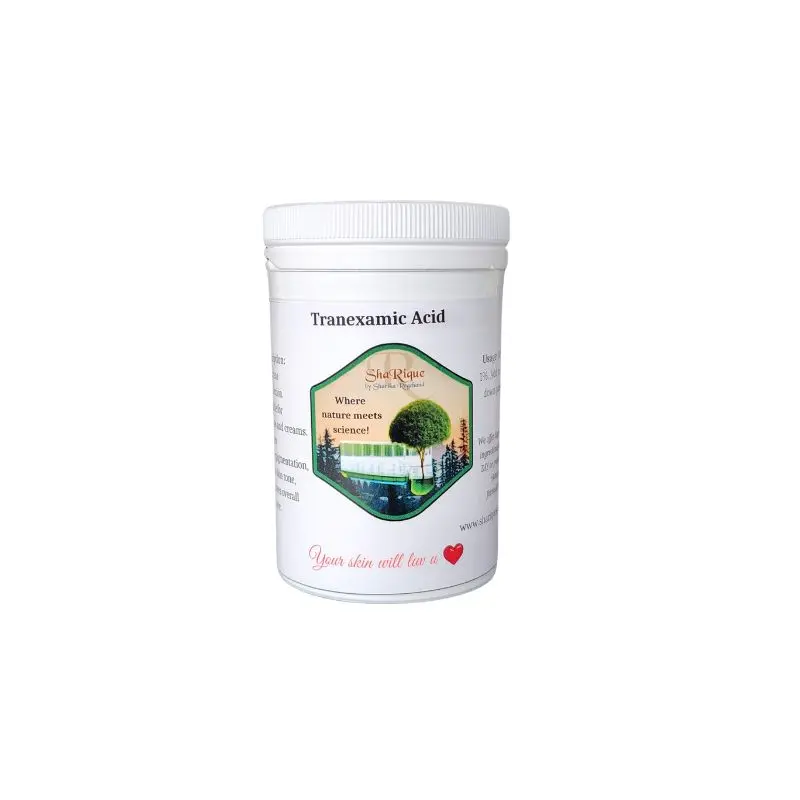
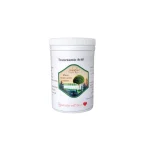
Tranexamic Acid Powder (High Purity)
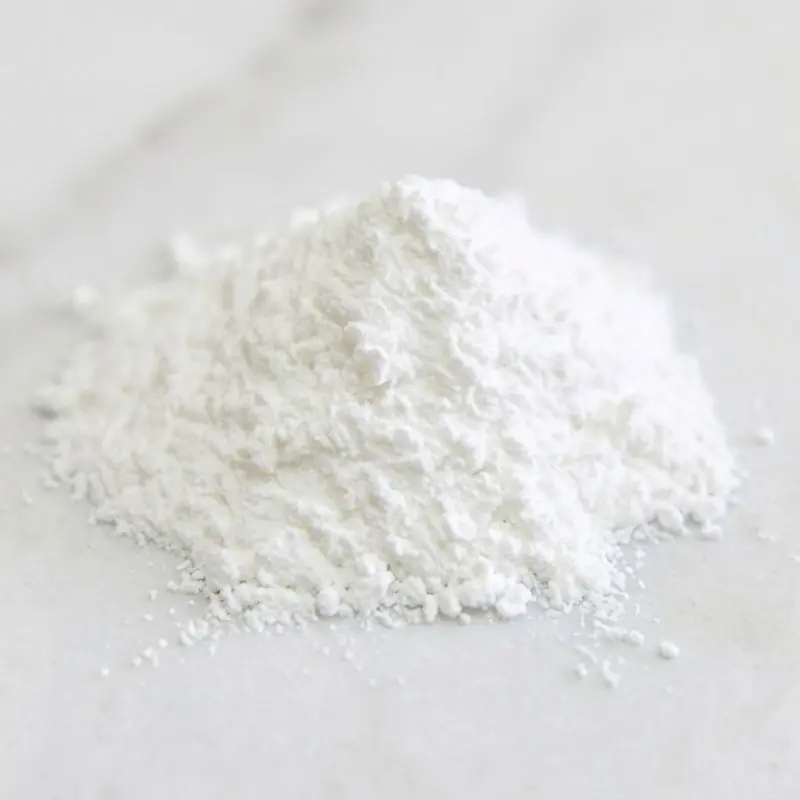
Appearance: Fine White Powder
Recommended Usage Rate: 1% – 5% in final formulation
Solubility: Water Soluble
pH Stability: Tranexamic acid is stable at a wide pH range, roughly pH 4–7
Formulating Tip: Add to the water phase of your creation
Sourced for the South African Formulator
In my research of the South African skincare landscape, I found a massive gap in accessibility. While high-end clinics offer Tranexamic Acid serums for upwards of R1,500 per 30ml, the raw, high-purity powder is difficult for local formulators to find. Most suppliers are either out of stock or only sell in industrial bulk quantities.
I have made this High Purity Tranexamic Acid available in “The Lab” to bridge this gap.
A professional-grade 5% Tranexamic Acid serum usually retails for R900 to R1,500. Using this 30g tub, a formulator can create the equivalent of twenty 30ml bottles at a 5% concentration. This provides South African students, enthusiasts, and professionals immediate access to clinical-grade results without the struggle of international imports or the high cost of retail markups.
Formulation Advice: Safety & Stability : Tranexamic Acid Powder (High Purity)
Important: Do not add this high-purity powder directly into pre-made serums, lotions, or creams.
I strongly advise against “DIY spiking” of finished products for several scientific reasons:
pH Incompatibility: Adding a concentrated active can drastically shift the pH of a finished product. If the pH moves outside the stable range (4.0–7.0 for Tranexamic Acid), the formula can “crash”, causing ingredients to separate or lose efficacy.
Preservative Failure: Finished products are balanced with a specific preservative load. Adding raw powders can overwhelm the preservative system, leading to hidden bacterial or fungal growth within days.
Solubility Issues: Without proper lab equipment and a balanced water phase, the powder may not dissolve fully, resulting in a gritty texture that can cause micro-scratches on the skin.
Unknown Chemical Reactions: You cannot predict how Tranexamic Acid will react with the emulsifiers or thickeners in a pre-made base. This can lead to skin irritation or “rebound” darkening.
Tranexamic Acid Powder (High Purity) in a formula
While this high-purity powder is the star, our Melanin Breaker illustrates the power of synergy. In this formulation, I’ve stabilized 5% Tranexamic Acid alongside a potent delivery system to ensure deep penetration into the dermal layers where melasma lives.
Multilayered Pigment Inhibition: By combining Tranexamic Acid with Phenylethyl Resorcinol and 4-Butylresorcinol, we target the pigment process at three different stages.
The Vitamin C Advantage: We use Tetrahexyldecyl Ascorbate, a lipid-soluble Vitamin C derivative. This ensures the brightening effect is non-irritating and highly stable, unlike traditional L-Ascorbic Acid.
Barrier Support: To prevent the inflammation that often triggers “rebound” pigmentation in South African skin, the formula is anchored in Ceramide NP, Shea Butter, and Soy Lecithin.
Anti-Inflammatory Shield: With the addition of Allantoin and Tocopherol, we ensure the skin remains calm, effectively “muting” the inflammatory signals that lead to darkening.
Expert Tip: If you are formulating at home with this powder, remember that Tranexamic Acid works best when the skin barrier is healthy. Always pair your active treatments with skin-identical ingredients like Ceramides to ensure long-term success.
The persistence of hyperpigmentation is frequently linked to a continuous biochemical cascade within the skin. When the skin is exposed to external stressors, such as UV radiation, heat, or friction, it triggers the release of plasminogen activators. These activators convert plasminogen into plasmin, which then stimulates the production of arachidonic acid and prostaglandins.
This specific sequence acts as a “on switch” for melanocytes (pigment-producing cells). If this pathway remains stimulated, surface treatments may only provide temporary results because the underlying signal to produce excess melanin has not been interrupted. By incorporating a high-purity 5% Tranexamic Acid into a formulation, you are specifically targeting this plasminogen-melanocyte axis to help stabilize the skin’s pigment response.
Comparative Ingredient Synergy- Tranexamic Acid Powder (High Purity)
In my professional practice, I have observed that Tranexamic Acid’s efficacy is amplified when strategically layered. While it inhibits the initial signal, pairing it with Tyrosinase Inhibitors (like the Phenylethyl Resorcinol found in our Melanin Breaker) ensures that any pigment that does get triggered is blocked from forming.
Resources for Advanced Management
To understand why certain marks appear to darken despite treatment, it is necessary to examine the “why” behind the biology.
Explore our technical breakdown in The Truth Blog : Why Your Melasma or Dark Spots are Getting Darker
For a comprehensive guide on how to master your own skin, so that you start seeing results with your pigmentation products, refer to the investigative guide: Why is My Melasma or Dark Spots Getting Darker?