
How to treat melasma without hydroquinone in South Africa?
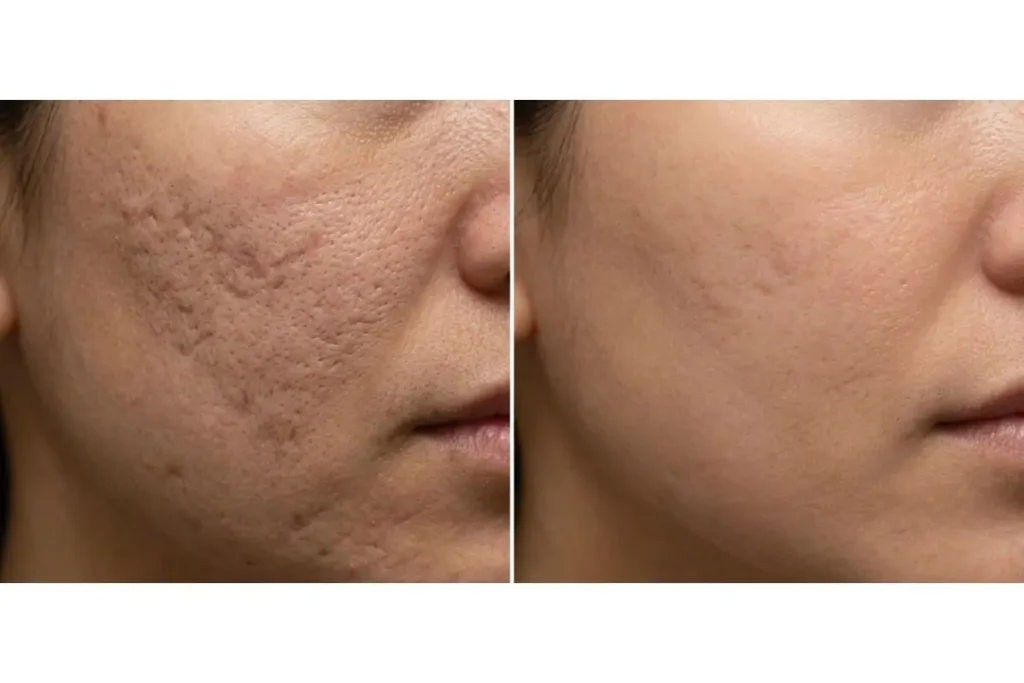
In my 20 years of investigative experience, I have seen the devastating results of unmonitored skin lightening. Recently, two clients came to me in distress saying that their skincare products “burnt” their faces. When I thoroughly researched the specific products they were using, I discovered they contained hidden Hydroquinone. Like many South Africans, they had no idea they were applying a regulated drug to their faces. I had to be direct with them: you must stop using these cheap, unregulated ‘brighteners’ immediately. They are not just ineffective, they are actively harming South African skin and increasing the risk of Exogenous Ochronosis—a permanent blue-black darkening that is notoriously difficult to reverse.
While hydroquinone is a known pigment suppressor, for Fitzpatrick IV–VI skin tones (skin of color), it often leads to a condition called Ochronosis-a permanent blue-black darkening that no cream can fix.
The truth is, you don’t need to bleach your skin to lighten your tough pigmentation and melasma. You need a clinical synergy of at least 10 high-performance actives that treat the skin without the “rebound” risk.
The Myth of the “Hero” Ingredient
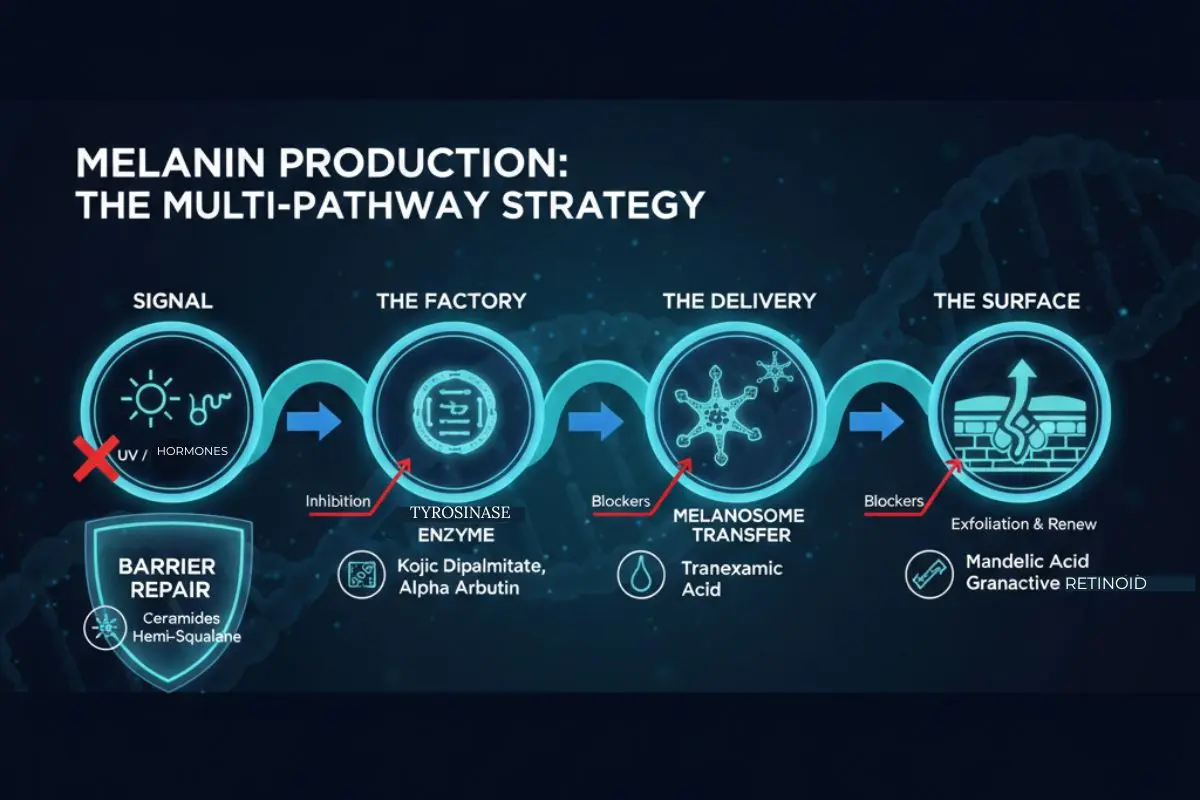
Most people search for one single ingredient to “cure” their pigmentation. But melasma is a multi-stage defense mechanism. If you only use one active, you are only blocking one pathway. To clear deep-seated pigment safely, you must move beyond the “one-bottle fix” and adopt a multi-pathway strategy.
In my research into the mechanics of pigmentation, I have found that treating skin of colour is not about “bleaching” a surface, it is about outsmarting a biological system.
Melanin is produced in a factory-like process within your cells. If you only use one ingredient, for example, a Vitamin C serum, you are only closing one “exit” in a factory that has ten. The skin, being a highly adaptive organ, will simply find another route to produce pigment.
To manage stubborn melasma well, especially in the harsh South African climate, the protocol must address the three critical stages of the pigment cycle simultaneously:
Enzymatic Inhibition: Slowing down the “factory” before the pigment is even made.
Melanosome Transfer: Stopping the pigment from traveling to the surface of the skin.
Controlled Desquamation: Shifting existing dark marks using large-molecule acids like Mandelic Acid and Gluconolactone that exfoliate without triggering heat or inflammation.
According to clinical studies on Fitzpatrick IV–VI skin tones, using a synergy of multiple actives at lower, non-irritating percentages is significantly more effective than using a high percentage of a single, aggressive active.
This “multi-pathway” approach allows us to achieve high-intensity results while keeping the skin barrier calm, which is the only way to prevent the dreaded “melanin rebound”.
The Protocol: How to treat melasma without hydroquinone effectively
To execute this strategy for real results, your routine must include these four distinct categories of actives:
The Gentle Exfoliant (Mandelic & Gluconolactone): Traditional exfoliants like Glycolic Acid have a small molecular structure that penetrates too quickly. To clear existing pigmentation without heat, you must use large-molecule acids, in low percentages, as found in the ShaRique Skin Pigmentation Exfoliant. These gently lift pigmented cells while keeping the surface hydrated.
The Retinoid (Cell Turnover): You cannot shift deep-seated melasma without increasing cell turnover. A retinoid acts as the “manager” of your skin cells, telling the bottom layers to push fresh, unpigmented cells to the top faster. However, you must be extremely careful with the choice of retinol and the percentage you use; high percentages often cause irritation, which triggers inflammation—the primary cause of rebound pigmentation.
When I formulated our Melasma Serum, I specifically chose Granactive Retinoid (Hydroxypinacolone Retinoate). Technically, this is a next-generation ester that binds directly to the skin’s retinoid receptors without needing the metabolic breakdown that traditional retinol requires. Research shows it delivers the high-intensity results of Tretinoin (prescription strength) but with significantly lower irritation potential. This allows us to accelerate turnover and clear pigment while keeping the skin’s inflammatory response completely silent.
Potent Brightening Inhibitors (The Multi-Blockers): To stop the melanin factory, you need a cocktail of inhibitors that work on different enzymes simultaneously. You need ingredients such as Tranexamic Acid, Kojic Dipalmitate, Alpha Arbutin, Licorice Root, and Vitamin C (SAP).
Our Pigmentation Night Serum and Melasma Serum use a strategic blend of these high-performance actives to ensure the melanocyte is blocked at every stage. By using this synergy, you are not just suppressing one enzyme; you are shutting down the entire assembly line. This multi-inhibitor approach is far more effective, and significantly safer, than using a high percentage of a single bleaching agent, as it prevents the skin from finding a biological “workaround” that leads to rebound darkening.
Barrier Repair Agents (The Shield): Correction without protection is a recipe for failure. You must include Ceramides, Urea, and Hemi-Squalane (found in our Barrier Repair Cream) to “seal” the skin and prevent the inflammatory response that makes melasma darker.
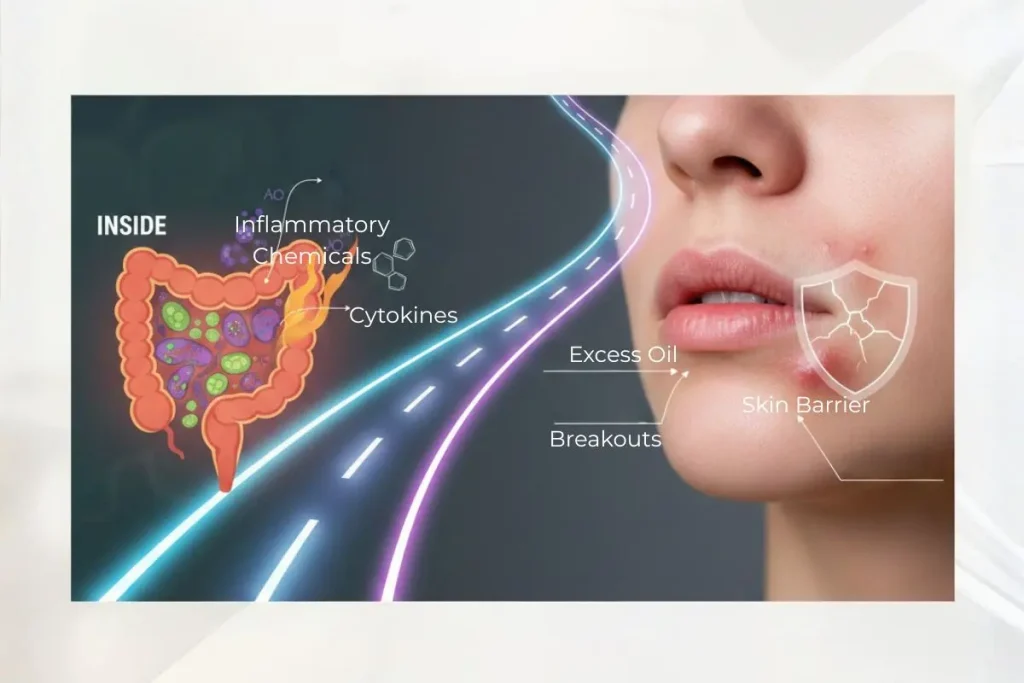
Technically, research into the biology of skin of colour shows that it often naturally lacks sufficient Ceramides, leading to a compromised moisture barrier. It is vital to repair your barrier every single day, especially when using active treatments. This is because most skin brighteners, even safe ones, work by manipulating the skin’s chemistry, which can lead to transepidermal water loss (TEWL). If the barrier is not reinforced daily with lipids and humectants, the skin interprets the dryness as an injury. This triggers an inflammatory response, and inflammation is the direct “on-switch” for melanocytes to produce more pigment as a defense mechanism.
By including these barrier repair agents, you are telling the skin it is safe. This “calming” effect is what allows the inhibitors and exfoliants in the Tough Pigmentation & Melasma Combo to do their work without the risk of the skin fighting back.
Why You Must Learn Your Skin (The Only Way)
Even with the best products, success depends on how you adjust them to your skin’s daily needs. There is no “one size fits all” in clinical skincare. If you truly want to stop the cycle of darkening, you have to learn about your skin, it is the only way to achieve long-term clearance.
If you don’t understand the biology of your own skin, you will always be at the mercy of the next “miracle” bottle. Skincare is not a guessing game, it is a science. This is why I didn’t just stop at creating products; I documented the technical truth.
In my investigative blueprint, “Why is My Melasma or Dark Spots Getting Darker?“, I solve the “darkening mystery” that plagues so many South Africans. This guide isn’t just a book; it is a Skin Barrier Blueprint. It provides the deep-dive research into ingredients and personalized guidance specifically for darker skin tones.
Unless you understand the “why” behind the “how”, specifically regarding Barrier Repair and Inflammation Control, you will continue to spend money on products that your skin eventually rejects. You need to know how to treat melasma without hydroquinone.
True clearance is 50% formulation and 50% education. To stop the cycle of melasma for good, you have to become the expert on your own face.
Conclusion: How to treat melasma without hydroquinone?
If you are wondering how to treat melasma without hydroquinone, remember that the system outperforms the ingredient. By combining Gentle Exfoliation, Retinoids, Multi-Inhibitors, and Barrier Repair, you are addressing the biological truth of your skin. Our Tough Pigmentation & Melasma Combo provides this exact synergy, offering a safe, scientific, and high-intensity solution for South African skin.