
Retinol vs Retinyl Palmitate: How to Read a Body Lotion Label
Walk down any pharmacy body care aisle and you will see “retinol” and “vitamin A” on the front of many lotions. Turn the bottle around and the ingredient list tells you which form you are actually getting. Retinol and retinyl palmitate are both vitamin A, but they work at different strengths, and each has its place.
This guide explains the difference in plain language, what the research shows, and how to read a body lotion label so you know exactly what you are buying. It is also why our Retinol Smoothing Body Cream contains both.
What is retinyl palmitate?
Retinyl palmitate is retinol joined to palmitic acid, a fatty acid. It is an ester (a compound formed when an acid and an alcohol bond together), and it is one of the most common forms of vitamin A in cosmetics because it is stable and gentle.
Your skin already uses retinyl esters as a way to store vitamin A. A 2006 review in Clinical Interventions in Aging (Mukherjee et al.) describes retinyl esters as the likely storage form in skin cells, and notes that an enzyme has to break them back down into retinol before they can be used.
Is retinyl palmitate the same as retinol?
No. They belong to the same family, but they sit at different steps of the same chain. Vitamin A only works on skin once it becomes retinoic acid, and each form needs a different number of steps to get there:
- Retinyl palmitate → retinol → retinaldehyde → retinoic acid
- Retinol → retinaldehyde → retinoic acid
Each extra step makes the effect gentler and more gradual. That is what makes retinyl palmitate so well tolerated, and why retinol gives a stronger effect.
| Retinol | Retinyl palmitate | |
|---|---|---|
| What it is | Pure vitamin A | Vitamin A bonded to a fatty acid |
| Steps to retinoic acid | Two | Three |
| Strength | Stronger | Gentler, more gradual |
| Irritation | Can cause dryness or peeling at first | Very low |
| On the label | Retinol (or an encapsulated form of retinol) | Retinyl Palmitate |
Is retinol stronger than retinyl palmitate?
Yes, retinol is the more potent of the two. In a 1997 study in the Journal of Investigative Dermatology (Duell, Kang and Voorhees), researchers applied different forms of vitamin A to human skin and measured how strongly each one switched on a retinoid response. Under occlusion (covered skin), it took 0.6% retinyl palmitate to produce a measurable effect, compared with just 0.025% retinol.
The same study found something that matters for a body lotion you rub in and leave uncovered. Retinol worked just as well on uncovered skin as on covered skin, while retinyl palmitate worked less well when the skin was left uncovered.
Retinol is also well tolerated. In an earlier 1995 study in the same journal (Kang et al.), retinol applied to the skin thickened the epidermis (the outer layer of skin) in a similar way to prescription retinoic acid, but without significant redness.
Does retinol work on the body?
There is good evidence that it does. In a 2007 randomised trial in the Archives of Dermatology (Kafi et al.), 36 older adults had 0.4% retinol lotion applied to one arm and a plain lotion to the other, up to three times a week for 24 weeks. The retinol-treated arms showed a significant improvement in fine wrinkles, along with more collagen and more of the water-holding molecules that keep skin plump.
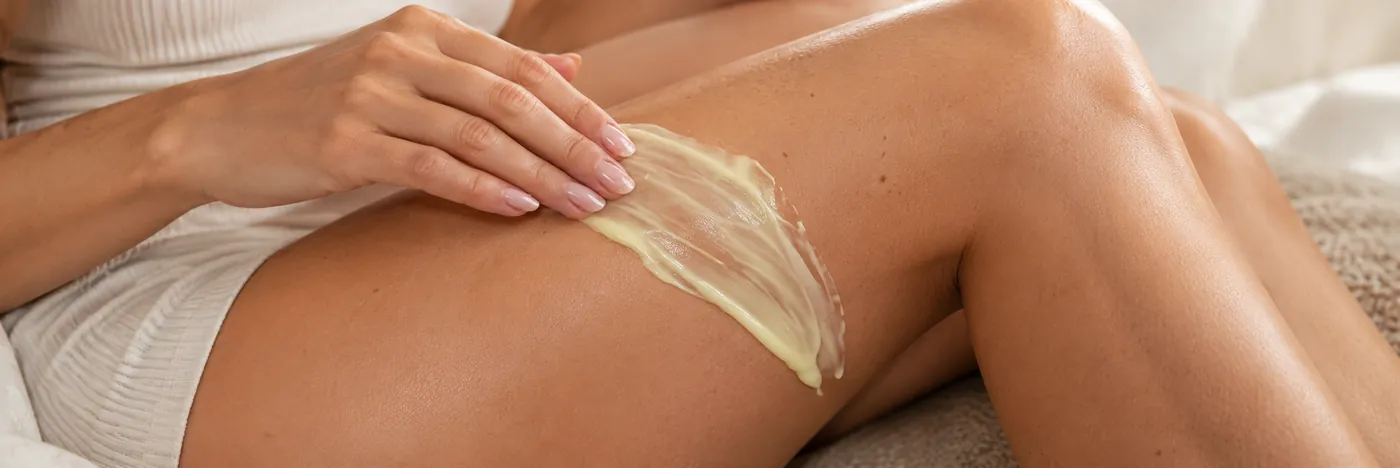
That study used arm skin, not facial skin, which is exactly where many of us notice crepey texture first. If that is your concern, read our guide to retinol body cream for crepey skin.
How do you know if a body lotion has real retinol?
Check the ingredient list, not the front of the bottle:
- Look for the word “Retinol” in the ingredients. An encapsulated form, such as hydroxypropyl cyclodextrin and retinol, is still real retinol.
- “Retinyl Palmitate” on its own means a gentle form of vitamin A, not retinol. “Vitamin A” or “with retinol complex” on the front does not tell you which one is inside.
- Look for other names too: retinyl acetate and retinyl propionate are also esters, not retinol.
- Check where it sits in the list. Ingredients are usually listed from highest to lowest concentration. Actives are used in small amounts, so they often appear near the end, and that is normal.
- Check the packaging. Retinol is broken down by light and air, so an opaque pump bottle protects it better than a clear jar.
What is retinyl palmitate good for?
Retinyl palmitate is stable, gentle and easy to formulate with, and in the Duell study it did not cause redness. It is a good choice for sensitive skin, for anyone new to vitamin A, and as a steady partner alongside retinol, which is exactly how we use it.
What matters is knowing which form you are buying, so you can choose the right strength for your skin.
Retinol or retinyl palmitate: which is better for your body?
For texture, crepey skin and loss of firmness on the arms, legs and décolletage, retinol is the stronger choice. Retinyl palmitate adds a gentle, steady supply of vitamin A.
That is why we formulated our Retinol Smoothing Body Cream with both. It contains true retinol in an encapsulated form, released slowly to stay gentle, together with retinyl palmitate. Alongside them are ceramide NP to support the moisture barrier, plus a stable vitamin C (tetrahexyldecyl ascorbate) and CoQ10 as antioxidants. It comes in a 200 ml + 50 ml free (250 ml total) pump bottle for R399.
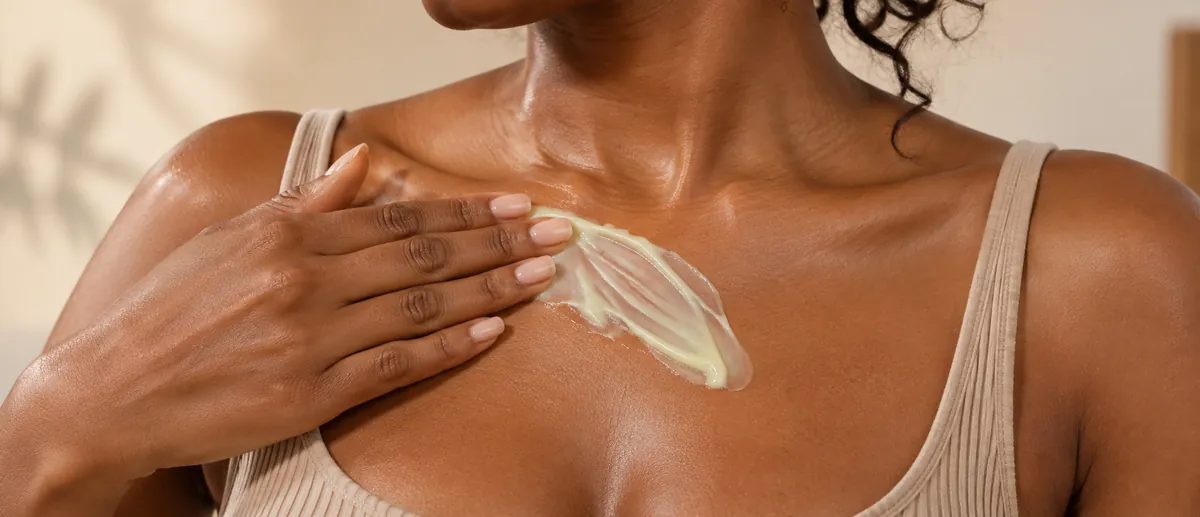
Want to go further on the face? Our Retinol Smoothing & Firming Face Cream pairs with the body cream for head-to-toe care. To understand the wider retinoid family, read what do retinoids do?
Ready for a premium retinoid? Get your body lotion custom made. Choose your strength, from R429
How do you use a retinol body lotion?
- Patch test first. Apply a small amount to your inner forearm and wait 24 to 48 hours.
- Use it at night. Retinol is broken down by light and raises sun sensitivity.
- Start slowly. Use it every second or third night for the first couple of weeks, then increase as your skin adjusts.
- Massage it in over the arms, legs, hands and décolletage until absorbed.
- Wear sunscreen the next day on any exposed areas.
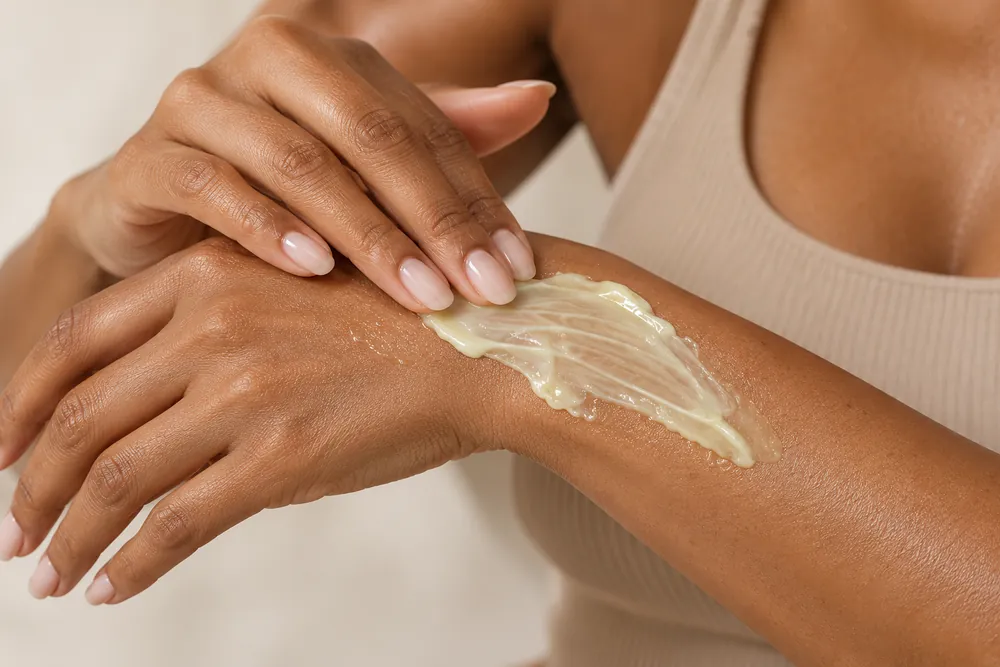
If your skin becomes red, tight or flaky, cut back and give it time to recover. Our guide on how to fix a burnt skin barrier from retinol walks you through what to do.
Retinyl palmitate and retinol FAQs
Is retinyl palmitate vitamin A?
Yes. It is a form of vitamin A, made from retinol bonded to palmitic acid. Your skin has to convert it into retinol before it can use it.
Can I use a retinol body lotion in summer?
Yes, as long as you apply it at night and wear sunscreen on exposed skin during the day. Retinol makes skin more sensitive to the sun, which matters in a South African summer.
Can I use a retinol body lotion while pregnant?
No. Our Retinol Smoothing Body Cream is not for use during pregnancy or breastfeeding. Speak to your doctor about alternatives.
Can I buy retinyl palmitate to formulate with?
Yes. We stock Retinyl Palmitate as a raw ingredient for formulators. If you sell your own skincare, our Anti-Aging Social Media Posts help you explain ingredients like these to your customers.