

Why Is My Pigmentation Not Going Away? The Truth When Nothing Works
You have tried the creams. You bought the serum everyone was talking about. Maybe you have already been to a dermatologist, and you are still looking in the mirror at the same patch. Maybe you even bought a product from us, and now you are asking: why is my pigmentation not going away?
So let us say it straight out. We formulate and sell pigmentation products, and we are not going to tell you that one bottle will erase pigmentation for everybody. Pigmentation can be stubborn. Melasma can come back. But there is a lot you can do about it, and one missing step can undo all the others.
The truth comes first. Then we show you what to do.
Jump to what you need
Is melasma permanent?
It can be. The American Academy of Dermatology says it “can also last for years, or even a lifetime”.
It is stubborn even in the hands of professionals. In one 2025 trial, more than half the people had already tried creams, oral treatment, laser or mesotherapy (injections into the skin). Of those, 42% said it did nothing and 30% said it came back.
What this tells us: when treatment fails, it is not always because you did something wrong or bought the wrong thing. This is a hard condition to shift, even for professionals.
And it hurts. In a Durban study, people with even mild melasma said it affected how they felt about themselves.
So if nothing has worked for you, you are not alone, and you are not imagining it.
Very few labels will tell you that. It does not mean you must give up. It means the goal is to fade it, control it, and stop feeding it. Dark marks left behind by pimples or injury are a different problem, so first make sure you know what you are treating: read melasma vs hyperpigmentation.
How can you tell if pigmentation is epidermal or dermal?
Before you can fade pigmentation, you need to know where it is sitting. There are three types:
Epidermal
The pigment is in the top layer of your skin.
The easiest part to reach.
Mixed
The pigment is in both layers.
The top can fade while the deeper part stays.
Dermal
The pigment has dropped into the deeper layer.
The hardest part to reach.
Depth decides how long this takes. The peels used in one study worked best on surface pigment, and the researchers left dermal melasma out because those peels do not work on it.
So is yours deep? If you have had it for months or years, be prepared for that. In a Greek study, people had lived with melasma for about five years and half of them had the deep type. But other studies found mostly mixed, so do not give up on yours without checking.
What this tells us: a lot of long-standing pigmentation has a deep part. A cream can fade the top and still leave a shadow. That is not a useless cream. It has reached as far as it can, and the rest needs time, or a different kind of help.
Colour alone can mislead you, so do not diagnose yourself in the bathroom mirror. A doctor can examine your skin with a special light (a Wood’s lamp) or a magnifier (a dermatoscope). We explain it fully in epidermal vs dermal hyperpigmentation.
Can hormonal pigmentation go away?
Sometimes, when the trigger goes. In the Greek study, about one in three women said pregnancy started it, and about one in six blamed the pill. The researchers also found thyroid problems in one in five patients, and some of them did not know.
What this tells us: if the trigger is still switched on inside, you can be fading pigment on the surface while your body keeps making more. What you do on the outside is being undone from the inside. No cream can attend to your hormones for you, so get them checked.
Ask yourself:
- Did it start in pregnancy, or after a new pill, injection, implant or hormone treatment?
- Does it get darker and lighter on its own?
- Has anyone checked your thyroid?
If you said yes to the first two, or no to the last one, speak to your doctor. Please do not stop any medication on your own.
What makes pigmentation worse?
You can use the best serum in the world and lose to one of these every day:
- Sun. It tells your skin to make more pigment.
- Visible light. This is the light you can see, and an ordinary sunscreen does not block all of it. On brown and deep skin it caused darker pigment than UVA, and it was still there two weeks later.
- Products that burn or sting. Irritation can leave you darker. Burning does not mean it is working.
- Too many strong products together. A damaged barrier is an irritated barrier.
- Hormones, as we have just explained.
- Changing products every few weeks, so nothing ever gets a fair chance.
If your patches are actually getting darker, read why your melasma or dark spots are getting darker before you buy anything else, from anyone.
Is pigmentation different on Black, Indian and white skin?
The triggers are largely the same, but skin does not behave the same way. And research has not been fair: in one count of American melasma trials, only about 15% of the patients were Black and about 15% were white. So when a label says clinically proven, ask: proven on whose skin?
Pigmentation on Black skin
Your skin makes pigment easily, so anything that irritates it can leave a mark. But it does respond. In a study of 54 Black people, dark marks faded more than twice as much with prescription tretinoin as with plain cream. It took 40 weeks, and half of those on tretinoin had irritation.
What this tells us: dark marks on Black skin can fade, but slowly. Go gently, protect your skin from visible light, and walk away from anything that burns.
Pigmentation on Indian skin
In an Indian study, a series of gentle glycolic peels, starting low and going up slowly with daily sunscreen, brought melasma down a lot with no new dark marks.
What this tells us: you do not need the strongest treatment. Low, slow and protected works, and it is safer on skin that marks easily.
Pigmentation on white skin
White skin gets melasma too, and it can be just as upsetting. Yours may be more likely to sit near the surface, which can make it easier to reach. In a small Italian study, a serum with 4-butylresorcinol, niacinamide, glycolic acid and a licorice ingredient, used with SPF 50+, made a clear difference in 12 weeks. There was no comparison group.
What this tells us: the right brighteners with strict sun protection can show results in about three months. But sun spots are not melasma, and skin cancer can look like a brown spot. Have any new or changing spot checked before you try to lighten it.
How do you get rid of stubborn pigmentation on your face?
With a full routine, not one product. These are the key steps. The products are our suggestions, so you can see what each step looks like in real life.
1Cleanse gently
Your cleanser must not burn, strip or upset your skin. Choose a gentle, fragrance-free one. If your face feels tight and hot after washing, you are starting your routine with irritation.
Our Pigmentation Cleanser is made without added fragrance, and has licorice root, niacinamide, turmeric and aloe.

2SPF 50, every day, and reapply
Above everything, do this. In a five-month summer study, melasma improved in women who used a high-protection sunscreen every day. Only the tinted one made the patches blend better with the skin around them. The company that makes the sunscreens was involved in the study.
What this tells us: sunscreen is not the boring step. It is treatment. And a tint adds something plain sunscreen does not.
South African dermatologists recommend SPF 50+ with a tint for melasma, all year round. Look for iron oxides on the label: CI 77491, CI 77492 or CI 77499. If the tints do not match your skin or your budget, a wide-brimmed hat and shade are the next best thing.
And do not put it on once and forget it. In the Durban study, about 92% of the people who used sunscreen regularly put it on only once a day.
Reapply at least every two hours, even on cloudy days, and after swimming or sweating. We do not sell a sunscreen, so we have nothing to gain by telling you this. Buy a good one. Without it, you are fighting your own routine.
3Exfoliate, but carefully
Dead, pigmented cells sit on the surface and make your skin look dull and patchy. Exfoliating helps to lift them away so that your serums are not sitting on top of build-up. But go too strong and you irritate the skin, and irritation can mean more pigment.
Our Pigmentation Exfoliator uses mandelic acid with gluconolactone (a gentle PHA). Use it in the evening, two to three times a week. It is not for very dry or highly sensitive skin. If you want to choose your own acids and strength, build a custom one.


4Use skin brighteners
Pigment is made in stages, so one brightener on its own may not be enough. These are the names to look for on a label:
- Niacinamide: in one trial it did almost as well as 4% hydroquinone on the other side of the same face, with fewer side effects. Gentle does not mean weak.
- Tranexamic acid: in the 2025 trial, tranexamic acid with niacinamide matched hydroquinone after three months, with far fewer side effects. Pairing two brighteners makes sense.
- Alpha arbutin, 4-butylresorcinol and SymWhite 377: they target tyrosinase, the enzyme your skin needs to make pigment.
- Licorice root and stable vitamin C: to brighten and protect.
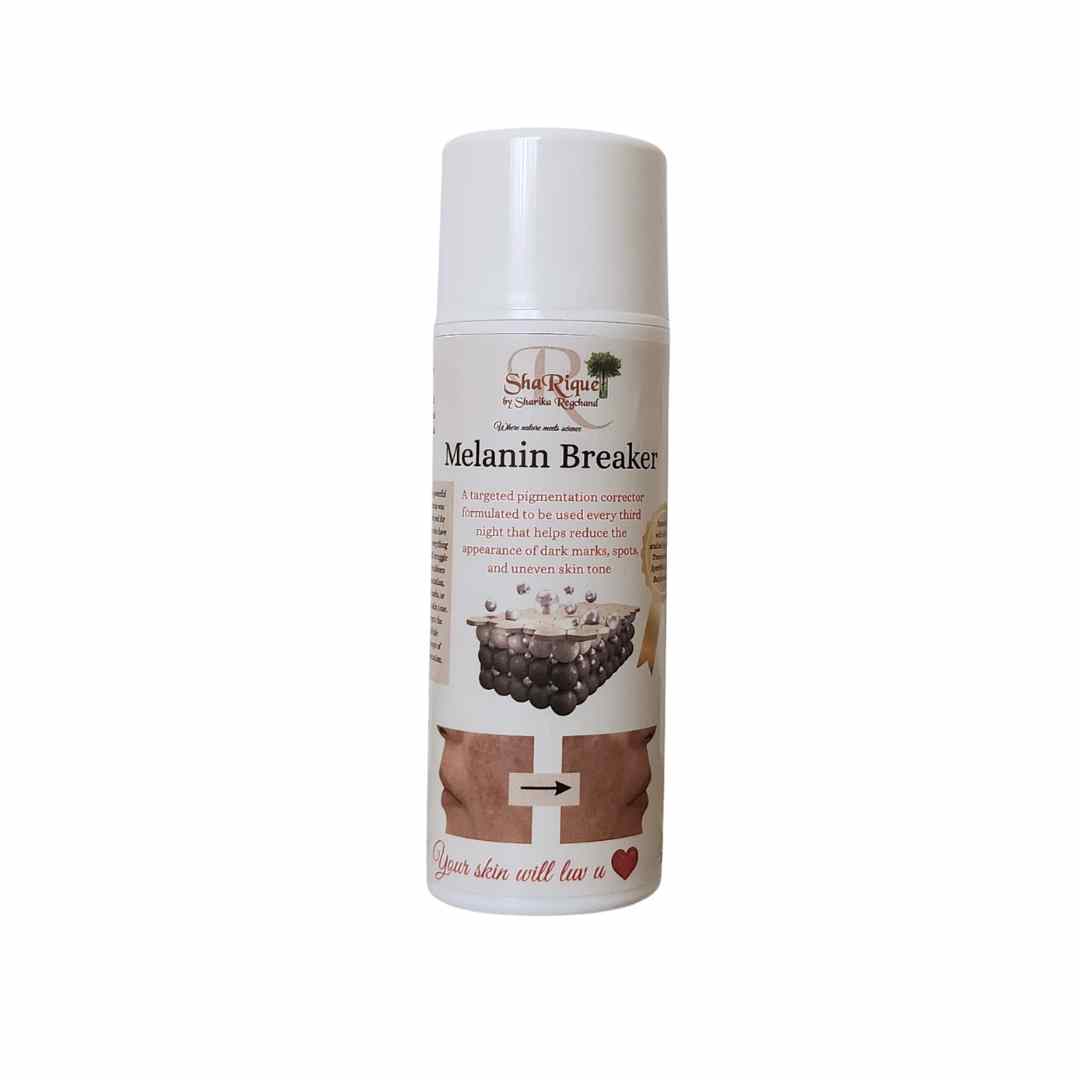
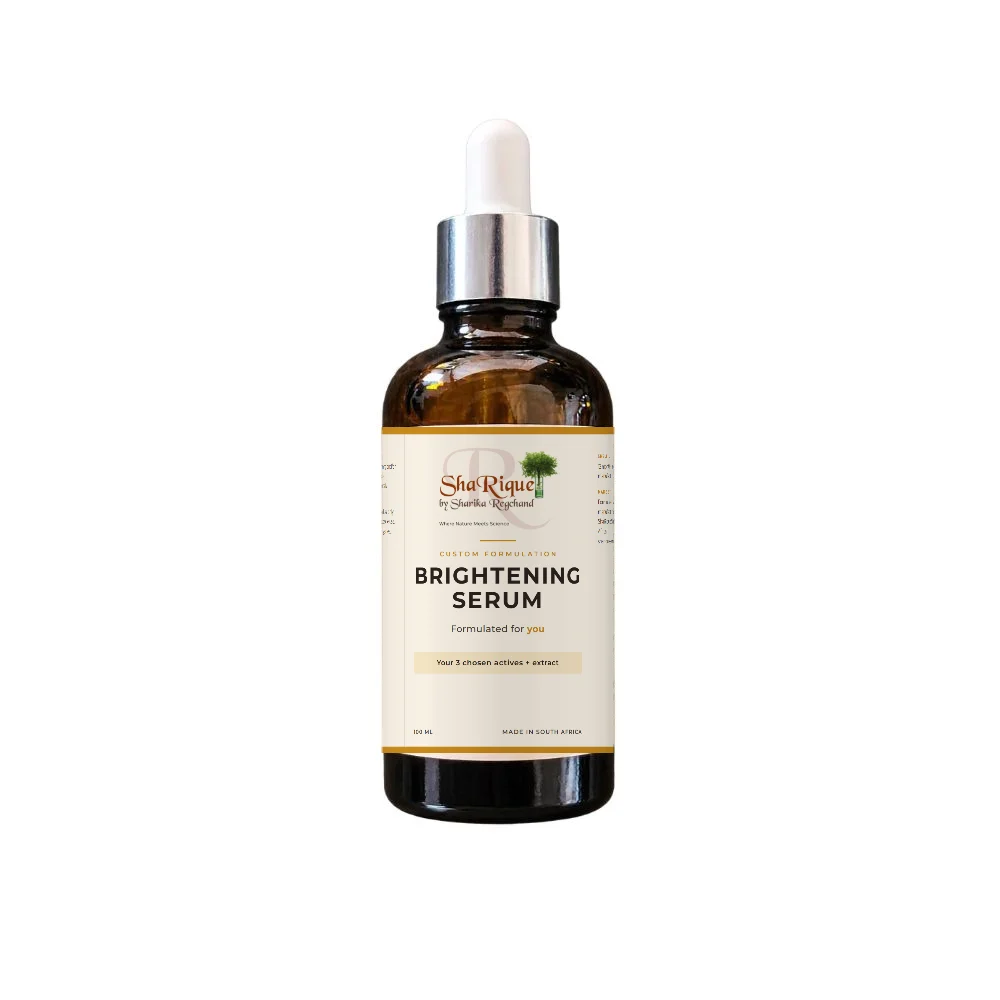
Those trials tested the ingredients, not our products. But this is how we work: we base our formulas on the science, we test different variations, and we put ingredients up against each other. And because no single formula suits every skin, we now offer custom formulations too.


5Add a retinoid at night
Retinoids speed up skin renewal, so pigmented cells move out faster. In a 10-month trial in Black patients, prescription tretinoin improved melasma, but it took 40 weeks and two in three people had irritation. Researchers have also found that retinoids work on the top layer, not on deep pigment alone.
What this tells us: a retinoid is worth it, but only if your skin can tolerate it for months. Choose gentle and stay with it.
Our Retinol Smoothing & Firming Face Cream is not tretinoin. It uses Granactive Retinoid, encapsulated retinol and retinyl palmitate, with vitamin C and ceramides. Start with every third night, on nights you are not exfoliating. Do not use it if you are pregnant or breastfeeding.

6Support your skin barrier
This is the step that gets skipped. Your barrier is the outer wall of your skin, and researchers found it does not work properly in melasma patches. So the skin you are treating hardest is already under strain. If your skin stings when you put on a plain moisturiser, stop your acids and retinoids and repair first.
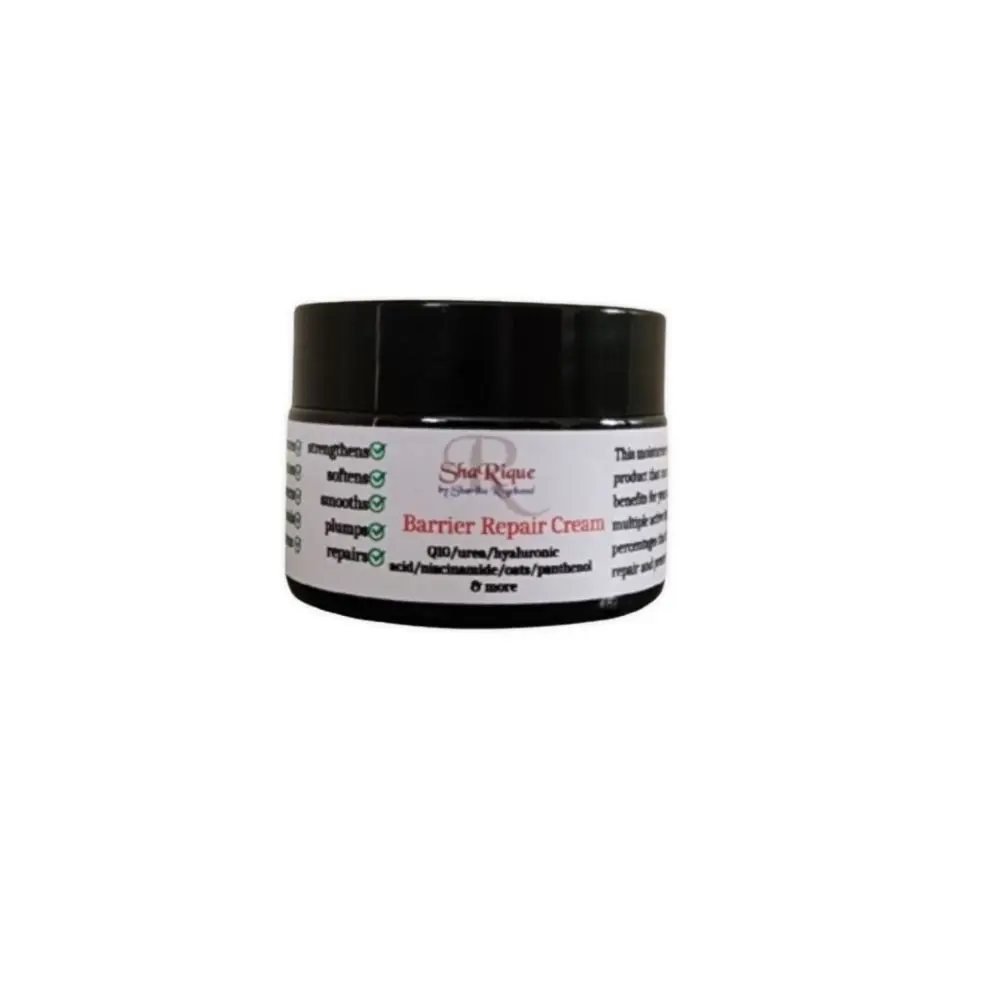
Our Ceramide Barrier Support Cream is fragrance-free, with ceramides, oats, niacinamide and panthenol. Use it last, morning and night (with your SPF over it in the day).
7Be patient and stay with it
Think in months, not weeks. In the 2025 trial, people kept improving every month for three months. With tretinoin it took 40 weeks. If you stopped at week four, you stopped too early to judge. Take one photo a month, in the same place and the same light. The mirror will lie to you every day. The photos will not.
Want the routine worked out for you?
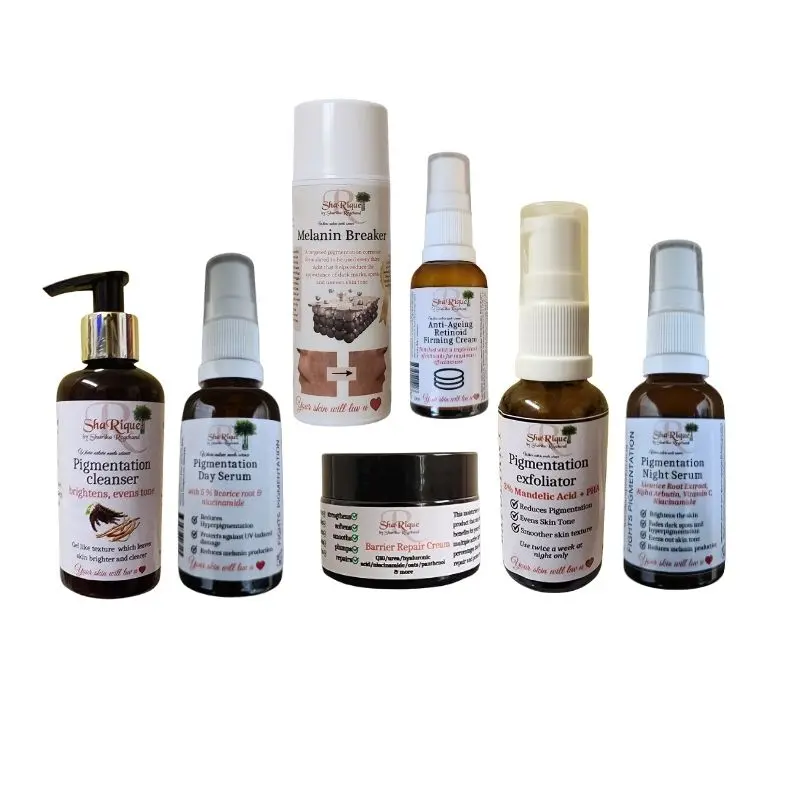
Our seven-product routine covers cleansing, brightening, exfoliating, retinoid and barrier support, with a morning plan and a seven-night schedule. You add your own SPF 50.
Which supplements help with pigmentation?
Supplements support a routine. They do not replace one. Glutathione is the one everybody asks about. In one study, 500mg a day for four weeks lightened skin in two places, the face and forearm, more than a dummy pill did. When the same team tried a lower dose, the overall difference was not significant.
What this tells us: glutathione may help some people at the right dose. It is support, not a cure. Two people in the second study had a temporary rise in their liver tests, so ask your doctor if you plan to take it long term.
UV Support is our antioxidant capsule with Polypodium leucotomos (a fern extract), French bark extract, nicotinamide, resveratrol and glutathione. It supports your skin from the inside. It is not a sunscreen, so please still use one.
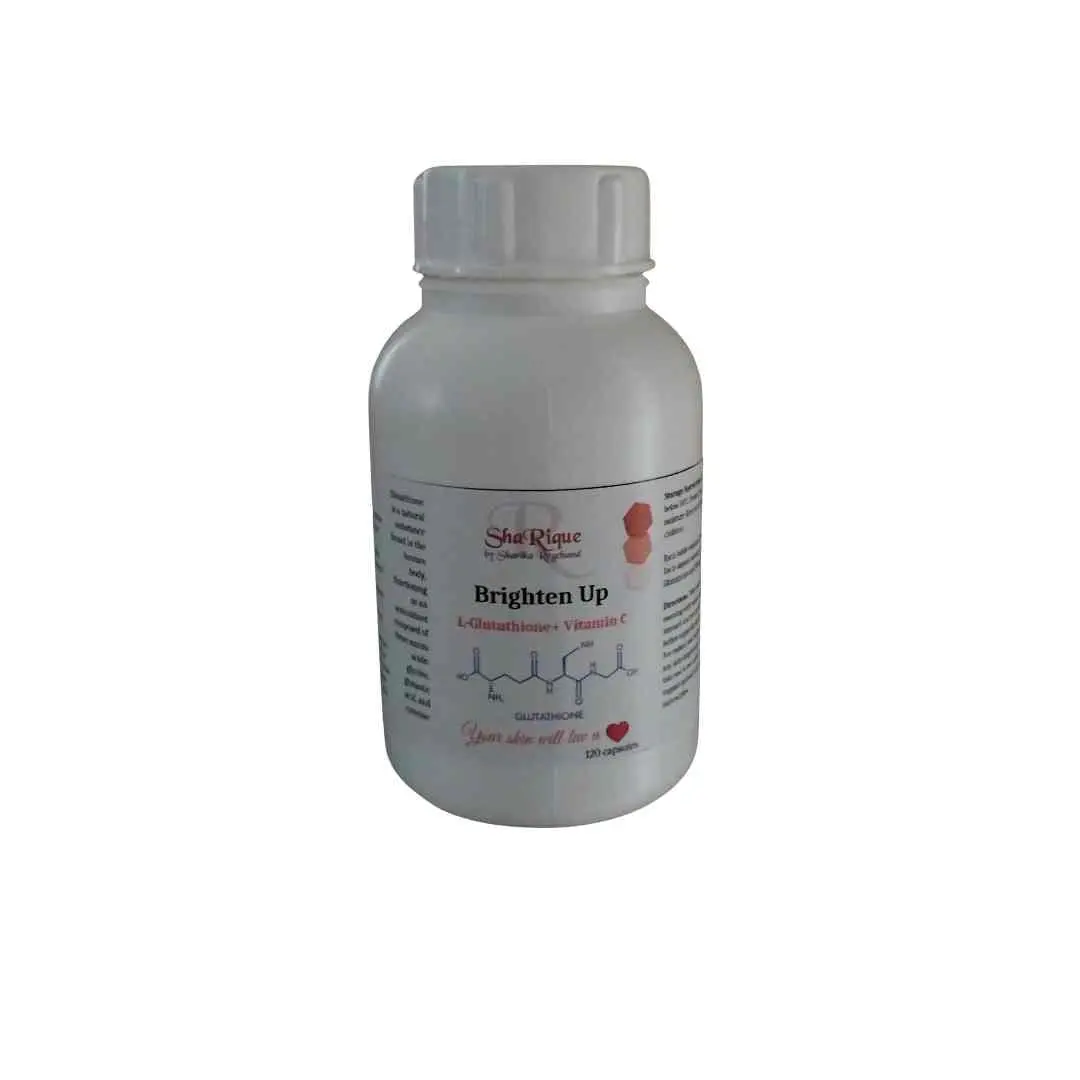 Brighten Up Glutathione CapsGlutathione + vitamin CShop now →
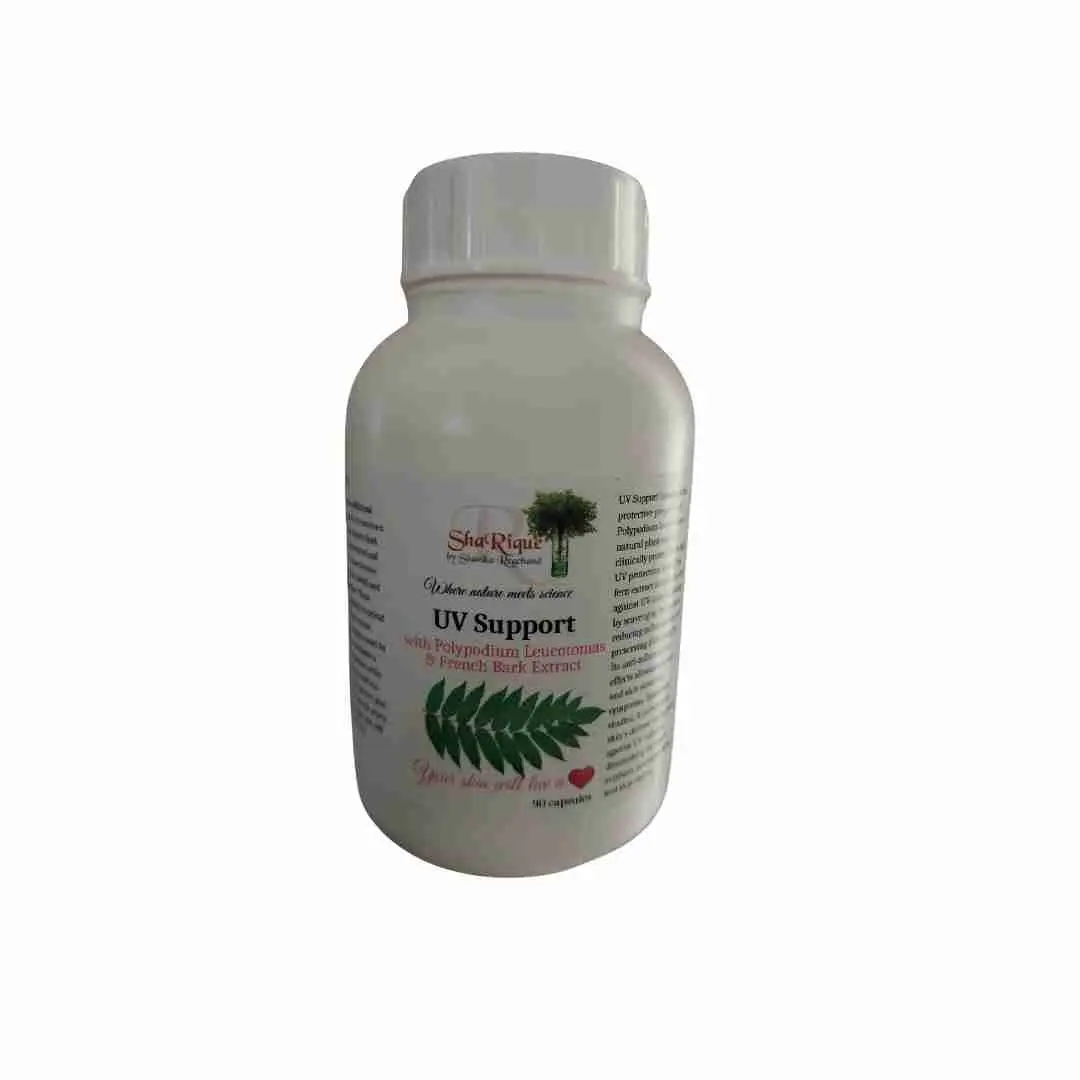 UV SupportAntioxidants, alongside SPFShop now →
Supplements are not medicine and are not intended to treat or cure melasma. If you are pregnant, breastfeeding, ill or on medication, ask your doctor first.
Do face peels, microneedling or laser work for pigmentation?
They can be added once your routine is steady and your barrier is healthy. But be careful who you go to, and be even more careful when you do it yourself. If you irritate pigmented skin, you can end up darker than when you started.
- Face peels: they can work, and stronger is not better. At a clinic in Bloemfontein, patients with deep skin improved after the milder glycolic peels, but not after the stronger TCA peels. Almost all had irritation from the TCA, and one in three darkened for a while. Three months after stopping, melasma had come back in seven out of ten. So a peel is not the finish line, and your routine must carry on. Start low, use SPF, and keep a routine going afterwards. Read what you need to know about chemical peels, then see our face peel range.
- Microneedling: a review of 16 studies found it helped melasma when used with tranexamic acid. But some people, about 7 in 100, got new dark marks. It can help, and it can backfire. Who does it, and how deep they go, matters. Read can microneedling make pigmentation worse first. Then look at our Microneedling Pigmentation Serum.
- Laser: you can go for laser, but know what you are paying for. A review of one of the most used lasers found it often helps, but in several studies melasma had come back in most people within three months, though not in all. Darker skin had more side effects. Go to someone experienced with melasma and with your skin tone, and do not spend money you cannot afford to spend again.
How long does it take for pigmentation to go away?
| What you are dealing with | What to expect |
|---|---|
| Surface (epidermal) melasma | Tends to respond better, if you protect it from light |
| Mixed melasma | The top can fade first. The deeper part is slower |
| Deep (dermal) melasma | The slowest. It may lighten without disappearing |
| A hormone trigger that is still active | It can keep coming back until the trigger is dealt with |
There is no honest way to give everybody the same date. For more, read how long hyperpigmentation takes to fade.
Why is my pigmentation cream not working?
Before you throw it away, go through this honestly:
Have you done all of this?
- I know if I am dealing with melasma or with marks left behind by something else.
- I have asked about my hormones, medication and thyroid.
- I use SPF 50 with iron oxides every day, and I reapply it.
- My cleanser does not burn, strip or have added fragrance.
- I exfoliate gently, not every night.
- I use brighteners consistently, not on and off.
- I use a retinoid at night, if it is safe for me.
- My barrier is calm. Nothing stings.
- I have stayed with it for months, not weeks.
Here is what we want you to understand.
If you are doing all of this and it is still slow, it does not mean you failed, and it does not automatically mean the product failed. Some pigmentation is deep, some is driven from inside, and some will always need to be managed. Very often, it needs time.
And if a product burns you or makes you darker, stop using it. That goes for ours too.

Nothing off the shelf suits your skin?
Choose your own brightening or exfoliating actives and we formulate your serum. Need something more personalised? Message us.
Does azelaic acid help with pigmentation?
The research is encouraging. Across six trials, 20% azelaic acid did at least as well as hydroquinone. And it faded facial pigmentation in darker skin better than a plain cream.
What this tells us: it is a serious option without hydroquinone, and it has been tested in darker skin. It can sting a little at first.
This is why we are researching and testing azelaic acid on pigmentation right now. When we have something worth telling you, we will. If you are a formulator and want to work with it yourself, we stock azelaic acid powder.
Pigmentation FAQs
How can you tell if hyperpigmentation is permanent?
You cannot tell from one look in the mirror. Deep pigment is harder to fade and melasma can be lifelong, but many patches are mixed. A doctor can examine the depth, and several months of a full routine with daily SPF 50 will show you how your skin responds.
Why does my pigmentation keep coming back?
Because the trigger is still there or has returned. Sun, visible light, hormones and irritation can all start pigment again. Stopping matters too, because pigmentation is something you maintain, not something you finish.
What clears up hyperpigmentation fast?
Nothing we would trust. Be careful of anything promising overnight or 7-day results. Harsh products can irritate your skin and leave it darker.
Can I use all seven steps at once?
Not on day one. Start with the cleanser, barrier cream and SPF 50. Add one brightener, then the exfoliator or retinoid, one at a time, on separate nights. Patch test each one.
Can I treat pigmentation while I am pregnant?
Gentle cleansing, barrier care and sunscreen are your base. Avoid retinoids, and ask your doctor before using any active or supplement.
When should I see a doctor?
If a mark is new, changing, bleeding, itching or uneven in colour, or looks different from your other marks, have it checked before you treat it. Not every dark mark is pigmentation.
Start where your skin is today
See every product we make for pigmentation, melasma, chubaba and uneven tone in one place.
This guide is for information and does not replace medical advice. Results differ from person to person.
Explore the pigmentation & melasma guide
Why is my pigmentation not going away?You are hereMelasma vs HyperpigmentationEpidermal vs Dermal — how deep?Why it's getting darkerHow long does it take to fade?
How to remove ChubabaWhat to Use for HyperpigmentationTreatment for dark skinTreat melasma without hydroquinoneDoes microneedling help?
Pigmentation, Melasma & Chubaba SolutionsFind your routine by concernChubaba Dark Patch CorrectorMelanin BreakerGuide: Why is it getting darker?
Best Skin Brightening Ingredients10 actives compared · the hubAlpha Arbutin4-ButylresorcinolKojic Acid DipalmitateMulberry Root Extract