Best Professional Chemical Peels for Salons in South Africa
Choosing a chemical peel for your salon is not about finding the strongest acid. It is about matching the acid, the strength and the aftercare to the clients who walk through your door. In South Africa that means planning for every skin tone, including darker skin, which is more prone to marks after a treatment.
This guide compares the main professional peels side by side, explains strengths and cost per treatment, and shows you what to look for in a supplier.
Shop our Professional Face Peels
What is a professional chemical peel?
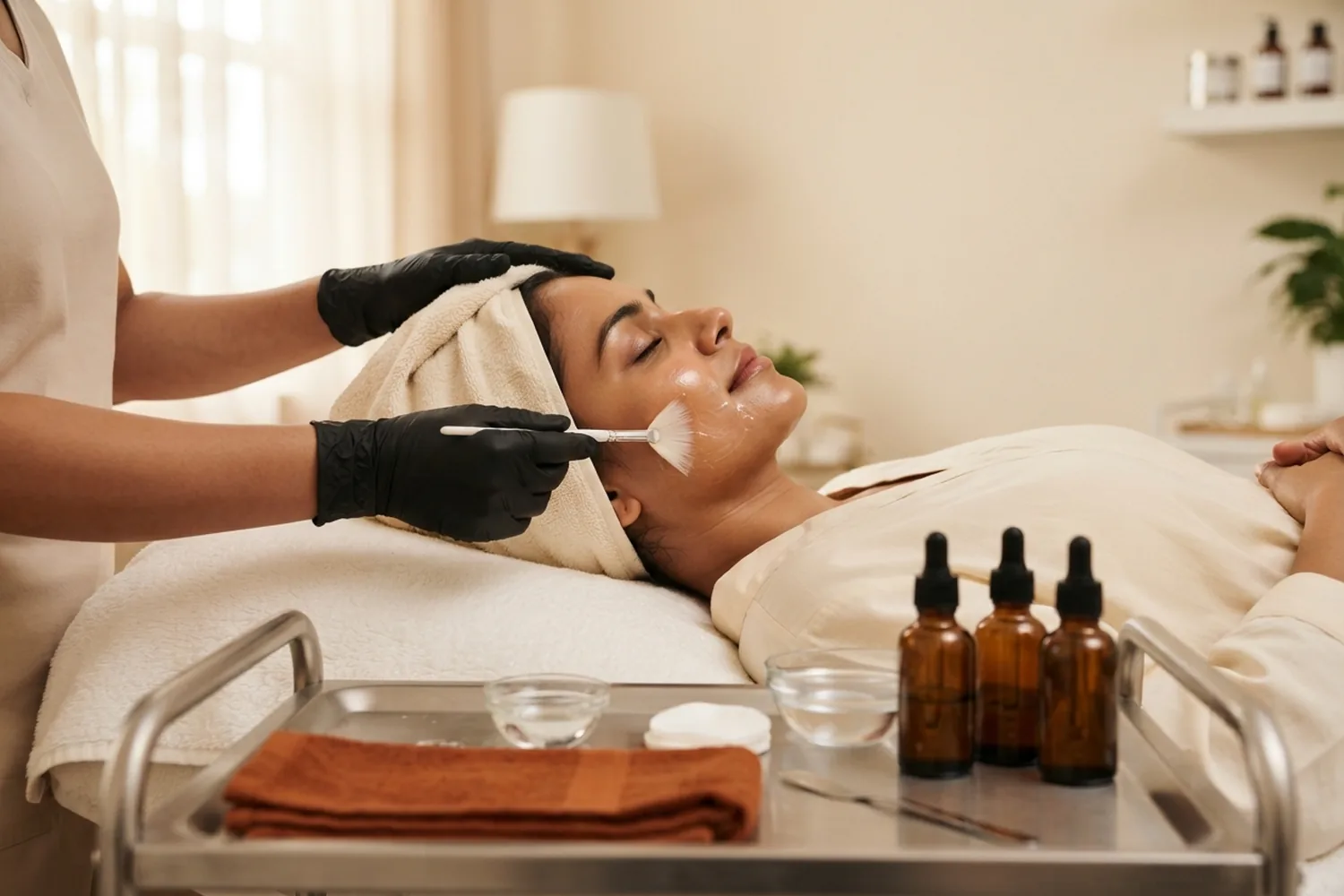
A professional chemical peel is an acid solution applied by a trained therapist to loosen and remove dead skin cells, leaving the surface smoother and more even. Salon-grade peels are stronger and more acidic than home exfoliating products, so they are applied for a set time and then stopped.
Two things decide how strong a peel feels on the skin: the percentage of acid and the pH (how acidic the solution is). A 2013 review in Clinical, Cosmetic and Investigational Dermatology (Sharad) puts it simply: the higher the concentration and the lower the pH, the more intense the peel. Our professional peels come in 15%, 20%, 25% and 30% strengths at a pH of between 3 and 3.8.
Which professional chemical peel is best for your clients?
| Peel | Best suited to | How it feels |
|---|---|---|
| Mandelic Acid Peel | Blemish-prone skin, post-blemish marks, uneven tone, melanin-rich skin | Gentlest, slower exfoliation |
| Lactic Acid Peel | Dull, dry or dehydrated skin, first-time clients | Gentle, with hydration built in |
| Glycolic Acid Peel | Rough texture, dullness, fine lines on skin that tolerates acids well | Strongest resurfacing of the four |
| Mixed Acid Peel | Pigmentation, post-blemish marks and texture together | Four acids in one 30% formula |
Which chemical peel is best for darker skin?
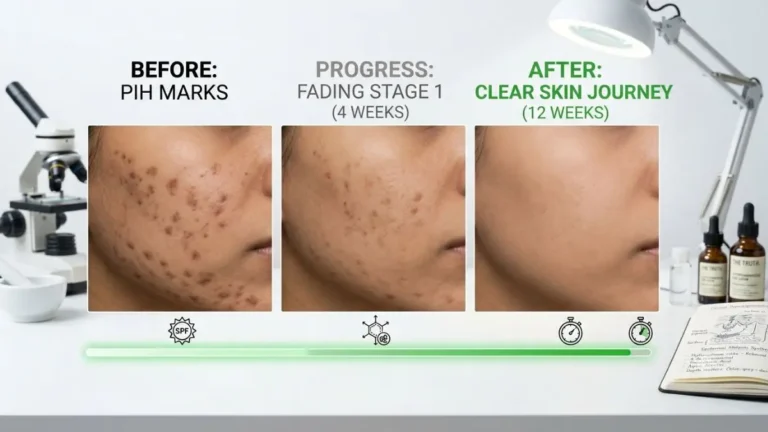
For melanin-rich skin, we recommend starting with a mandelic acid peel. Darker skin carries a higher risk of post-inflammatory hyperpigmentation (dark marks left behind after irritation). A 2013 review in the British Journal of Dermatology (Salam et al.) warns that the higher risk of pigment changes and scarring in ethnic skin can make peels potentially disfiguring, which is why acid choice and strength matter so much.
Mandelic acid is a larger molecule than glycolic acid. A 2024 review in Clinical, Cosmetic and Investigational Dermatology (Almeman) notes that this larger size means it penetrates the skin slowly, which is why it is considered gentler. In a 2009 trial of 44 Indian patients in Dermatologic Surgery (Garg et al.), a salicylic-mandelic peel improved acne and pigmentation more than a 35% glycolic peel, with fewer side effects.

Glycolic acid can still work on darker skin with the right protocol. In a 2017 randomised trial of 30 patients with skin types III to V (Sarkar et al.), serial glycolic peels combined with a home-care cream improved dark marks more than the cream alone. But it is not our first choice for skin of colour.
For a deeper look at peels and skin of colour, read our guide to chemical peels: what you need to know.
Mandelic acid peel vs lactic acid peel: what is the difference?
Both are gentle alpha hydroxy acids (AHAs), so the choice comes down to the skin in front of you:
- Choose mandelic for blemish-prone, oily or congested skin, and for clients worried about dark marks.
- Choose lactic for dry, dull or dehydrated skin. Lactic acid is also a humectant, so it leaves skin feeling more hydrated.
Lactic acid has a long record on pigmentation. In a 2005 study in Dermatologic Surgery (Sharquie et al.), every patient with skin type IV who completed a course of lactic acid peels for melasma improved, with no side effects recorded. Note that study used a much higher concentration than salon peels, so results with a 15–30% peel will be more gradual.
Which glycolic acid peel is best for salons?
Glycolic acid has the smallest molecule of the AHAs, as the Sharad review notes, so it works fastest and gives the strongest resurfacing. That makes it a good choice for rough texture, dullness and fine lines on skin that tolerates acids well.
Because it is so active, a glycolic peel needs careful timing. The Sharad review describes glycolic peels as very safe for skin types I to IV, and stresses that they must be properly neutralised to stop the acid working. For clients with darker skin, start with mandelic or lactic first and move to glycolic only once you know how their skin responds.
What is a mixed acid peel?
A mixed acid peel combines several acids in one formula so each can do a different job. Our Mixed Acid Peel is a 30% formula of lactic, mandelic and glycolic acids with gluconolactone, a polyhydroxy acid (PHA) that exfoliates gently and also holds moisture. It suits clients with pigmentation, post-blemish marks and uneven texture all at once.
As a 30% formula, it is a peel for clients who have already had lighter peels, not a first treatment.
What strength chemical peel should a salon start with?
We suggest starting every new client on the lowest strength, 15%, after a patch test and a skin assessment. If the skin responds well, you can move up gradually over a course of treatments. This is why we offer each single-acid peel in four strengths.

Stocking two strengths of the same acid, such as 15% and 25%, lets you take a client through a full course without changing products.
How much does a professional chemical peel cost per client?
The bottle price matters less than the cost per treatment. Our single-acid peels start at R199 for 10 ml at 15%, and a 30 ml bottle at 30% is R499. If your protocol uses around 2 ml per full-face application, a 30 ml bottle gives about 15 treatments, or roughly R33 of peel per client.
Larger sizes bring the cost per treatment down further. If you are building a peel menu, the 50 ml and 100 ml sizes are the better value.
Do you need a peel neutraliser?

For peels that require it, yes. AHA peels such as glycolic acid keep working until they are stopped, so neutralising at the end of the contact time is part of a safe protocol. An Indian dermatology task force guideline (Khunger, 2008) advises neutralising glycolic peels after a set time, or immediately if redness or blistering appears.
Our Face Peel Neutraliser (200 ml) is made for compatible mandelic, lactic, glycolic and multi-acid peels that need neutralising. Not every peel needs it, so always follow the protocol for the peel you are using.
What aftercare do clients need after a chemical peel?
Aftercare is where many peel results are won or lost, especially on darker skin. A 2025 South African study in the International Journal of Women’s Dermatology (Maruma, Dlova et al.) followed 40 patients, mostly skin type V, who had peels for melasma. Their skin improved, but melasma returned in 70% of them by week 12 after treatment stopped. Daily sun protection and home care are not optional extras.
Send clients home with a barrier-supporting cream such as our Post-Treatment Barrier Repair Cream, plus a broad-spectrum sunscreen.
Where to buy chemical peel products in South Africa
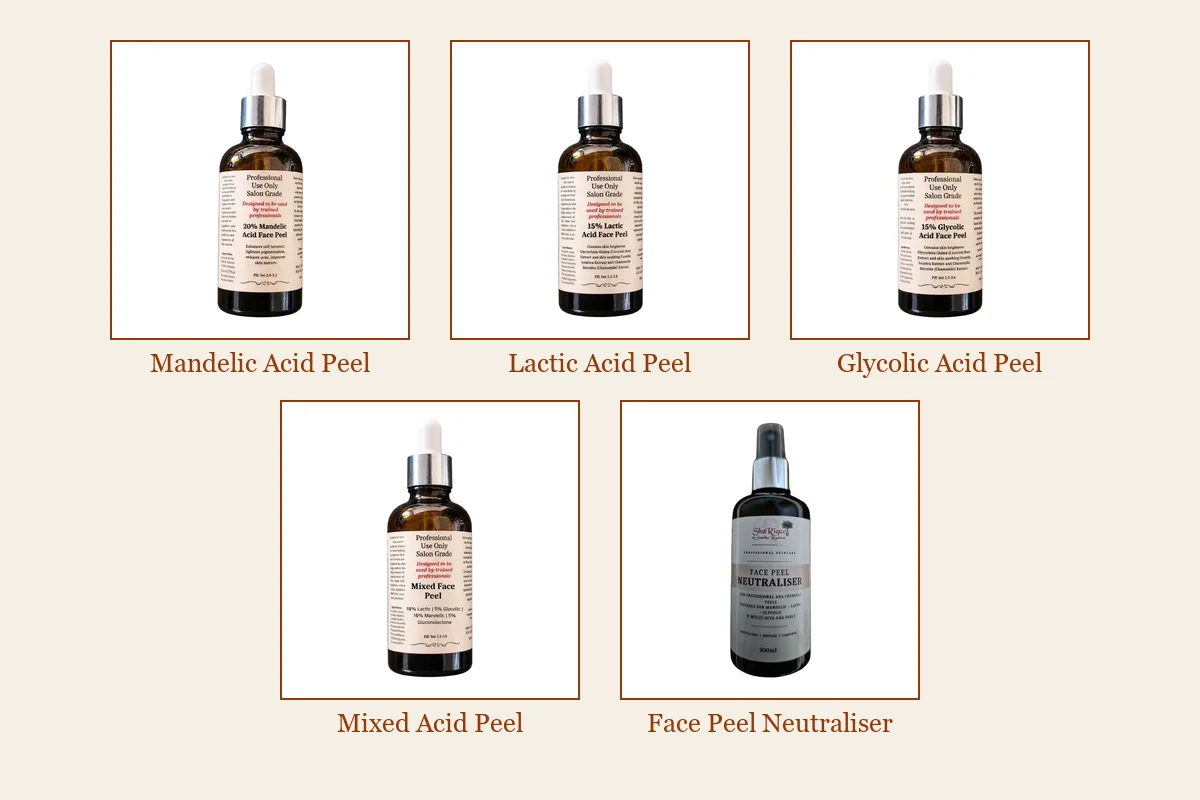
When you compare chemical peel suppliers, look for:
- A clear acid percentage and pH on every product
- More than one strength, so you can build a course
- A range of acids for different skin types, including darker skin
- A matching neutraliser and aftercare
- Sizes that suit both trial and salon use
Our Professional Face Peels range covers all of these: four single-acid strengths, a mixed acid formula, a neutraliser and aftercare, in sizes from 10 ml to 100 ml, delivered across South Africa.
Want to market your new peel menu? Our Exfoliation Social Media Posts give you ready-made content to promote it.
Professional chemical peel FAQs
Are chemical peels safe for dark skin?
They can be, with the right acid, strength and aftercare. Darker skin has a higher risk of dark marks after irritation, so start with a gentle acid such as mandelic, use the lowest strength, patch test first and insist on daily sun protection.
How often can you do a chemical peel?
Professional AHA peels are usually given as a course, spaced a few weeks apart. Many of the studies above used peels every two to three weeks. Always let the skin fully settle before the next session.
Can you use water to neutralise a chemical peel?
In a 2021 trial of 126 patients with skin types IV and V (Sitohang et al.), water worked as a substitute for a sodium bicarbonate neutraliser after a 35% glycolic peel. Follow the protocol for the peel you are using.
Can I buy professional chemical peels without being a therapist?
Our face peels are salon grade and for professional use. They should be applied by a trained skin therapist who has assessed the skin first.